
16th Advisory Group Meeting
Shaping Peace in a Fractured World – The Imperative Role of Religious and Traditional Actors
September 2026
Addis Ababa, Ethiopia
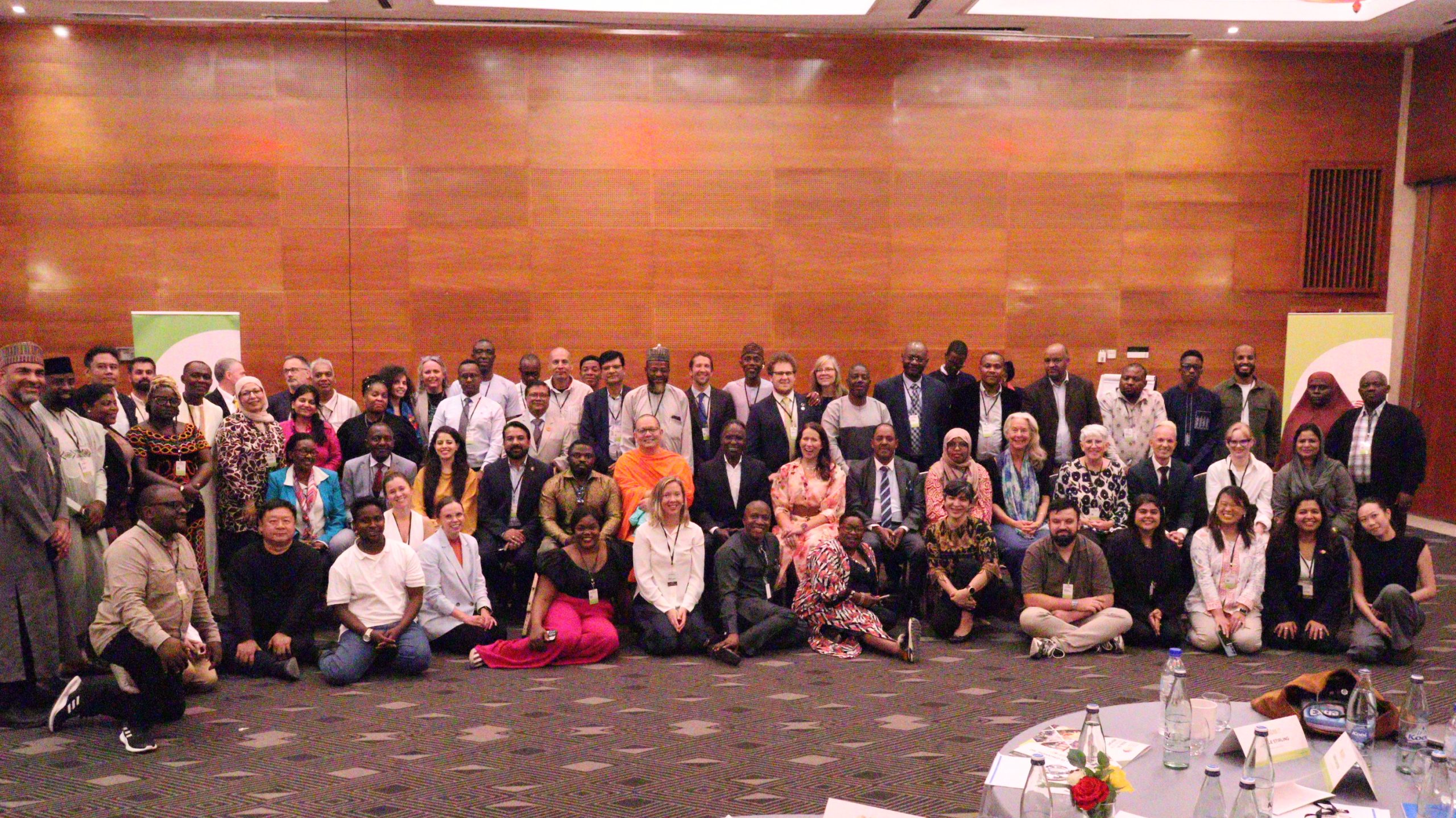
Network Members, Secretariat, partners and sponsors gather in Addis Ababa, Ethiopia for the 16th Advisory Group Meeting.
2026 is a significant year for the Peacemakers Network’s (Network) Advisory Group Meeting (AGM). Held in Africa for the first time, with 34% of members headquartered in the region, the meeting convened over 75 Network members and supporters representing faith-based organizations, multilateral and intergovernmental organizations. From September 2-4, members and partners gathered in Addis Ababa, Ethiopia to: develop analyses on challenges and the status of peace in the world and provide concrete examples on why investing in peace matters; launch the Network’s 2026-2030 Strategy and determine how the Strategy can respond to those challenges; operationalize the Strategy and reflect on our contributions to advancing the role of religious and traditional actors within peacebuilding and peace mediation; engage in peer learning on emerging topics among members and partners; and discuss our collaboration going into 2027.
Since its inception in 2013, the Peacemakers Network’s AGM has served as an opportunity for members to gather for reflection, learning and networking to uplift the imperative role of religious and traditional actors in addressing some of our most pressing global challenges. The Peacemakers Network gratefully acknowledges the long-standing support of Finn Church Aid, the Government of Finland, and the Government of the Sultanate of Oman, whose partnership has been instrumental in strengthening the Network and its global peacebuilding initiatives. This year’s event was hosted through the generous support of the Stirling Foundation, The Church of Jesus Christ of Latter-day Saints, the Fetzer Institute, the KAICIID Dialogue Centre, the African Union, Finn Church Aid Ethiopia, and the Abu Dhabi Forum for Peace, where their contribution helped to continue a platform for dialogue, collaboration, and collective action among religious and traditional peacemakers from around the world.
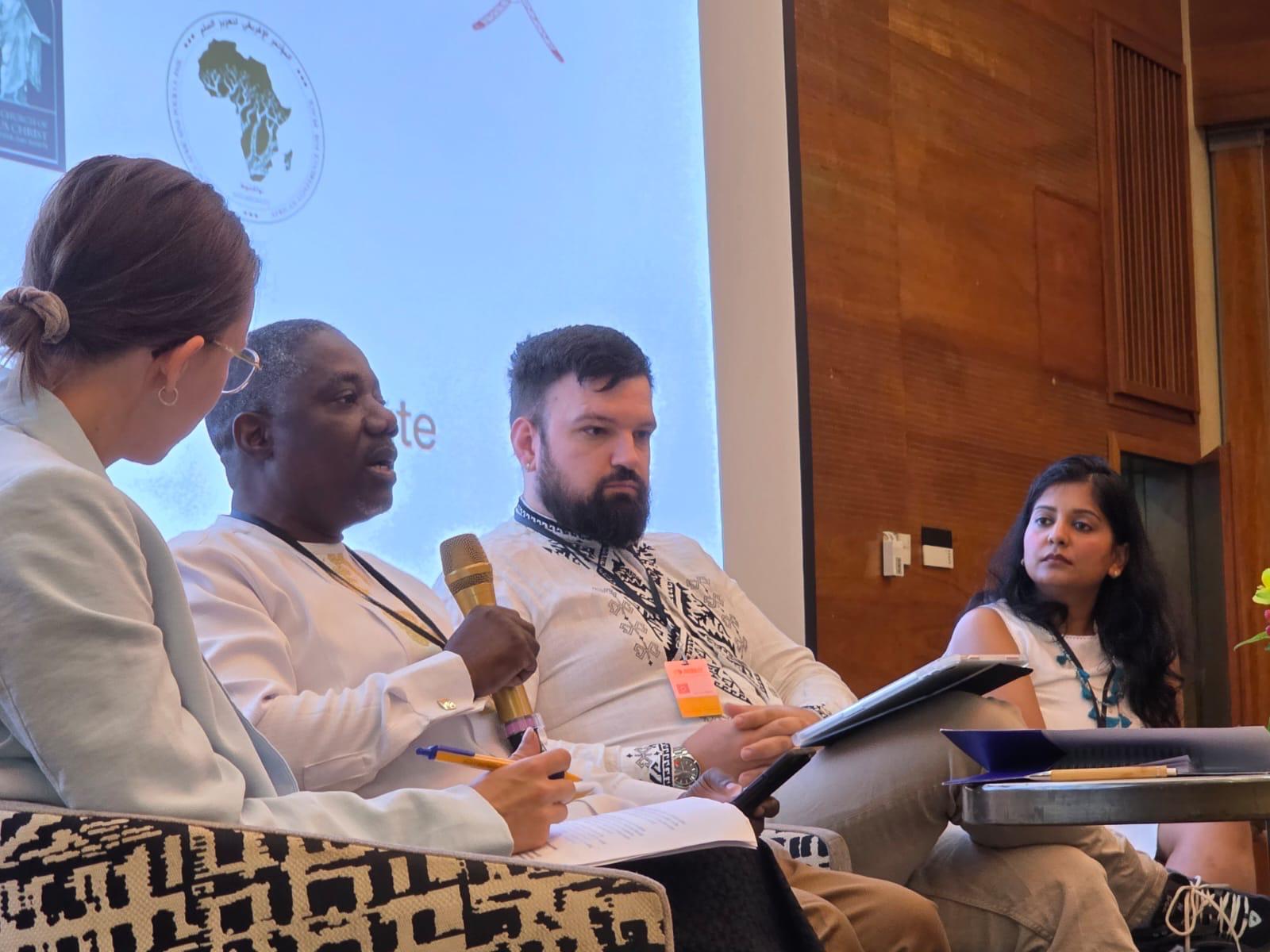
Panel on ‘The State of Peace Across the World: Global Disruptions, Regional Realities, and the Role of Religious and Traditional Peacemakers’. Left to Right: Paula Tarvainen (Moderator, Lead Advisor on Peace, Finn Church Aid/Peacemakers Network), Ernest Nya Dolo (The Citizens and Diaspora Directorate (CIDO), AU), Dmytro Fedorchak (Facilitator and Researcher, Dialogue in Action), and Saumya Aggarwal (CEO and Co-founder, Youth for Peace International).
“Before conflict begins, religious and traditional leaders are there. During conflict, religious and traditional leaders are there. After conflict, they are there in peacebuilding processes,” stated Nya Dolo. The panel emphasized the role that religious and traditional leaders play, that they are not simply local partners to be consulted once a conflict has erupted; their proximity, legitimacy, continuity and understanding of community dynamics position them as critical actors across the entire conflict cycle. Context matters, and inclusion must move beyond discussions, as stated by Aggarwal, “We have seen that there is representation of young people and women in different processes, but unfortunately, the engagement is limited to consultation. People have them as part of consultations, but what after it?” and “We have to start with accountability that leads to trust,” added Fedorchak.
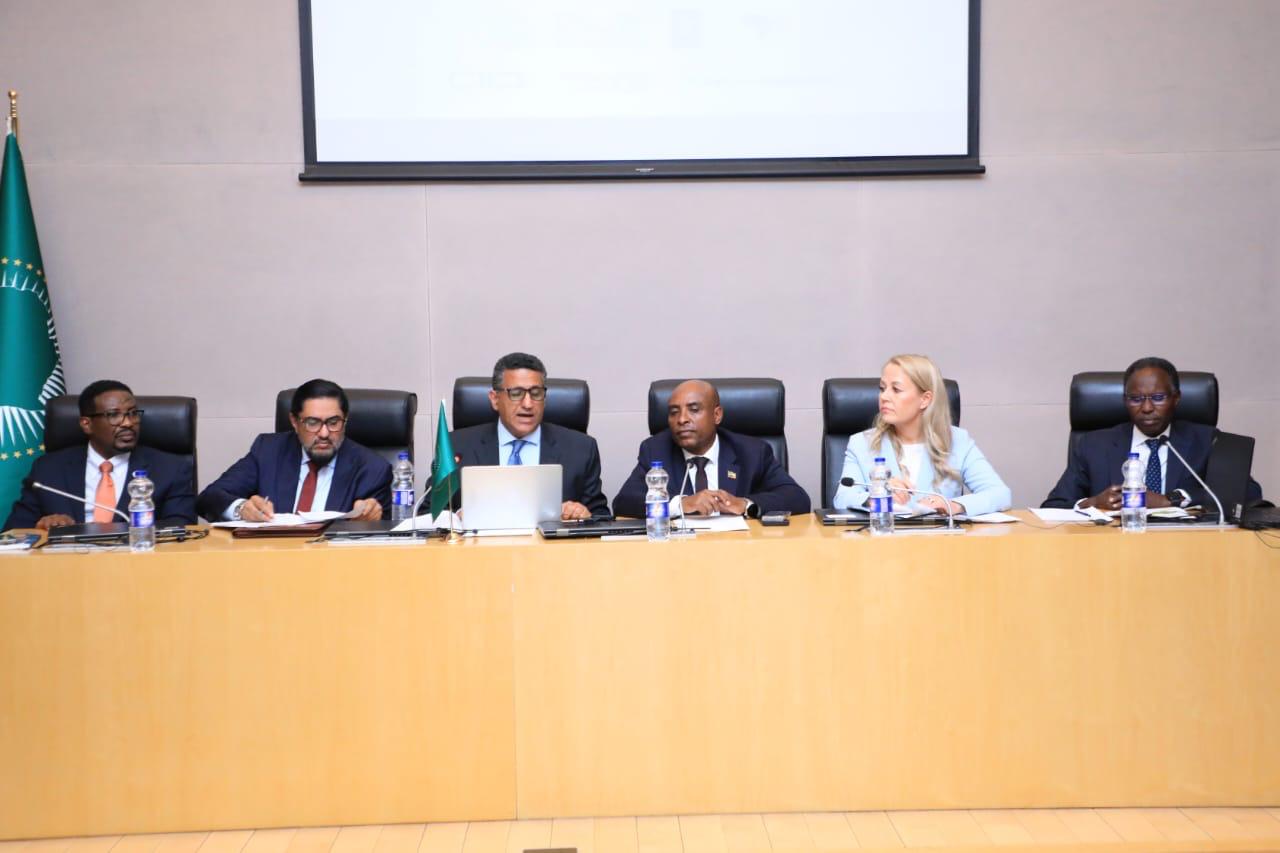
Panel on ‘The State of Peace and the Moral Imperative for Action.’ Left to Right: Kesis Tagai Tadele (Secretary-General, Inter-Religious Council of Ethiopia), H.E. Cheikhna Almahfoudh Bin Bayyah (Abu Dhabi Forum for Peace), H.E. Ambassafor Amr Aljowaily (Director, Citizens and Diaspora Organizations Directorate, African Union Commission), H.E. Dr. Keyredin Tezera (State Minister, Ministry of Peace, Federal Democratic Republic of Ethiopia), Pirjo-Liisa Heikkilä (Deputy Head of Mission and Deputy Permanent Representative to the African Union, Embassy of Finland), and Dr. Mohamed Elsanousi (Moderator, Executive Director, Peacemakers Network).
The afternoon session was held at and hosted by the African Union where high-level speakers reflected on why peace should be treated as a shared public good, how continental and community-level efforts can reinforce one another, what is needed to move from crisis response towards sustained prevention, and expressed their support and spoke candidly to the urgent realities facing peace mediation and security today. High-level recognition alongside grassroots intervention in advancing the role of religious and traditional peacemakers is a vital asset of peace and dialogue.
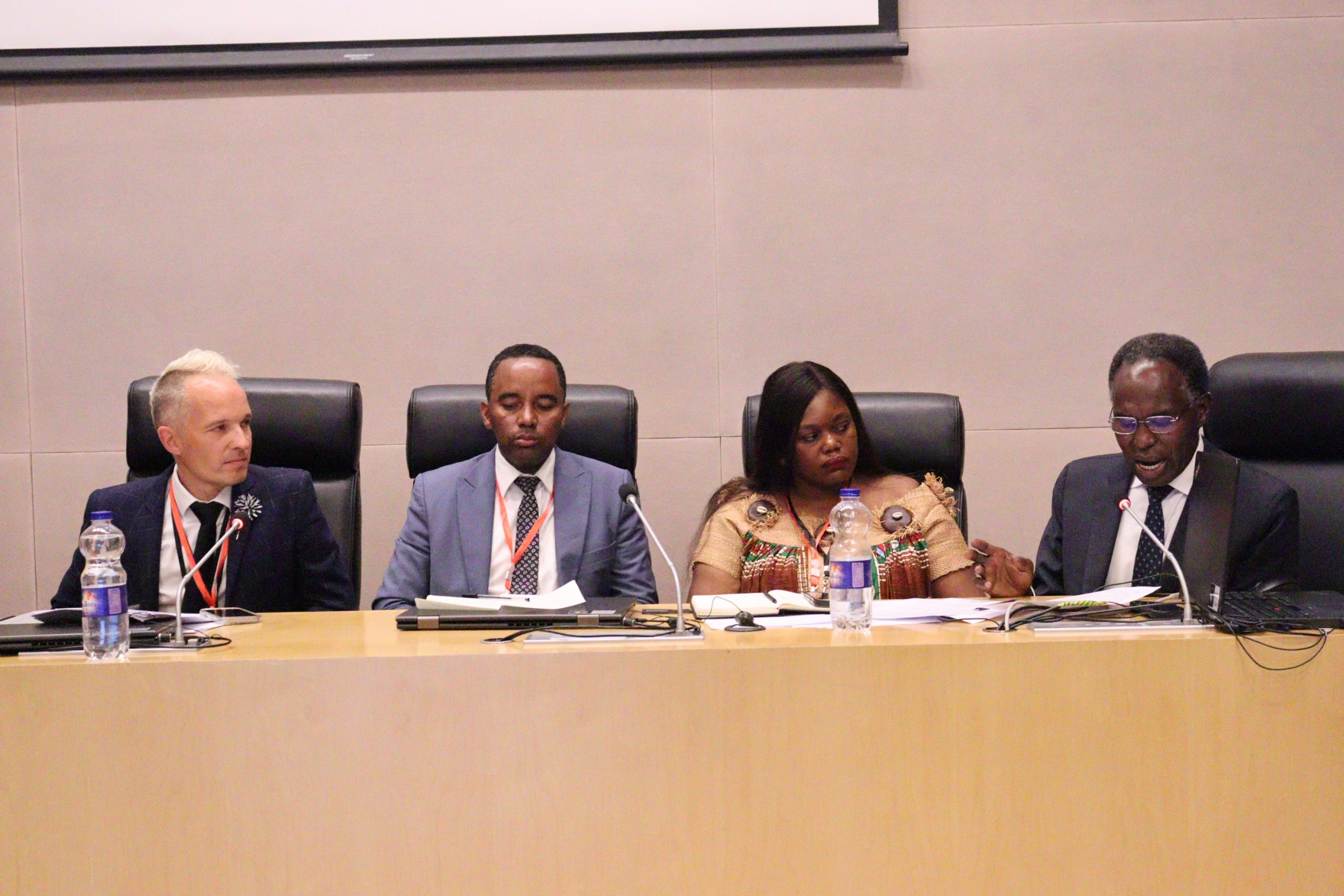
Panel on ‘Peace as a Global Public Good: Why Investing in Peace Matters Today.’ Left to Right: Dr. Ikali Karvinen (Deputy Executive Director, Finn Church Aid), President Kefeni Tesfaye (Church of Jesus Christ of Latter-Day Saints), Caryn Dasah (Hope Advocates Africa, Cameroon), and Dr. Mohamed Elsanousi (Moderator, Executive Director, Peacemakers Network).
“Peace cannot be sustained if the people who hold trust, legitimacy, and influence within communities are excluded from shaping [it],” stated Dr. Mohamed Elsanousi (Executive Director, The Peacemakers Network), who moderated the panel session. “Our members are the ones on the ground. They carry the relationships, the local knowledge, and the moral authority that no institution can substitute.”
“Peace, like other public goods, like other global public goods, is underprovided when it is left to be produced by a single actor alone,” said Ambassador Amr Aljowaily, and follows with “It is strengthened when institutions create spaces for the actors who sustain it on the ground – religious and traditional leaders among them.” His statement provides a compelling rationale for partnership; peace isn’t something that governments, the UN, regional organizations or communities can produce independently, but rather that institutions need to create space for the people already sustaining peace locally.
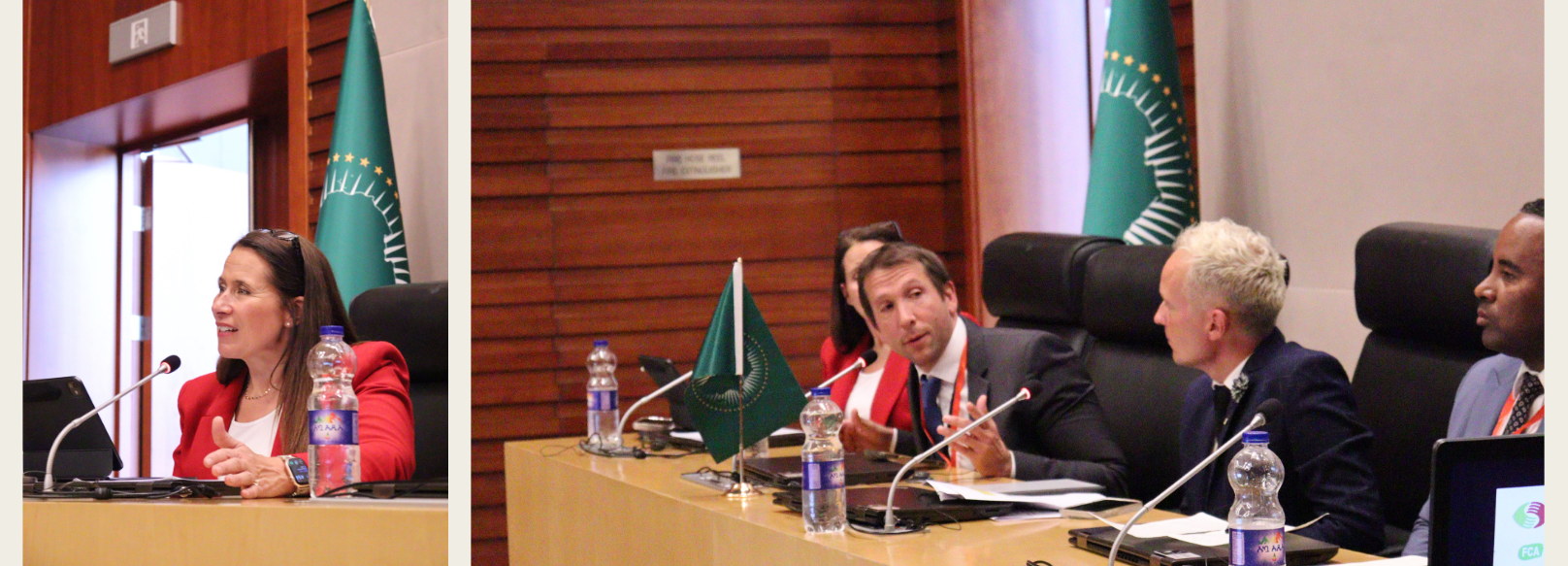
Panel on ‘Peace as a Global Public Good: Why Investing in Peace Matters Today.’ Left to Right: Nicole Stirling (Vice President and Chief Relations Officer, The Stirling Foundation) and Agustin Nunez-Vicandi (Africa Senior Programme Manager, KAICIID).
A peace process isn’t genuinely locally owned simply because it happens within a country. People embedded in affected communities need to have meaningful influence. Deputy Ambassador Heikkilä emphasized, “We have seen how trusted local leaders can create spaces for dialogue to open when formal processes stall. They can uphold the values of dialogue, human dignity, and peaceful coexistence, and it requires meaningful participation of actors who are already there.”
Perhaps the strongest overarching message in this session was that the international community shouldn’t continually ask whether local religious and traditional actors have a role; they already have one. The task is now to build the partnerships, resources, and institutional pathways that allow that contribution to have greater impact, as expressed by Network member Caryn Dasah (Hope Advocates Africa, Cameroon).
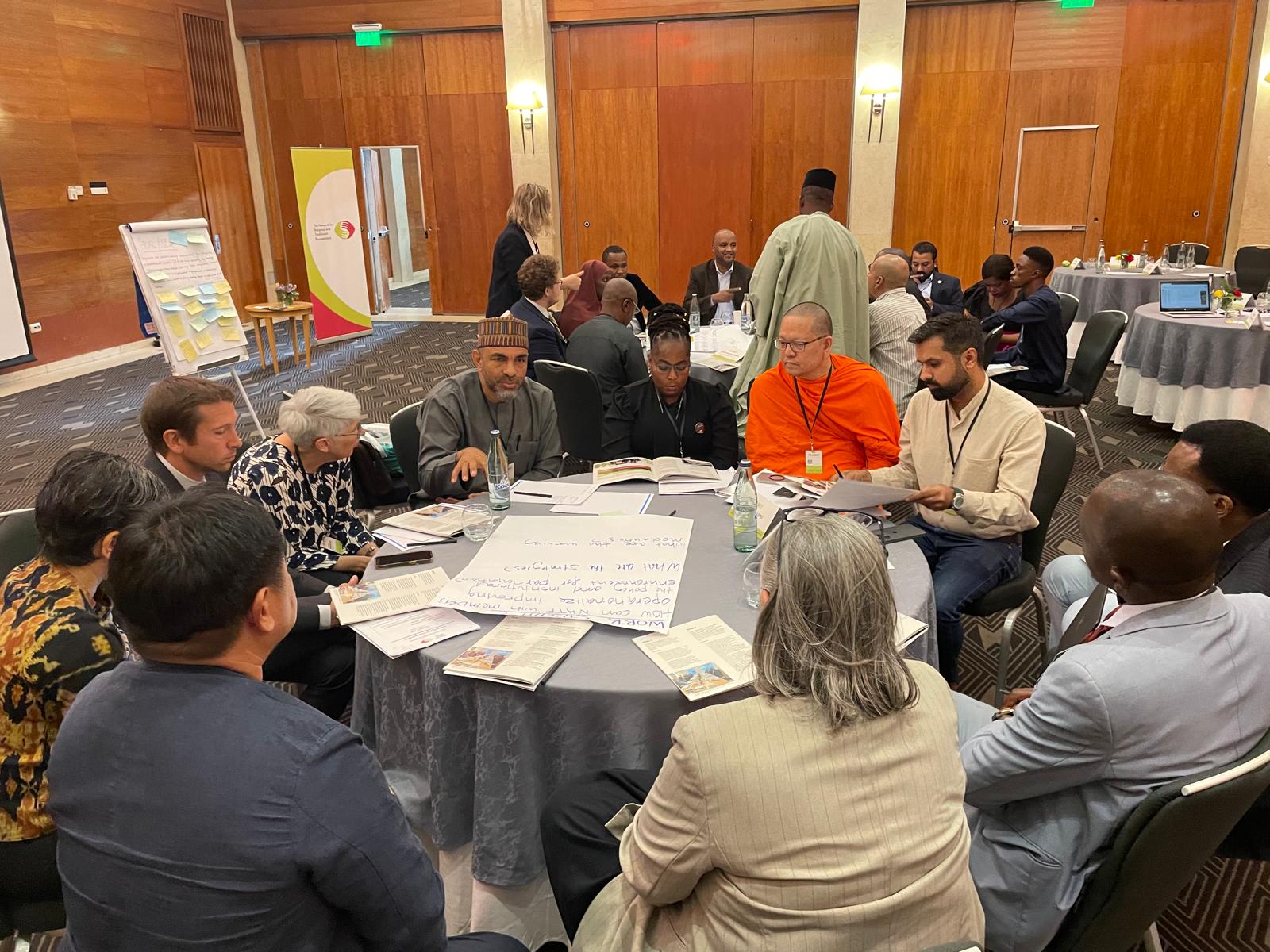
Co-designing the roadmap. Members participated in groups to discuss operationalizing thematic focuses, the whole of society and proces inclusion, collaboration and ecosystems.
Participants engaged in several learning labs and knowledge exchange during the second day, where they worked together on co-designing a roadmap to operationalize thematic focuses stated in the new 2026-2030 Strategy, and discussed member collaboration moving forward. The learning labs provided a space to expand on: the new research report on The Roles of Tradition and Faith-Oriented Insider Mediators in Africa; how religious and traditional peacemakers can protect dialogue in the digital age; building resilience through local ecological knowledge with the climate-peace nexus; and develop strategies for persons with disabilities in peacebuilding.
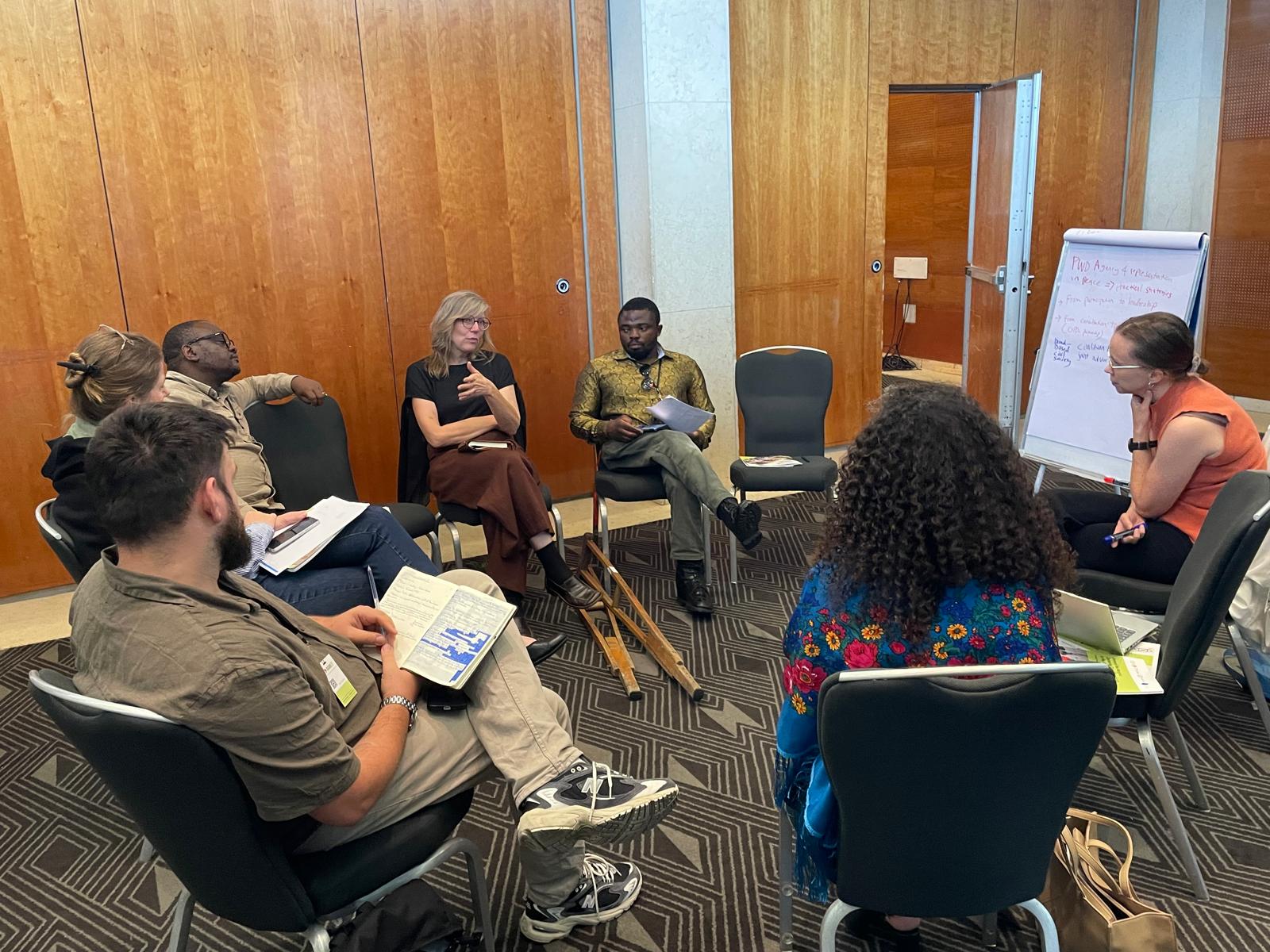
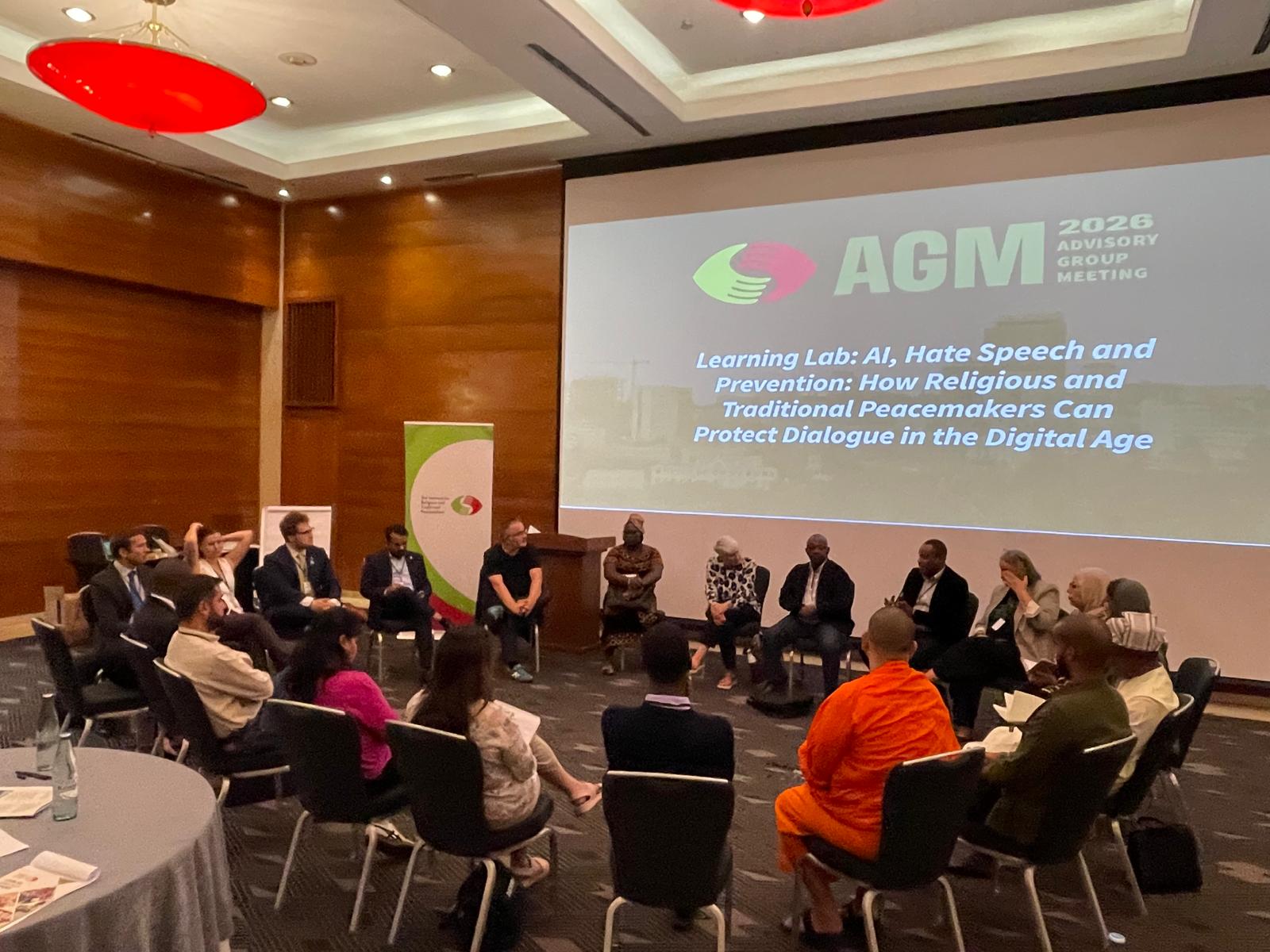
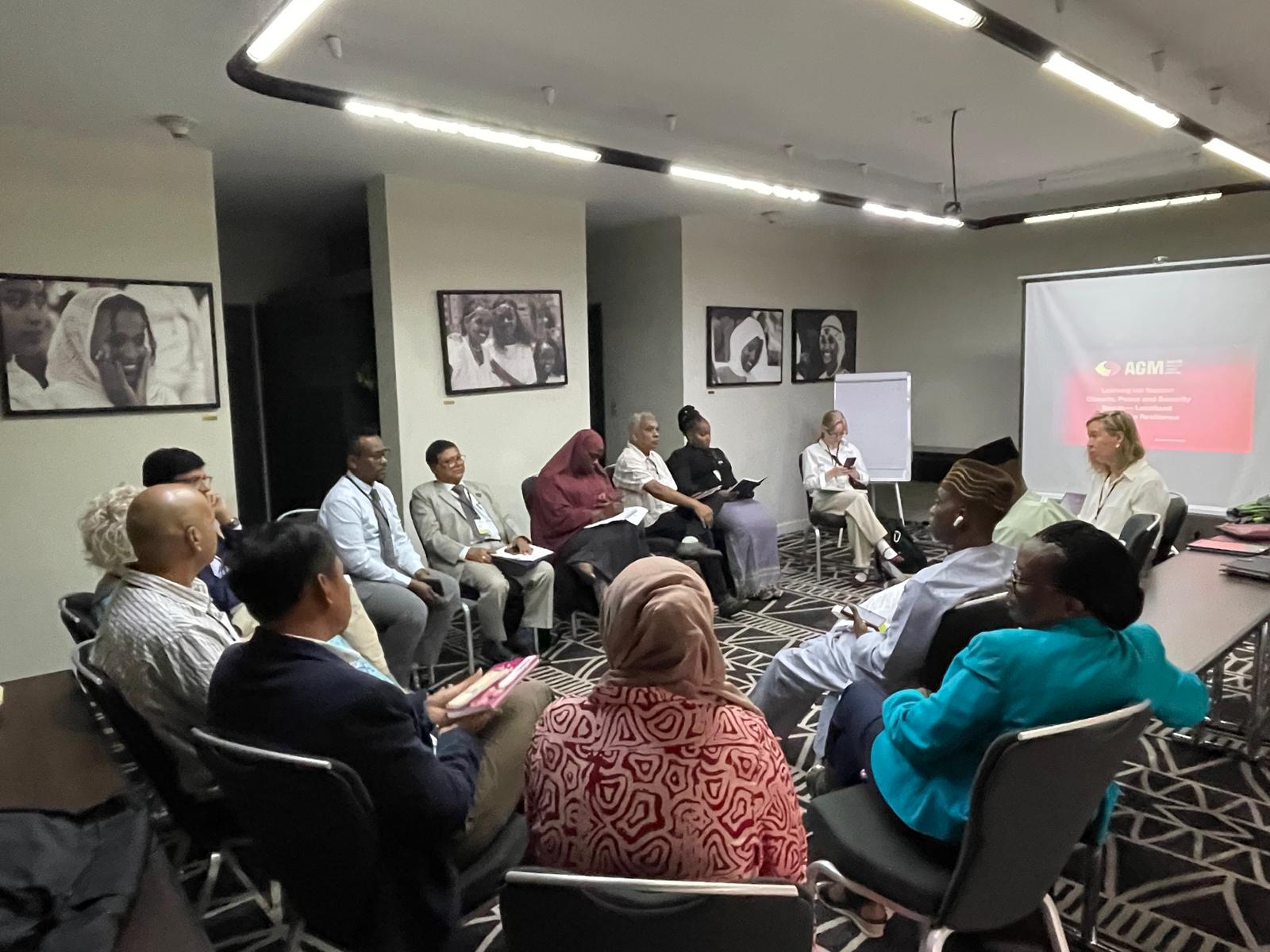
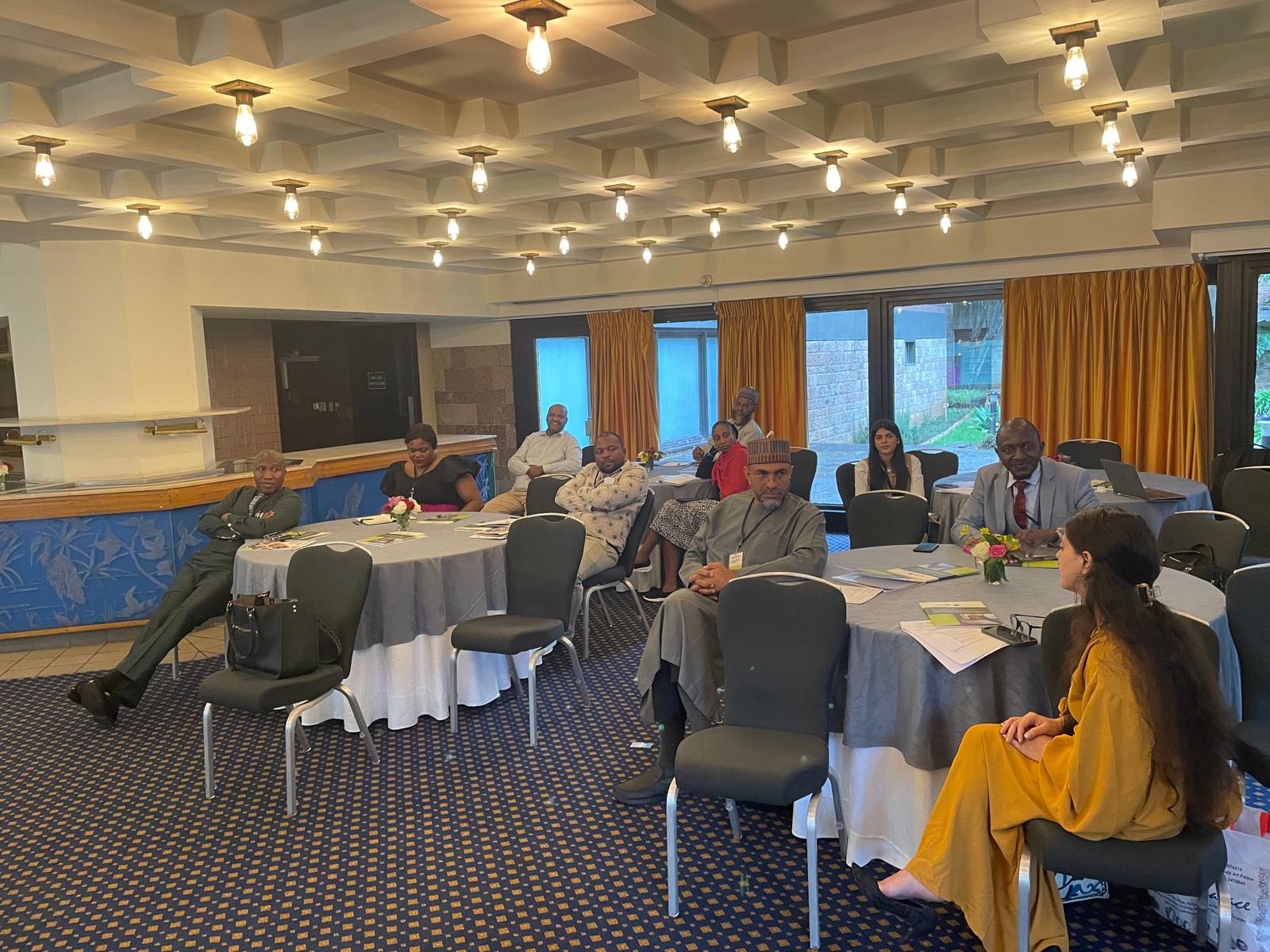
Learning Labs. Left to Right: ‘Accessible Peace: Strategies for PWD Agency and Representation’; ‘AI, Hate Speech and Prevention: How Religious and Traditional Peacemakers Can Protect Dialogue in the Digital Age’; ‘The Climate-Peace Nexus: Building Resilience Through Local Ecological Knowledge’; and ‘Traditional and Faith-Oriented Insider Mediators: From Research to Action.’
•••
Follow the Network on social!