
70th UN Commission on the Status of Women: Faiths in Multi-Stakeholder Partnerships
March 2025
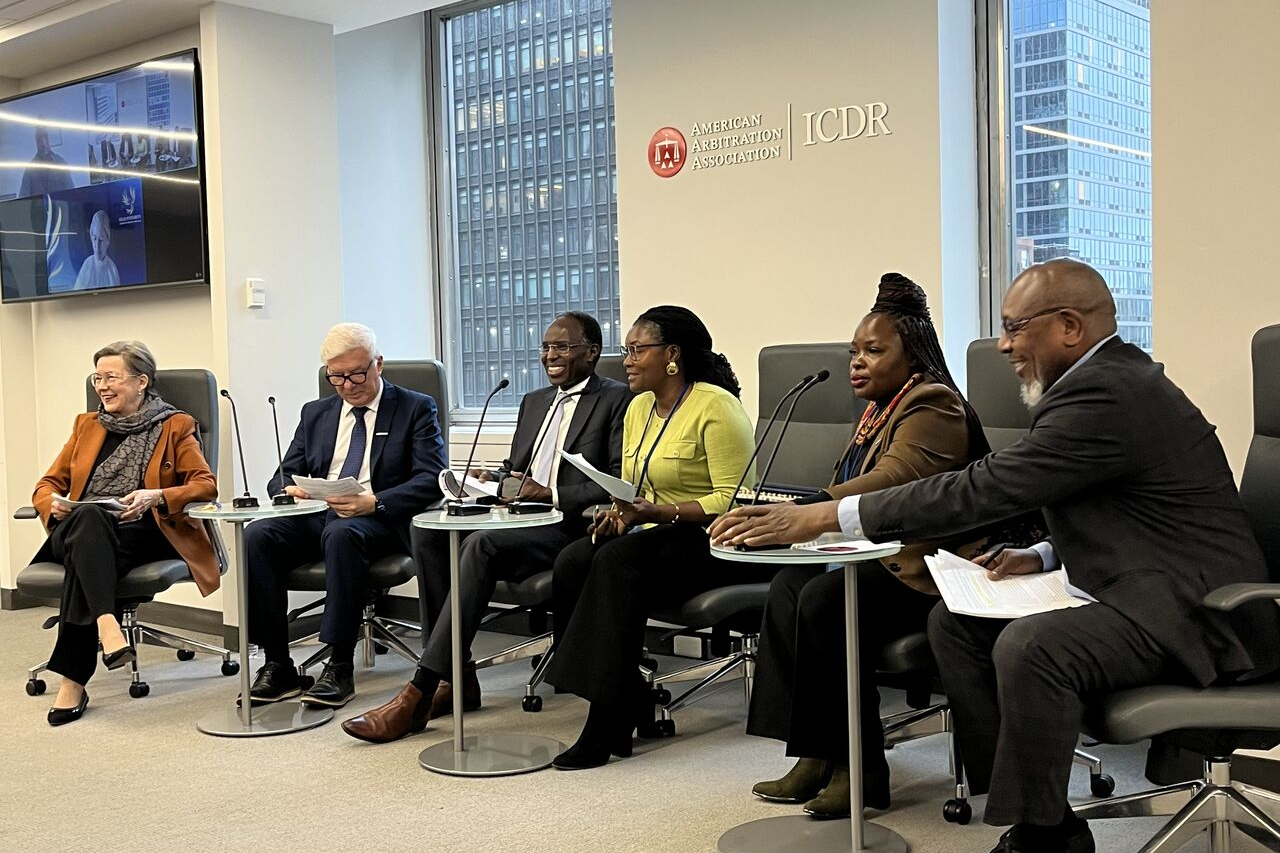
Panel Photo from the Faiths in Multi-Stakeholder Partnerships CSW Event.
As part of the 70th UN Commission on the Status of Women (CSW70), a hybrid side event titled “Faiths in Multi-Stakeholder Partnerships: The Tipping Point in Women’s and Girls’ Access to Justice in Armed Conflict” convened over 80 in-person participants and approximately 40 online attendees on 12 March, 2026. The event brought together faith actors, policymakers, UN representatives, civil society organizations, and practitioners to examine how partnerships across sectors can strengthen access to justice for women and girls in conflict and atrocity settings. In case you missed the event, you can find the recording here.
The discussion was grounded in the recognition that armed conflict has reached historic levels globally, with devastating and disproportionate impacts on women and girls, including exposure to violence, displacement, and systemic barriers to justice. Against this backdrop, the event explored how faith-based and secular actors can work collaboratively to address gaps in justice systems and support survivors in meaningful and contextually relevant ways. High-level remarks were provided by Special Adviser on the Prevention of Genocide, Chaloka Beyani, and by State Secretary to the Minister of Social Security in Finland, Ms. Laura Rissanen.
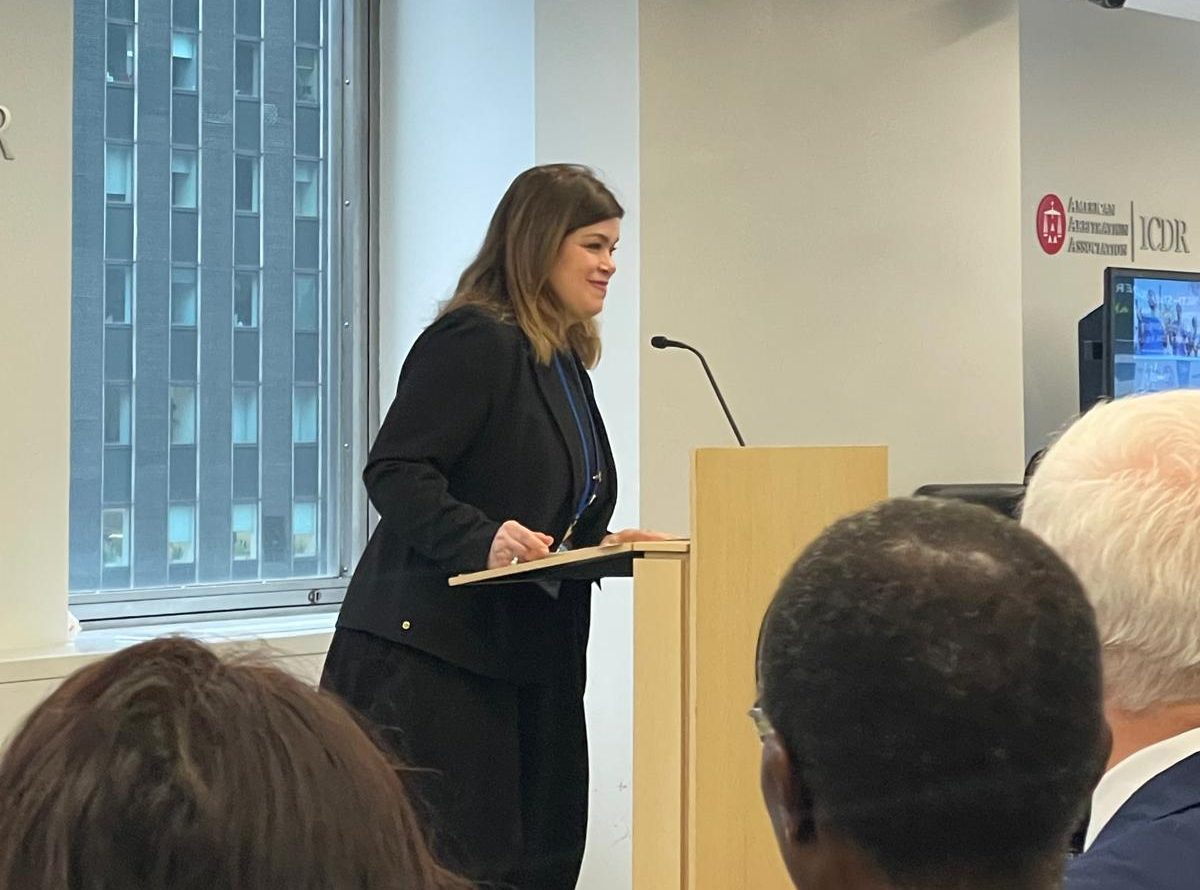
High-level opening remarks given by State Secretary to the Minister of Social Security in Finland, Ms. Laura Rissanen.
A video presentation featuring voices of faith actors working in conflict-affected contexts was screened ahead of the roundtable discussion, setting the stage for reflections on lived realities and community-based responses.
Key Reflections from the Dialogue
At the top of the discussion, Ambassador Elina Kalkku, Permanent Representative to the Mission of Finland to the United Nations, emphasized that in many conflict-affected contexts, formal justice systems are either absent, inaccessible, or not trusted. Mr. Rudelmar Bueno de Faria, ACT Alliance General Secretary, furthered this point in stating that justice is often mediated through relationships, social norms, and community structures, where religious leaders play a central role. However, participants also acknowledged that religious institutions are not inherently neutral and have, at times, reinforced harmful norms or silenced survivors. This underscores the importance of critically examining which religious voices are amplified, particularly elevating those that are inclusive, rights-affirming, and representative of marginalized communities.
Speakers highlighted that justice must extend beyond legal accountability to include cultural and societal transformation. Faith actors, when engaged responsibly, can contribute to reshaping norms, addressing stigma, and fostering dignity-centered approaches to justice.
The discussion also underscored the scale and invisibility of many conflicts, particularly in Indigenous territories. Ms. Binalakshmi Nepram of the Global Alliance of Indigenous Peoples, noted that a significant proportion of global conflicts remain underreported, with Indigenous communities disproportionately affected and often excluded from decision-making spaces. Her intervention reinforced the imperative of meaningful inclusion, warning that exclusion from decision-making processes results in communities being directly impacted without agency.
A recurring theme across interventions was the need to shift from dialogue to action. Dr. Christine Schliesser of Lead Integrity called for moving from “think tanks” to “do tanks,” emphasizing practical, action-oriented collaboration among multi-faith and multi-stakeholder actors.
The Role of Partnerships in Practice
Concrete examples highlighted how partnerships across sectors can address gaps in humanitarian and justice responses. In Uganda, Mrs. Lilian Musoki of Finn Church Aid, described how faith-based institutions are often on the frontlines of responding to displacement, particularly as women and children make up the majority of refugees arriving on foot. Despite their central role, these institutions frequently face resource and funding constraints, requiring partnerships with private sector actors and broader humanitarian systems to sustain their work.
Similarly, speakers emphasized that faith-based organizations are deeply embedded within communities and often serve as first responders and trusted intermediaries. Dr. Mohamed Elsanousi, Executive Director of the Peacemakers Network, highlighted that in some contexts, such as parts of Nigeria, the majority of cases are brought to religious leaders rather than formal courts. While this reflects trust and accessibility, it also raises challenges around documentation, accountability, and resourcing.
At the same time, examples were shared of the protective role of religious authority, including instances where faith leaders have intervened directly to prevent violence and protect vulnerable populations. These examples reinforced the importance of recognizing faith actors not only as service providers, but as key agents of prevention, mediation, and protection.
Gendered Dimensions of Justice and Recovery
Speakers consistently underscored the disproportionate burden placed on women and girls in conflict settings. Rev. Mark E. Fowler highlighted how gender inequalities are deeply embedded across the life cycle, shaping women’s vulnerability in times of crisis. In conflict and post-conflict settings, women are often expected to rebuild communities and restore social cohesion, despite being among those most affected by violence and displacement.
This reinforces the need for justice approaches that are survivor-centered, gender-responsive, and grounded in dignity, recognizing women not only as victims but as leaders and agents of recovery and peacebuilding.
Insights from the Interactive Dialogue
The discussion also surfaced important tensions around resourcing and sustainability. While some participants emphasized the importance of starting with existing resources to build credibility and momentum, others cautioned that many organizations lack even the minimum financial capacity to operate effectively without upfront support.
There was strong consensus that multi-stakeholder partnerships—including governments, UN actors, civil society, and the private sector—are essential to ensure that faith-based and community actors can sustain their work and scale their impact. External funding, flexible support mechanisms, and recognition of local expertise were identified as critical enablers.
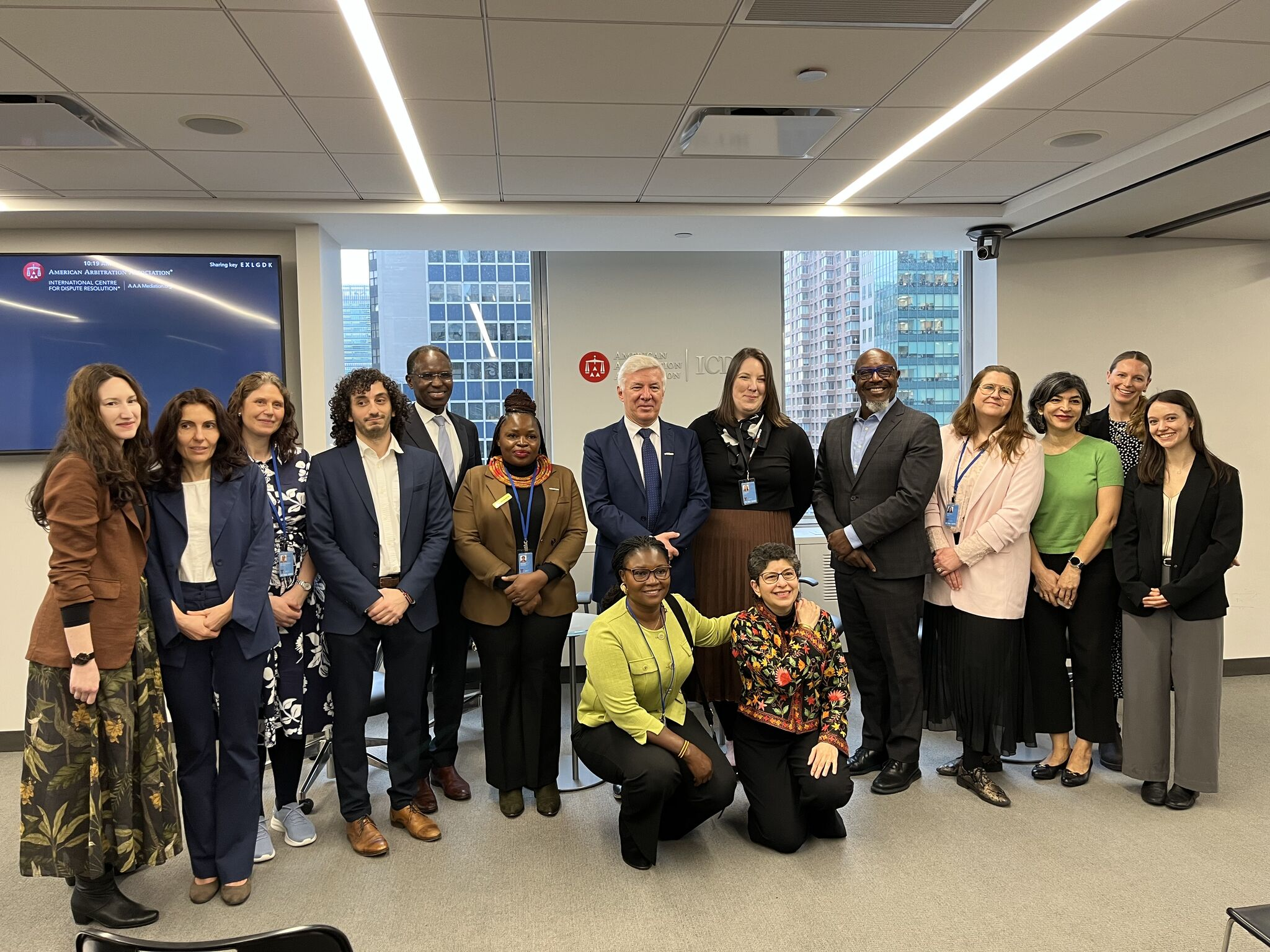
Group Photo of the Speakers and Organizers of the Faith in Multistakeholder Partnerships Event.
The event reaffirmed that faith-based and multi-stakeholder partnerships are not peripheral, but central to advancing access to justice in conflict and atrocity settings. While faith actors hold significant reach, legitimacy, and influence, their impact depends on inclusive engagement, adequate resourcing, and alignment with gender-responsive and rights-affirming approaches.
By bringing together diverse actors across sectors, the dialogue highlighted the potential for partnerships to serve as a tipping point—shifting fragmented responses toward more coordinated, inclusive, and effective systems of justice that center the dignity, agency, and lived realities of women and girls.
Follow the Peacemakers Network on social