Bangladesh Protibandhi Kallyan Somity – Promotion of Peacebuilders Advocates with Disabilities in Grassroots
The Promotion of Peacebuilders Advocates with Disabilities in Grassroots (PADG) project, implemented by Bangladesh Protibandhi Kallyan Somity (BPKS), equipped young Persons with Disabilities (PWDs)–with a focus on Women with Disabilities (WwDs)–to serve as community peacebuilders and mediators across Banglades. Over August-October 2025, BPKS trained 42 Peacebuilder Advocates with Disabilities (PADs), formed eight divisional Peacebuilding Advocacy Teams (PATs), and established digital channels to sustain collaboration and outreach.
Key Achievements
- 42 PADs trained, (47% women with disabilities; ~80% from grassroots/ marginalized backgrounds)
- Seven-day residential course (Sept 13–19, 2025, BPKS Complex): 22 sessions led by 19 experts
- 8 divisional PATs formed (7 members each = 56 total, including 16 OPD representatives)
- Digital networking: Facebook group (“Peacebuilder Advocates with Disabilities (PADs)”) and 8 divisional WhatsApp groups with monthly meetings
- Enhancement in participants’ knowledge and skills in peacebuilding, advocacy, and conflict mediation
- Declaration adopted by trainees; certificates issued
Project Activities and Objectives
PWDs in Bangaldesh face stigma, exclusion, and limited representation in peace/development decision-making. To address the lack of representation and participation of PwDs in peace and development efforts in Bangladesh, the project’s key objective was to develop a nationwide, grassroots network of trained and empowered PwD – especially women – who lead local peace dialogues, conflict mediation, and inclusion advocacy.
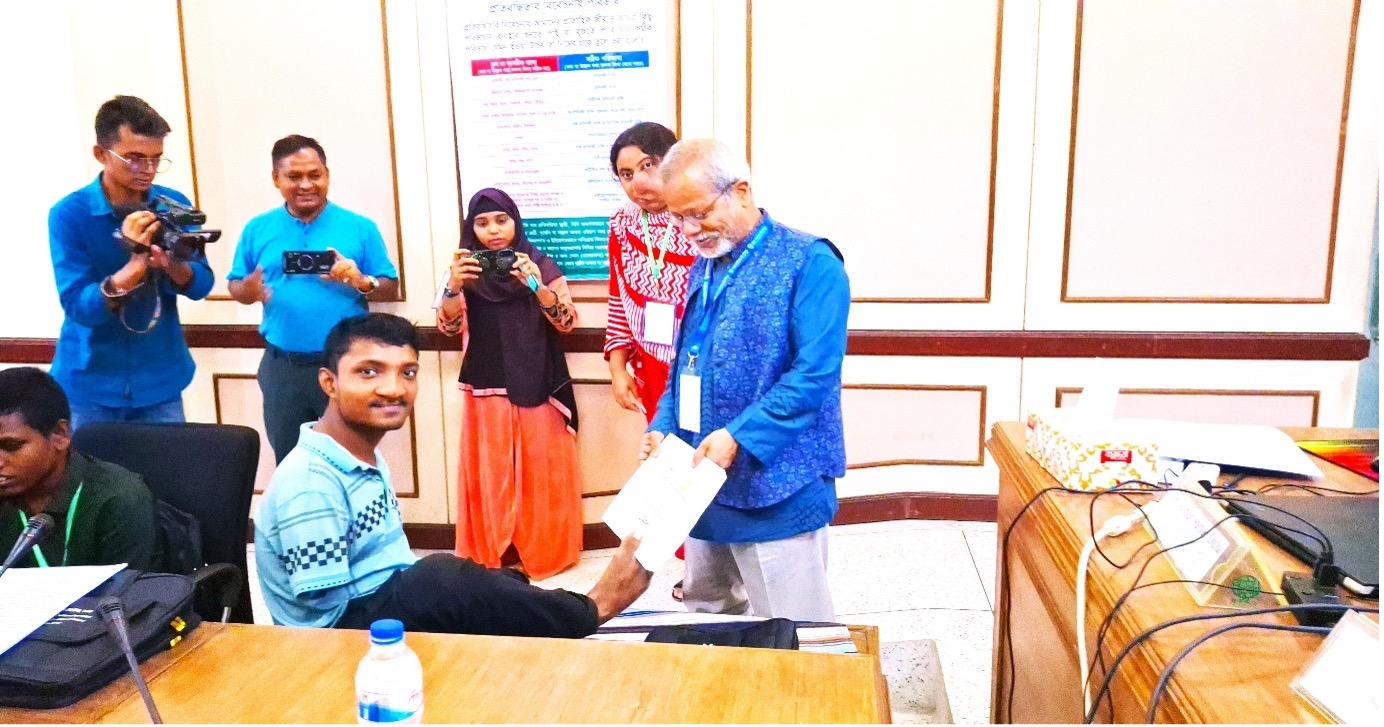
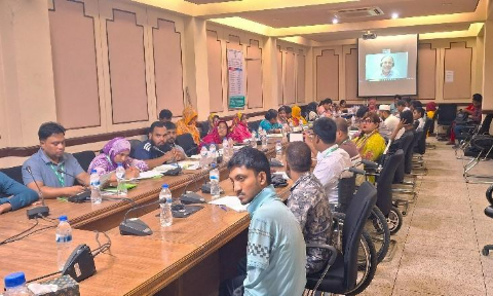
BPKS identified and trained 42 Peacebuilder Advocates with Disabilities (PADs) from across Bangladesh’s eight administrative divisions. A comprehensive seven-day residential training program was conducted, featuring 22 sessions by 19 subject matter experts. The training was designed to strengthen participants’ leadership capacity, knowledge, skills, and confidence in areas such as leadership, advocacy, conflict mediation, and peacebuilding.
Outcomes and Early Results
Through the PADG initiative, eight divisional Peacebuilding Advocacy Teams (PATs) were formed, each comprising seven members (five PADs and two representatives from grassroots Organizations of Persons with Disabilities). These teams were coached and supported to engage in local peace processes, advocacy, and community outreach. A Facebook group and WhatsApp groups were also established to facilitate ongoing communication, collaboration, and knowledge-sharing among the PADs.
- Human capital: PADs report stronger knowledge and confidence in leadership, peacebuilding, mediation, and advocacy; improved understanding of UNCRPD, UDHR, SDGs, disability terminology, and OPD functions.
- Structures for scale: 8 PATs operational by November 2025, with regular WhatsApp coordination and monthly meetings.
- Systems links: Strengthened ties with OPDs, civil society, universities, media, and government (incl. Ministry of Social Welfare); participation of government representatives in activities.
- Advocacy readiness: Adoption of a shared Declaration clarifying roles, responsibilities, and action priorities for peace and inclusion at local level
Impact, Sustainability, and Next Steps
- Continuity: PATs continue with OPD facilitation and BPKS coaching/monitoring beyond the grant period.
- Institutionalization: PAD model to be integrated into BPKS’s PSID program and replicated in future initiatives.
- Network effects: PATs align local action with national/regional peace frameworks and link to global learning networks.
- Digital backbone: Facebook and WhatsApp groups sustain knowledge-sharing, rapid coordination, and reporting.
The PADG project has pioneered an innovative model for empowering PwDs as agents of change in Bangladesh’s peace and development processes. By bridging the gap between grassroots advocacy and institutional policymaking, the initiative has demonstrated the transformative potential of inclusive leadership. As the PATs continue their work, the project’s impact will continue to ripple through communities, fostering a more inclusive and equitable future.
BPKS invites partners to co-finance PAT coaching, refresher trainings, and localized peace initiatives, and to pilot the PAD model with government service providers. Targeted investments will consolidate gains, extend to new districts, and embed disability-inclusive peacebuilding within local systems.
Follow the Peacemakers Network on social