Organization for the Women and Disable Care (OWDC): Strengthening Inclusive Peacebuilding through Local Leadership in Multan, Pakistan
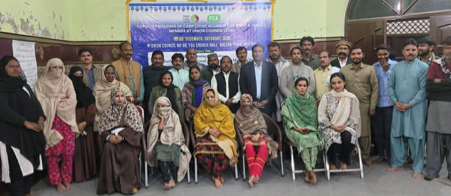
From July – December 2025, the Organization for the Women and Disable Care (OWDC) launched a district-wide effort to bring underrepresented groups into local peace processes across five Union Councils in Multan. The project supported the direct capacity building of 400 grassroots peace actors in inclusive, rights-based, conflict‑sensitive and trauma‑informed practice; strengthened two burgeoning coordination platforms—the Multan Alliance for Inclusive Peace & Rights (MAIPR) and Union Council–level Civic Alliances for Rights & Peace (CARP); and initiated community‑led Social Action Projects (SAPs). In total, 542 people participated across project activities. These steps created practical entry points for women and young women of faith, persons with disabilities, religious minorities, and LGBTQI+ community members to participate safely and meaningfully in dialogue, mediation, and local decision-making.
Key Achievements
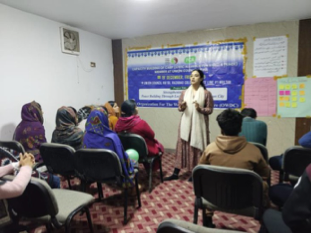
- 400 community peace actors trained (women, youth, PWDs, faith/minority leaders, CSOs) in inclusive dialogue, conflict sensitivity, Do No Harm, rights-based advocacy, and trauma‑informed practice from September – December.
- MAIPR formed at district level (25 members) with clear roles and meeting cadence; CARP structures initiated at Union Council level for ongoing coordination.
- Tools and guidance produced: practical frameworks, facilitation guides, and quick references to support inclusive participation and decision-making.
- Community‑led Social Action Projects launched to address local tensions through dialogue, mediation, and civic engagement.
-
Structure, Activities, and Approach
The project opened with community mapping, outreach, and a brief orientation to set norms of confidentiality and voluntary participation, followed by the formation of MAIPR (25 members: women leaders, youth, PWDs, religious minorities, CSOs). OWDC ran needs‑based trainings in each Union Council using participatory methods and accessible materials, Parallel to training, OWDC convened dialogue with faith leaders and local officials to ensure safe access and community acceptance, then supported MAIPR/CARP members to design and begin Social Action Projects (SAPs) addressing priority tensions. A targeted session on inclusive dialogue and civic engagement demonstrated a 60% average knowledge gain (pre/post). Safeguarding, confidentiality, and do‑no‑harm were standard in all sessions; scheduling and transport adjustments improved access.
Outcomes
- Inclusion: Underrepresented groups (women of faith, youth, PWDs, religious minorities, LGBTQI+) engaged in structured dialogue and action via MAIPR/CARP and SAPs.
- Capacity: Trained actors demonstrated improved knowledge and confidence to apply inclusive dialogue, mediation basics, conflict sensitivity, and rights‑based framing.
- Cohesion: Local actors reported reduced tensions and increased mutual respect in forums moderated by MAIPR/CARP members.
-
Institutionalization: MAIPR recognized as a district coordination platform; CARP units provide Union Council–level continuity and shared planning for peace initiatives.
-
Impact and Significance
- Closes a critical skills gap at the grassroots by pairing practical training with immediate application through SAPs.
- Creates standing, multi-stakeholder platforms (MAIPR/CARP) that embed inclusive practice beyond grant timelines.
- Aligns local work with global frameworks (Beijing Platform, UNCRPD, Yogyakarta Principles) and channels them into concrete, community‑owned actions.
-
Builds constructive links with local authorities and faith leaders, increasing legitimacy and safety for sensitive inclusion work.
-
Sustainability and Looking Ahead
- MAIPR/CARP will meet quarterly to coordinate SAPs, track issues, and engage authorities.
- Advanced trainings and mentorship will develop a local facilitator pool and deepen trauma‑informed practice.
- OWDC and partners will integrate tools and methods into ongoing CSO programming and expand to neighbouring townships in South Punjab.
- Policy engagement will focus on inclusion in local peace and social cohesion plans; OWDC will maintain DCSN linkages to scale learning.
Impact at a Glance
- Coverage: 5 Union Councils, District Multan.
- Participation: 542 direct participants engaged across activities; 400 trained in core modules.
- Platforms: 1 district alliance (MAIPR, 25 members) and Union Council–level CARP mechanisms initiated.
- Measured learning: 60% average knowledge gain in a sample training (pre/post).
- Outputs: Tailored training modules and tools; community‑led SAPs started; regular coordination with local authorities and faith leaders.
Follow the Peacemakers Network on social