
Strengthening Peace Mediation Ahead of Kenya’s 2027 Elections
October 2026
As Kenya prepares for the 2027 General Elections, peacebuilding actors are placing renewed attention on a simple but important question: how can trusted mediators, communities and institutions work together more effectively to prevent tensions from escalating?
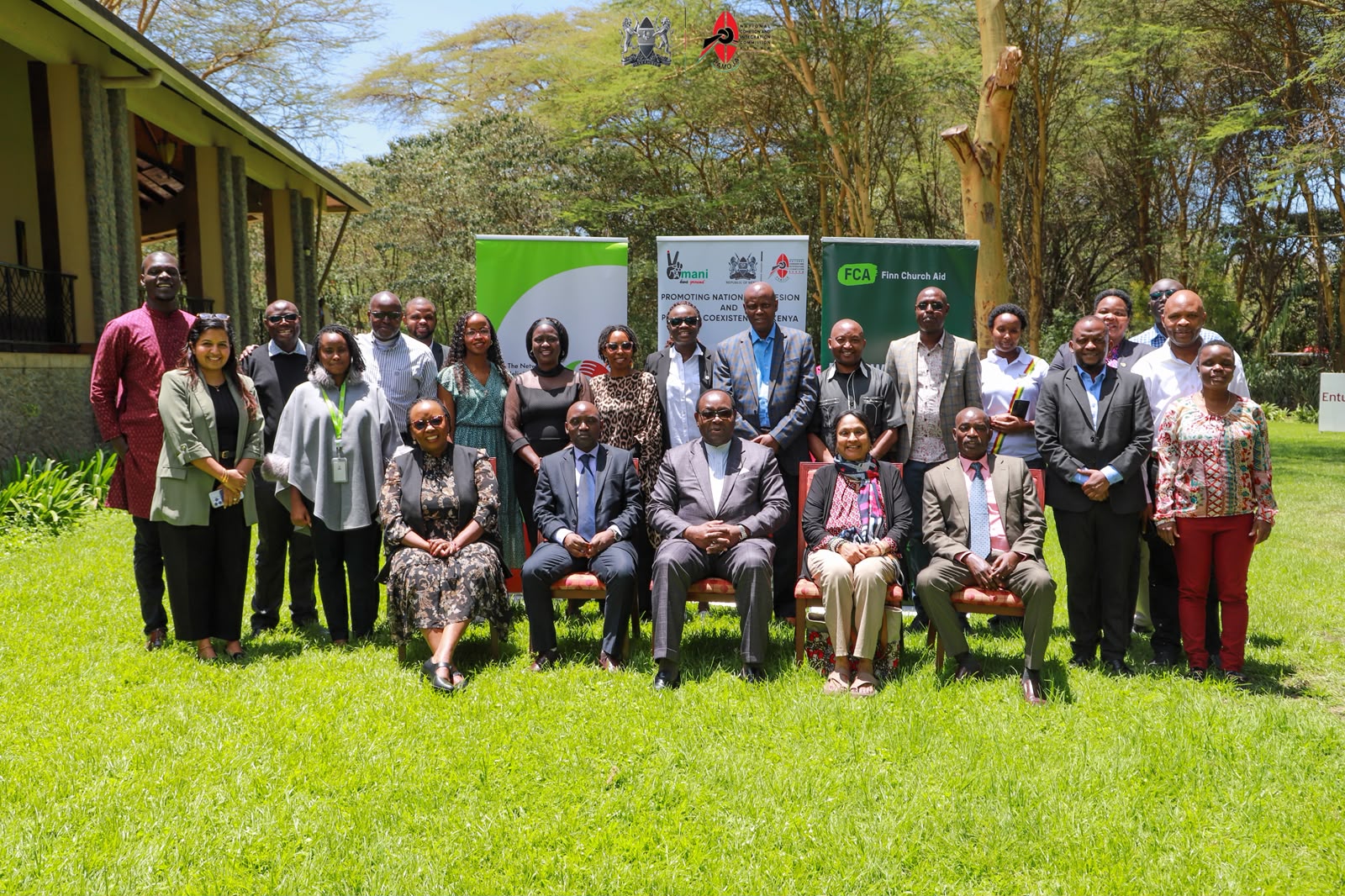
Religious leaders and peacebuilding practitioners gathered together for a meeting in Naivasha, bringing together key stakeholders to set up a TFIM panel for the Kenyan elections as part of the National Peace Mediation Team, coordinated by IRCK and supported by UNDP.
This question shaped the Kenya Tradition and Faith-Oriented Insider Mediators (TFIM) Election Mediation Panel Consultations, held on 14th–15th October 2026 in Naivasha. The two-day consultation brought together actors involved in peacebuilding and mediation to reflect on how existing structures can be better connected, how trusted mediators can be identified, and how early-warning information can support timely and appropriate responses.
The consultation was convened by the Network for Religious and Traditional Peacemakers (NRTP) and Finn Church Aid (FCA) in collaboration with the National Cohesion and Integration Commission (NCIC) and the Inter Religious Council of Kenya (IRCK). It followed earlier national peacebuilding engagements including the National Stakeholders Conference on Peaceful 2027 Elections and the Africa TFIM research dissemination event held in Nairobi on 12th October 2026.
Building on What Already Exists
One of the clearest messages from the consultation was the importance of strengthening existing peacebuilding structures rather than creating parallel systems. Participants reflected on Kenya’s wide network of national, county, faith-based, traditional, civil society and community-level actors already contributing to dialogue, prevention and mediation.
The discussions highlighted opportunities to improve coordination between these actors and to strengthen the connection between early-warning information and timely response. Rather than focusing on creating new structures, participants explored how existing mechanisms could complement each other more effectively.
This emphasis on collaboration became one of the central themes of the two-day meeting.
Trust at the Centre of Mediation
The consultations also underscored that effective mediation depends heavily on trust. Participants noted that the most suitable mediator may differ depending on the issue, location and parties involved. A mediator who is highly trusted in one context may not necessarily be the best fit in another. This placed greater emphasis on qualities such as integrity, impartiality, confidentiality, emotional intelligence, cultural sensitivity, good communication skills and availability.
The discussions also recognised that effective peacebuilding involves different roles. Some individuals may directly facilitate dialogue, while others may help open communication channels, connect communities, provide technical advice or reinforce messages that encourage peaceful engagement. This broader understanding allows mediation efforts to draw on different strengths while ensuring that the right people are engaged for the right situation.
Linking Early Warning to Timely Response
Participants also explored how early-warning information could be connected more clearly to mediation and response processes. A draft working sequence discussed during the consultation proposed steps beginning with receiving and verifying information, assessing the nature of the situation, identifying appropriate mediators, coordinating deployment and following up on the intervention.
The proposed timelines discussed during the meeting remain subject to further review and validation. However, the broader principle was widely recognised: early-warning information is most useful when it is linked to clear responsibilities, coordination and follow-up. This approach could help ensure that concerns identified at community or institutional level are assessed carefully and referred to the appropriate actors.
Expanding Participation
Another important discussion focused on ensuring that mediation structures reflect the diversity of the communities they seek to serve. Participants emphasised the importance of meaningful participation by women, young people, persons with disabilities, county-level actors and trusted voices within digital spaces.
The role of young people received particular attention. Participants noted the value of engaging young people directly in peacebuilding conversations and exploring how youth actors can contribute to dialogue, digital peacebuilding and community-based mediation. These discussions reflected a wider recognition that mediation systems are strengthened when they draw on different generations, experiences and forms of community leadership.
Strengthening Prevention
The consultation also explored opportunities for preventive engagement before disputes become more difficult to manage. Participants discussed areas such as political-party dispute-resolution mechanisms, county-level mediation capacity and stronger links between community information and national peacebuilding structures. These discussions remained proposals for further consideration rather than finalized arrangements.
They nevertheless reflected an important principle running throughout the meeting: effective mediation is strongest when preparation, relationships and coordination are established before they are urgently needed.
From Discussion to Practical Steps
By the conclusion of the two-day consultation, significant progress had been made in clarifying how a TFIM mechanism could complement existing peacebuilding efforts. Participants developed mediator-selection criteria, explored possible coordination arrangements and discussed a draft process for connecting early warning with verification, mediator selection, response and follow-up.
Ways Forward
Questions around institutional arrangements, coordination responsibilities, the final composition of mediation structures, resourcing and the vetting of mediators remain subject to additional consultation and decision-making. The Naivasha consultation therefore represented an important step in an ongoing process rather than the conclusion of it.
Its strongest message was perhaps also its simplest: Kenya already has many institutions, networks and individuals committed to peaceful dialogue. The opportunity now lies in connecting those strengths more effectively, strengthening trust and ensuring that the right actors can engage at the right time.
As preparations for the 2027 electoral cycle continue, such collaboration can contribute to a peacebuilding architecture that is responsive, inclusive and firmly grounded in the communities it serves.
Follow the Peacemakers Network on social