
United Nations Secretary General Launches Muscat Plan of Action for Indigenous and Traditional Leaders on Countering Hate Speech Through Peace Mediation
June 2026
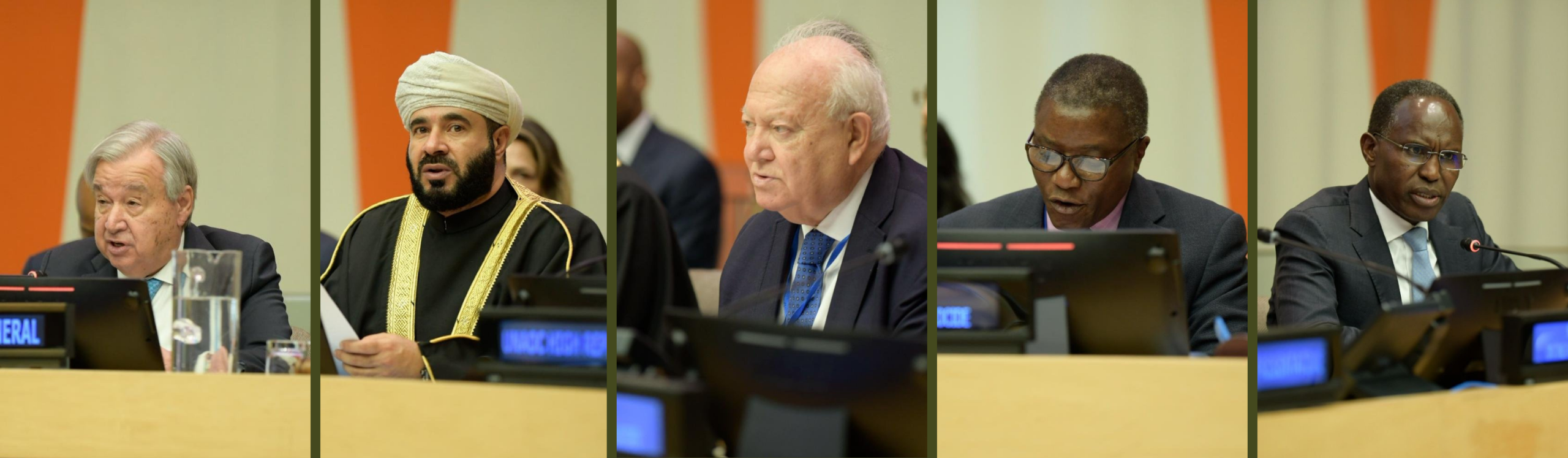
(First photo) H.E. António Guterres, United Nations Secretary-General, (second photo) H.E. Dr. Mohammed Bin Said Bin Khalfan Al Mamari, Minister of Endowments and Religious Affairs of the Sultanate of Oman, (third photo) H.E. Miguel Ángel Moratinos, High Representative for the United Nations Alliance of Civilizations, (forth photo) H.E. Chaloka Beyani, Under-Secretary General and the Special Adviser on the Prevention of Genocide and (fifth photo) Dr. Mohamed Elsanousi, Executive Director of the Network for Religious and Traditional Peacemakers sharing remarks at the Muscat Plan of Action Launch. Photo: UNAOC.
In a world increasingly connected by technology yet fractured by division, leaders gathered at the United Nations in New York to launch a new global framework rooted in one of humanity’s oldest sources of wisdom: the knowledge, traditions, and lived experiences of Indigenous and traditional communities.
The launch of the Muscat Plan of Action for Traditional and Indigenous Leaders and Peoples in Countering and Addressing Hate Speech and Preventing Genocide and Other Atrocity Crimes and Their Incitement Through Peace Mediation brought together United Nations officials, government representatives, civil society leaders, and Indigenous and traditional leaders from around the world. Their shared message was clear: preventing hatred, violence, and atrocity crimes requires more than policies and institutions, it requires trust, dialogue, and communities themselves.
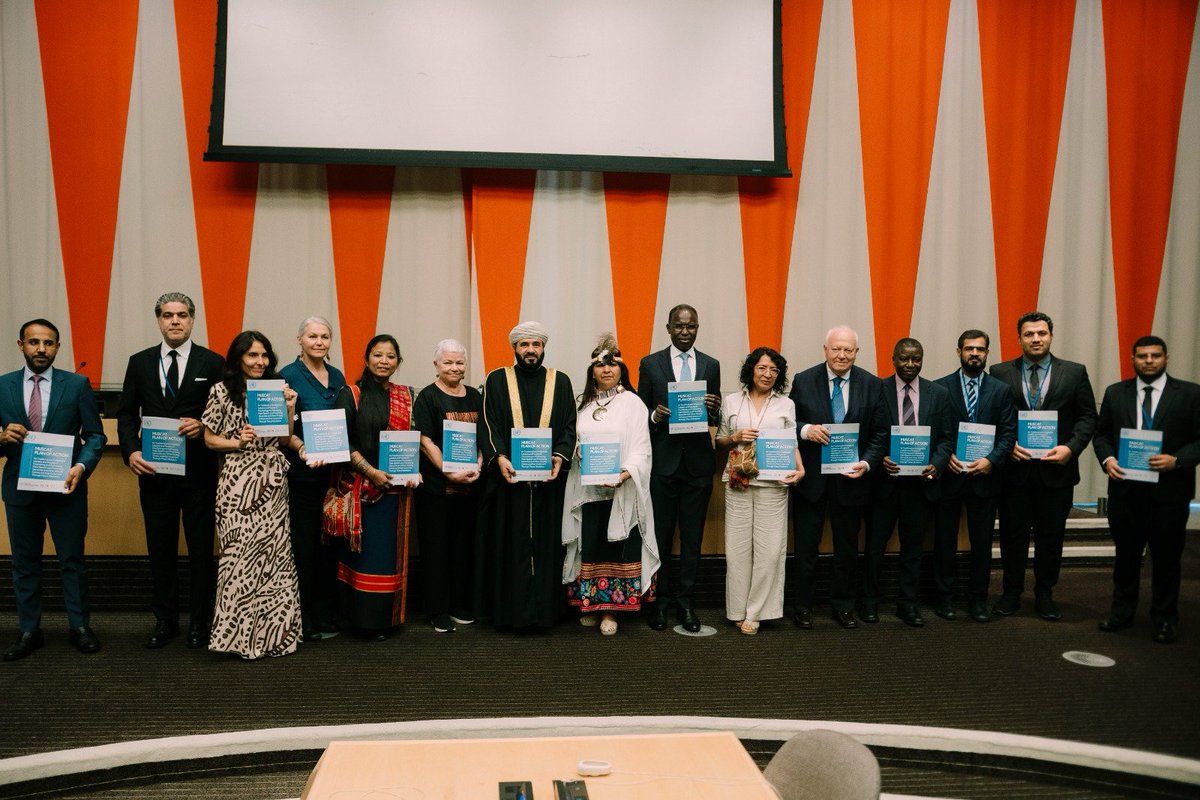
Muscat Plan of Action Launch group photo of UN officials, policymakers, tradtional and Indigenous leaders.
Opening the event, H.E. Dr. Mohammed Bin Said Bin Khalfan Al Mamari, Minister of Endowments and Religious Affairs of the Sultanate of Oman, emphasized that diversity should not be viewed as a source of division but as a resource for managing differences and building understanding.
He described the Muscat Plan of Action as the product of a collective effort to create spaces where people can come together around common values, mutual respect, and cooperation. As societies confront growing challenges–from environmental crises to the rapid spread of hate speech–he stressed that development must be understood not only in economic terms but also through the lens of trust, dignity, and social cohesion. “Peace is built through trust,” he emphasized, calling on all sectors of society to recognize peace and development as shared responsibilities.
The urgency of that call was echoed in a message from the United Nations Secretary-General H.E. António Guterres. At a time when hate speech and incitement can spread across borders at unprecedented speed–including through emerging technologies and artificial intelligence–he underscored that the responsibility to prevent genocide belongs to everyone. Guterres highlighted the importance of investing in human rights education, early warning systems, mentorship opportunities, and community-based dialogue initiatives. Civil society, he noted, is more essential than ever in building resilience against violence and atrocity crimes.
For H.E. Under-Secretary General and the Special Adviser on the Prevention of Genocide, Mr. Chaloka Beyani, the launch represented the culmination of years of consultation and listening. Reflecting on the process that led to the Muscat Plan of Action, he pointed to the consultations held in Oman that centered Indigenous and traditional leaders as key partners in prevention efforts. “Speaking out against hate speech is crucial,” he noted, emphasizing that mediation and local leadership remain among the most powerful tools for preventing violence before it escalates.
Throughout the event, speakers repeatedly returned to a common theme: prevention begins at the community level.
Dr. Mohamed Elsanousi, Executive Director of the Network for Religious and Traditional Peacemakers, described the Plan as both a roadmap and a reminder. Indigenous and traditional leaders and Peoples, he said, have long understood that peace cannot be built without wisdom, truth, and education. “The Muscat Plan of Action reminds us that local leadership matters and prevention starts with communities,” he said. For Dr. Elsanousi, the Plan reflects a broader commitment to ensuring that those often excluded from formal peace processes are not merely consulted during times of crisis but become long-term partners in shaping peace and security. He called for governments, UN entities, civil society organizations, and donors to move beyond acknowledgement toward concrete action.
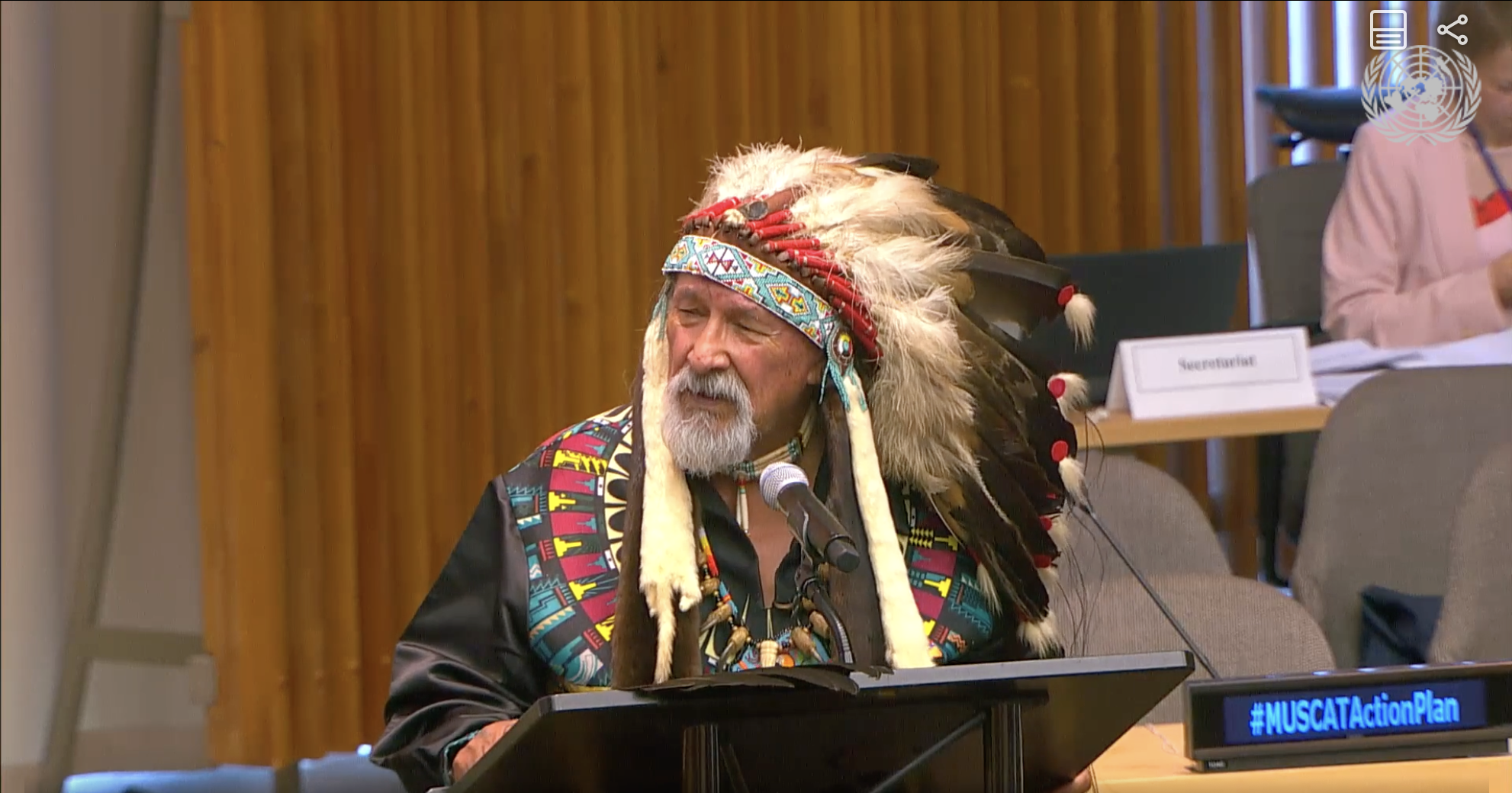
Grandfather Dominique Rankfin, Co-founder of Organisme Kina8at and the Dominique Rankin Foundation.
During the second segment, the Indigenous and traditional leaders and Peoples remarked on the discussion from policy to lived experience. Grandfather Dominique Rankfin, Co-founder of Organisme Kina8at and the Dominique Rankin Foundation, reflected on lessons inherited from ancestors and the responsibility of each generation to protect one another and safeguard spirituality. He described the gathering as part of a historic journey–an opportunity to make visible experiences and stories that have too often remained unseen. “We are all models of life for future generations,” he reflected.
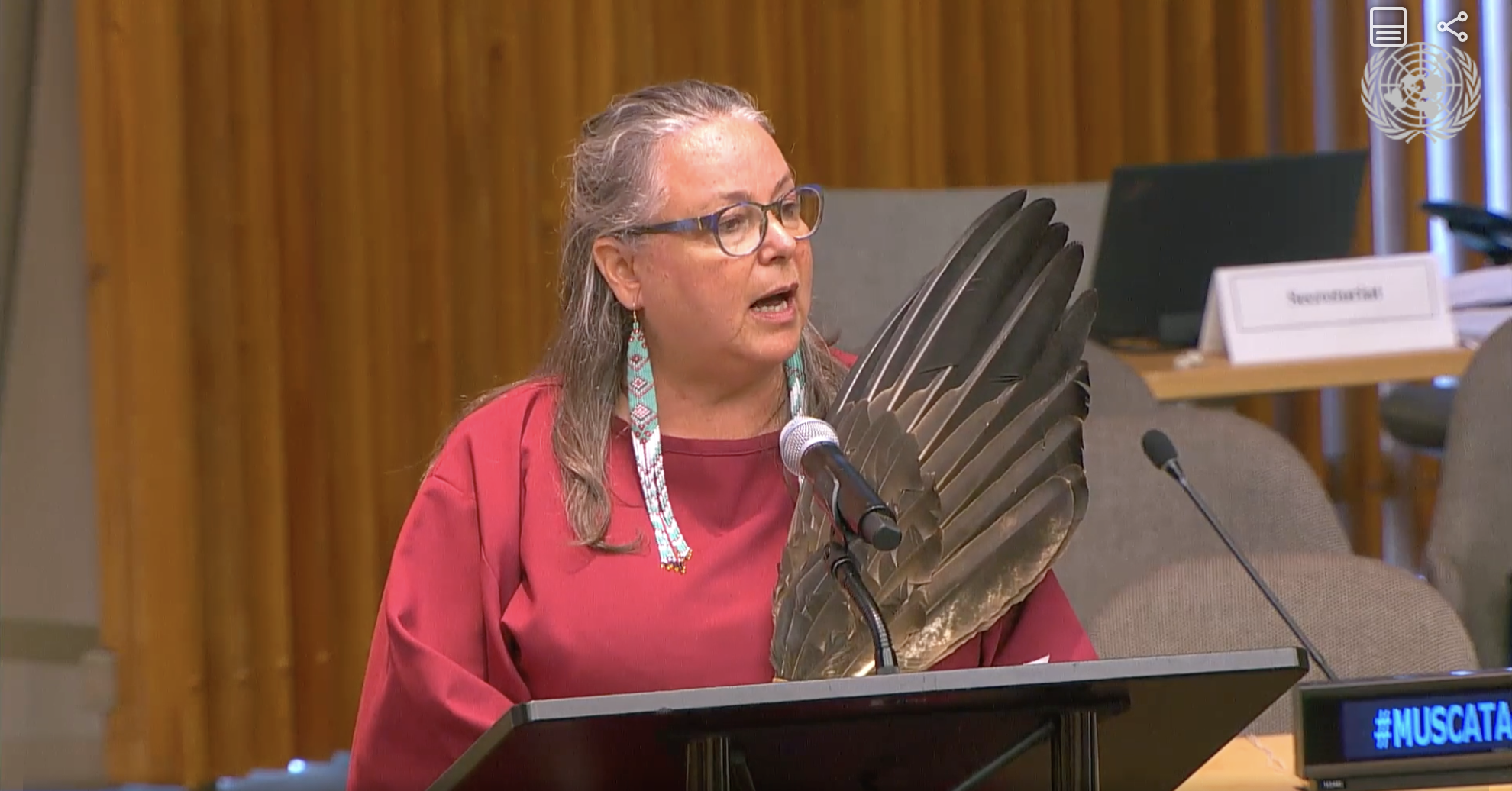
Grandmother Marie-Josee, Co-founder of Organisme Kina8at and the Dominique Rankin Foundation.
Grandmother Marie-Josee, Co-founder of Organisme Kina8at and the Dominique Rankin Foundation, shared a story about inviting a Swiss banker to participate in a traditional ceremony after he questioned whether such practices still existed. The story illustrated a broader point: Indigenous knowledge systems continue to be misunderstood despite their profound contributions to mediation, peacebuilding, and conflict prevention. Drawing on years of experience, she spoke about a worldview rooted in interconnectedness. “When the heart grows up in fear, it searches for an enemy. When the heart grows up in love, it searches for safety and connection,” she said.
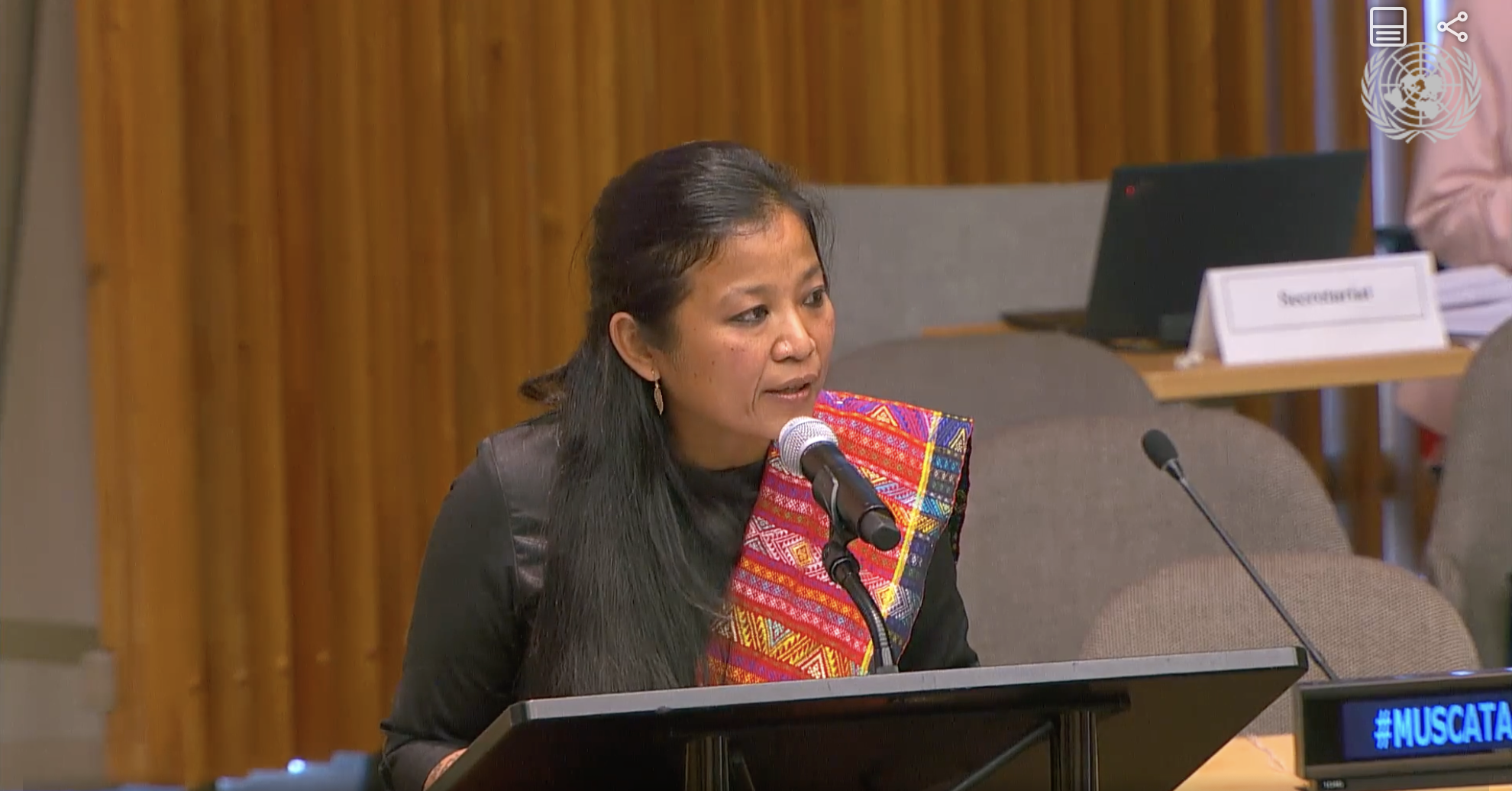
Her Highness Rani Yan Yan, Advisor of the Chakma Circle.
For Her Highness Rani Yan Yan, advisor of the Chakma Circle, the Muscat Plan of Action represented a milestone long overdue. She described Indigenous leaders as guardians of cultural knowledge and community governance whose experience often allows them to detect early warning signs of violence before institutions can. The Plan, she argued, provides a concrete framework for placing Indigenous leadership at the center of prevention efforts while fostering meaningful partnerships with governments and international institutions. At the same time, she warned the Indigenous communities continue to face systemic harms that can create conditions for atrocity crimes. The Plan, she said, must serve as a call to action for states to protect Indigenous rights and address hate speech before it escalates into violence.
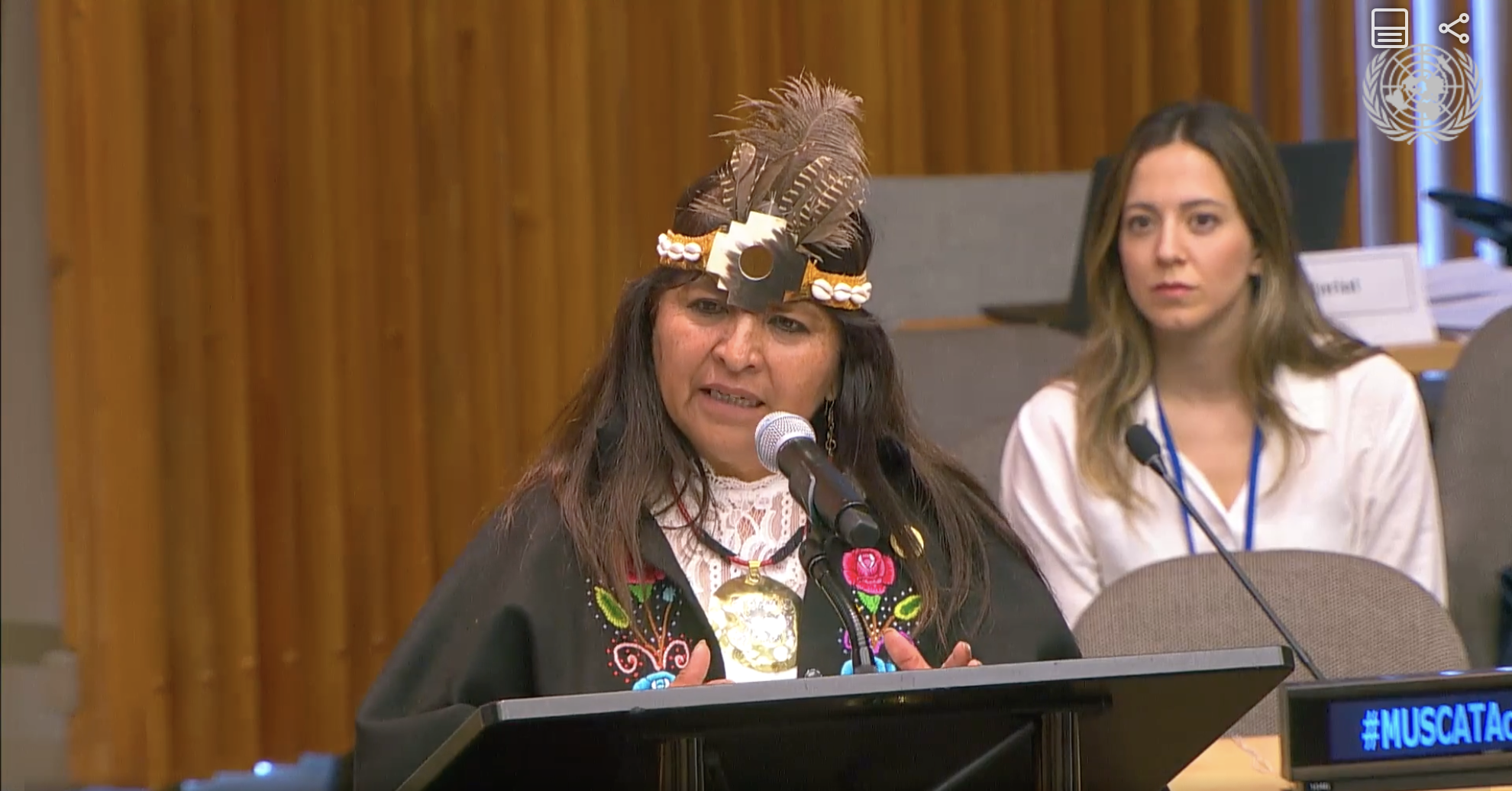
Sonia Asthuaman Pardave, an Andean priestess and Coordinator for the Andean Indigenous Organizations (CAOI).
The theme of interconnectedness surfaced again in remarks from Sonia Asthuaman Pardave, an Andean priestess and Coordinator for the Andean Indigenous Organizations (CAOI), who spoke with deep conviction about the relationship between peace, spirituality, and everyday life. “There is nothing that divides us,” she reflected, “We are all drinking the same water and eating the same food.” Drawing inspiration from the dialogue fostered in Oman, she emphasized that lasting peace must be built through consent, inclusion, and respect for Indigenous participation. Sustainable solutions, she argued, are only possible when Indigenous peoples are recognized as equal partners in shaping the future. Her words resonated throughout the room as she described humanity as part of a shared “cosmic embrace,” connected through the earth, water, rain, and the roots of life itself.
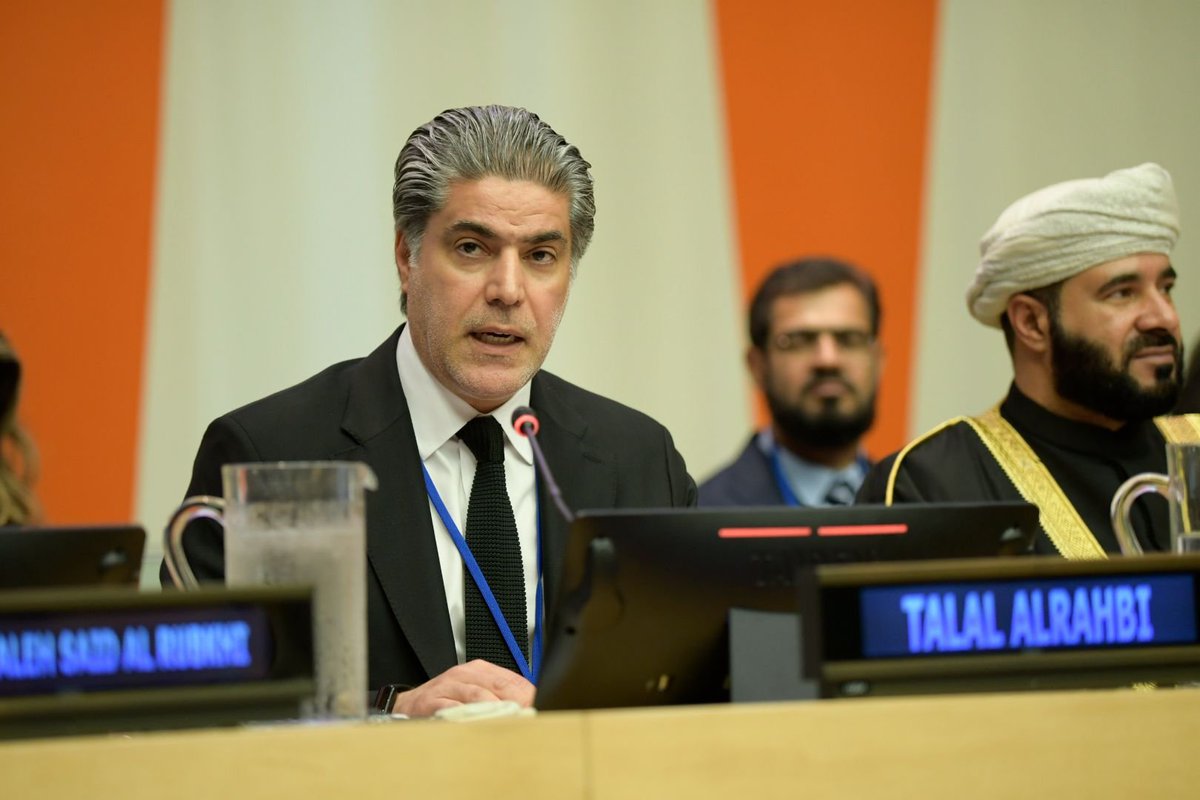
H.E. Ambassador Talal Sulaiman, Oman’s Ambassador to the US. Photo: UNAOC.
The day’s discussions concluded with reflections from H.E. Ambassador Talal Sulaiman, Oman’s Ambassador to the US, who noted the paradox of modern society: despite unprecedented technological connectivity, divisions, exclusion, and mistrust continue to grow. Peace, he argued, cannot be sustained by institutions alone. “It requires the participation of communities themselves,” he said, emphasizing that prevention is far less costly–and far more effective–than responding to conflict after it erupts.
Member States and UN partners echoed that sentiment in their closing remarks. Representatives from Saudi Arabia and Morocco highlighted the importance of addressing hate speech and recognized Indigenous and traditional leaders and Peoples as essential actors in preventing conflict and addressing the root causes of atrocity crimes. The United Nations Alliance of Civilizations reaffirmed its commitment to advancing the objectives of the Muscat Plan of Action and confronting the challenges of hate speech both today and in the future.
As the event drew to a close, one message stood above all others: preventing genocide and atrocity crimes is not solely the responsibility of governments or international organizations. It is a collective endeavor that requires listening to communities, investing in trust, and recognizing the leadership of those who have long safeguarded peace within their own societies.
At a moment when multilateral systems face growing strain and social divisions are deepening across the globe, the Muscat Plan of Action offers more than a policy framework. It offers a reminder that some of the most effective solutions to humanity’s most urgent challenges may already exist–in ancestral knowledge, local leadership, and the enduring power of dialogue.
Follow the Peacemakers Network on social