
New Research Highlights the Critical Role of Tradition and Faith-Oriented Insider Mediators in Advancing Peace Across Africa
June 2026
On June 15, The Network for Religious and Traditional Peacemakers (NRTP), in partnership with Finn Church Aid (FCA), has launched a landmark research report in Addis Ababa that highlights the critical yet often underrecognized role of Tradition and Faith-Oriented Insider Mediators (TFIMs) in advancing peace, fostering dialogue, and supporting political transitions across Africa.
The report, Bridging the Tracks: The Roles of Tradition and Faith-Oriented Insider Mediators in Africa, provides new evidence on how faith and traditional leaders are helping to prevent violence, mediate conflicts, build trust between communities and decision-makers, and support sustainable peace processes across the continent.
Commissioned by NRTP with support from the Ministry for Foreign Affairs of Finland, the study draws on research conducted across multiple countries in Africa and calls for greater recognition, investment, and inclusion of TFIMs in formal peace and political processes.
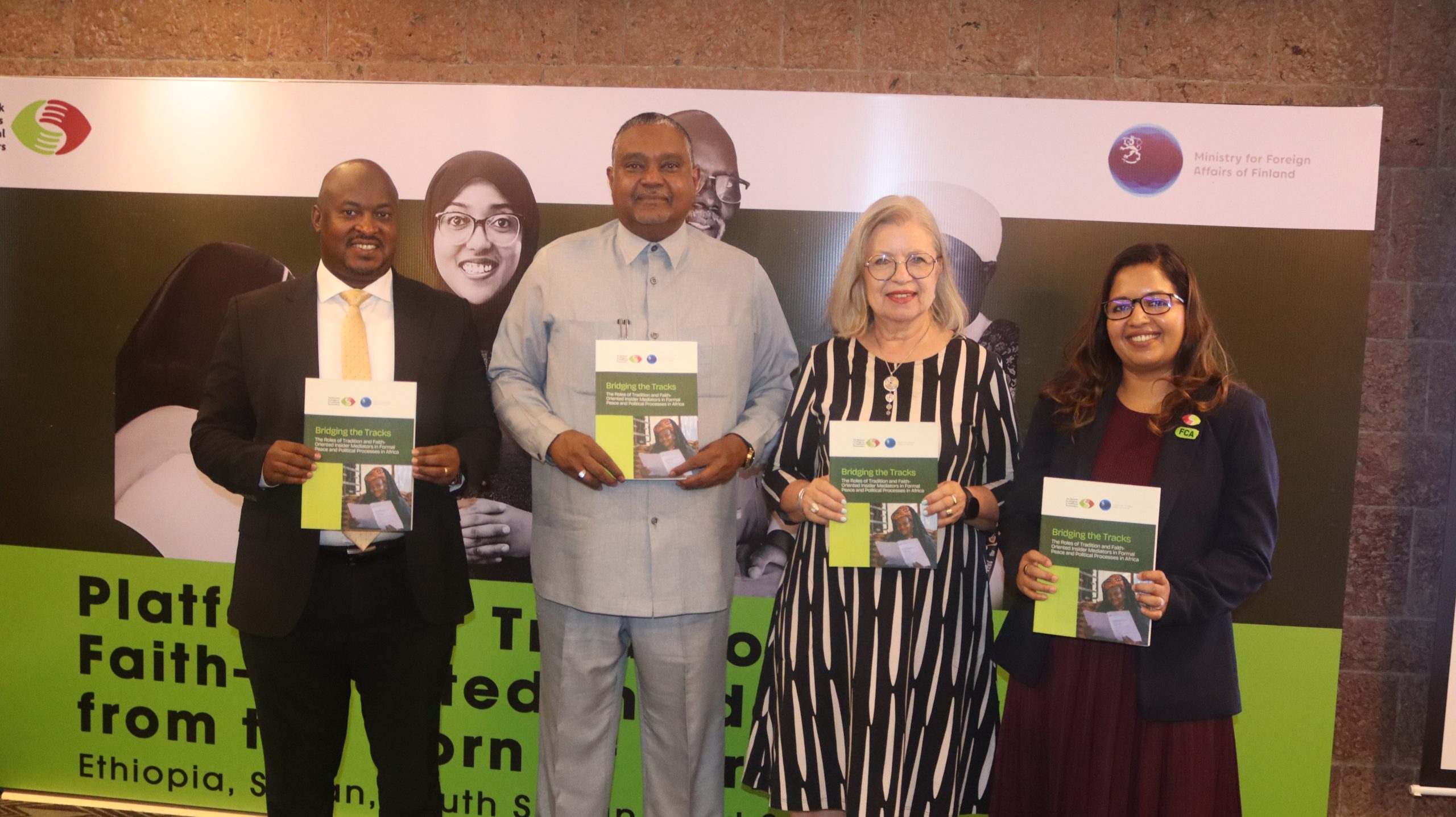
The report was officially launched in Addis Ababa at an event attended by representatives from governments of Finland and Ethiopia, the African Union, the European Union, diplomatic missions, civil society, academia, and faith and traditional institutions.
Speaking during the launch, Ambassador Sinikka Antila, Ambassador of Finland to Ethiopia, Djibouti, South Sudan, the African Union, IGAD and UNECA, underscored the significant role that tradition and faith-oriented insider mediators play in promoting peace and social cohesion.
“Tradition and faith-oriented insider mediators play an indispensable role in building trust, preventing violence and creating spaces for dialogue. We must continue to support and invest in these local peace actors,” said Ambassador Antila. She also emphasized the importance of ensuring the meaningful participation of women in peace processes and strengthening the links between humanitarian action, peacebuilding and development.
During his welcoming remarks, Ambassador Salah Hammad, Head of AGA-APSA at the African Union, noted that traditional and faith-based actors remain central to Africa’s peace architecture and should be further strengthened within formal mediation and reconciliation processes.
Barriers Continue to Limit Meaningful Participation
The research finds that TFIMs are already playing significant roles in formal peace and political processes across Africa, often serving as trusted bridges between communities and decision-makers. Their contributions range from formally recognized mediation roles and informal diplomacy to dialogue facilitation and community reconciliation efforts.
Despite their contributions, the report reveals that TFIMs frequently remain underrecognized and under-supported. Many face barriers to meaningful participation in formal peace processes, including political gatekeeping, institutional hierarchies, tokenistic inclusion, and professional biases that prioritize formalized mediation approaches over community-based efforts. Furthermore, women and youth mediators often face additional gender- and age-related barriers that limit their influence and participation.
Presenting the research findings, researcher Celina Sorboe noted that while TFIMs are often among the most trusted actors within their communities, they are not consistently provided with the resources, recognition, or opportunities needed to contribute effectively to formal peace and political processes.
Recommendations for Strengthening Inclusion and Support
A panel discussion at the event with three TFIMs from Ethiopia, Somalia, and South Sudan highlighted practical examples and measures to strengthen the meaningful participation of TFIMs. The unique and diverse contributions of TFIMs were highlighted through their ability to foster community trust and legitimacy, act with impartiality, promote unity, complement other peace initiatives, apply intersectional approaches, and sustain peace efforts over the long term. These include embedding TFIMs within mediation architectures through advisory councils, liaison mechanisms, and designated envoys; establishing coordination platforms that facilitate engagement between formal and informal actors; providing tailored capacity-strengthening support; and ensuring adequate financial, legal, and political safeguards to enable safe and sustained participation.
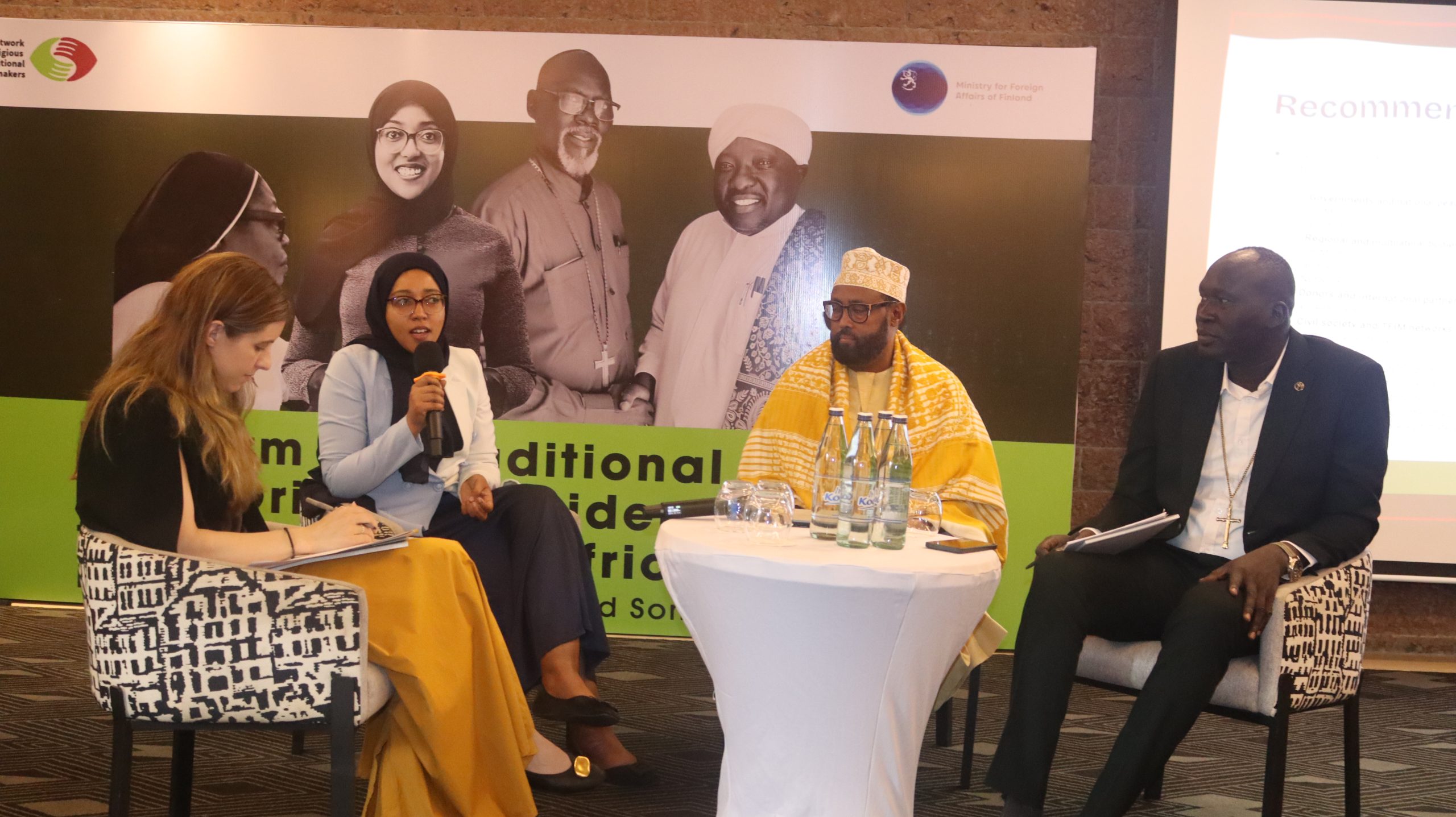
Panellists at the TFIM Research Report Launch in Addis Ababa.
The report further recommends that governments and regional organizations formalize the inclusion of TFIMs within peace infrastructures and build on existing mechanisms such as the African Union’s Panel of the Wise, FemWise-Africa, and the WiseYouth Network.
It also calls on donors to provide flexible, long-term support that reflects the realities of community-based mediation work, while encouraging civil society organizations and mediation networks to strengthen peer learning, amplify underrepresented voices, and document locally rooted peacebuilding practices.
In addition, the report urges multilateral actors to establish stronger partnerships with TFIMs and integrate them more systematically into peace architectures, recognizing the value they bring in fostering trust, legitimacy, and local ownership.
During his closing remarks, Wycliffe Nsheka, Country Director for Finn Church Aid (FCA) Ethiopia and Uganda, noted that Tradition and Faith-Oriented Insider Mediators possess unique legitimacy and access that position them to make meaningful contributions to peace negotiations and political processes. He emphasized the need to recognize and institutionalize their role within ongoing dialogue and peace efforts.
“We need to unlock the potential of Tradition and Faith-Oriented Insider Mediators by ensuring their contributions are recognized and supported within formal peace processes,” said Nsheka.
The report concludes that while TFIMs are not a substitute for professional mediation actors, they offer access, legitimacy, and moral leadership that formal actors often struggle to achieve. In fragile and conflict-affected contexts, they provide vital connections between political processes and the communities they are intended to serve.
As conflicts across Africa continue to evolve and intersect with issues of identity, religion, governance, and social cohesion, the report argues that investing in the meaningful inclusion of Tradition and Faith-Oriented Insider Mediators is both a strategic necessity and an opportunity to build more inclusive, legitimate, and sustainable peace processes across the continent.
Access the Report
Follow the Peacemakers Network on social