
Blog
Together Creating Natural Balance through Real Action
A youth reflection piece by Zuhrupatul Jannah
The Oman Harmonious Connection program is an inspiring journey, demonstrating a shared dedication to creating a harmonious world through interfaith understanding and cooperation.
One of the agenda points in the Oman Harmonious Connection 2024 program was a visit to the Markaz Fathul Khair Museum, located in Shur, Oman, which was not only a historic place but also a window into civilization maritime that has long become the heart and soul of Oman. The visit to Markaz Fathul Khair Museum and Shur Tower became a chance to dig more into the meaning and relevance of maritime civilization, which has formed Oman’s identity as an island nation rich in the history of shipping and trade.
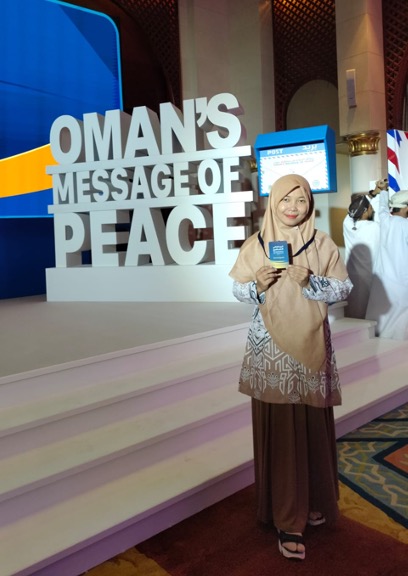
Zuhrupatul Jannah at the Oman’s Message of Peace Celebration. 2024.
Markaz Fathul Khair, or the Boat Museum, is vital for understanding Oman’s maritime history. The name “Fathul Khair” itself means “Opening of Goodness,” reflecting the important role of maritime civilization in Oman’s economic and cultural development. The museum houses a collection of traditional boats, artifacts, and ancient maps that illustrate how Omanis have sailed across the Indian Ocean, estabilished trade relations with other nations, and spread their culture to various corners of the world.
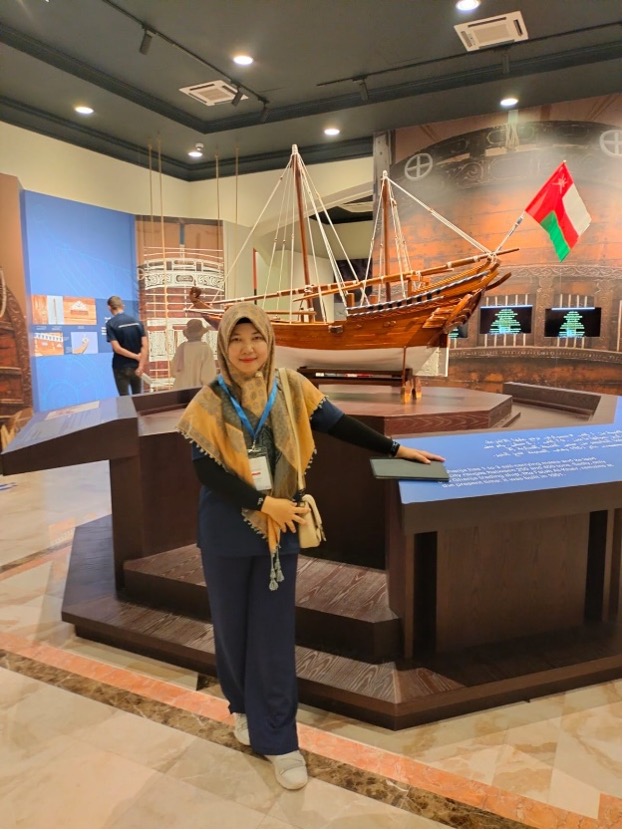
Zuhrupatul Jannah visiting Markaz Fathul Khair museum. 2024.
The boats are not just vehicles, but symbols of the collective identity of the Omani people, who have depended on the sea for their livlihood for centuries. A visit to the museum provided insight into Oman’s deep connection to the sea and how this has shaped its culture, including in art, architecture, and oral traditions passed from generation to generation.
The Shur Tower, located near Markaz Fathul Khair, is magnificant building that acts as a silent witness to the long history of the Omani kingdom ruling its coastal areas. The tower served multiple purposes including as a watchtower, defense point, and guide for sailors. The Shur Tower stands firmly, symbolizing the glory of Oman’s maritime power in the past, as well as its important role in maintaining the security and smoothness of sea trade routes.
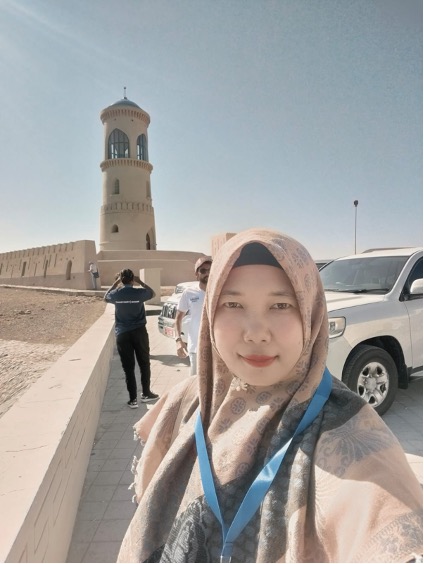
Zuhrupatul Jannah visiting Shur Tower. 2024.
Visits to Markaz Fathul Khair and Shur Tower were not just a tourist trip, but also an intellectual and emotional journey that brings us closer to the universal values of connectivity, peace, and collaboration that Oman’s maritime has built over centures. By commemorating and celebrating the maritime history that connects nations, Oman reaffirms its role as guardian of traditions, a preserver of peace, and a connector of the world through the sea.
The next stop was Ras Al Hadd, an area located on the eastern coast of Oman, known as one of the best places to watch turtles lay eggs. This activity not only introduced participants to stunning natural beauty but also instilled awareness about the importance of preserving nature and endangered species–a message that is very relevant to the program’s goal of building harmony between humans and nature.
Ras Al Hadd is a point located at the eastern tip of Oman, where the land meets the blue sea and the vast sky. In additionl to being a stunning place to enjoy the natural coastal scenery, this area is also known as one of the important locations for turtles to lay their eggs. Ras Al Hadd has a uniqueness that is rarely elsewhere. Here, nature is pristine and untouched, allowing visitors to experience peace and tranquility rarely found anywhere else.
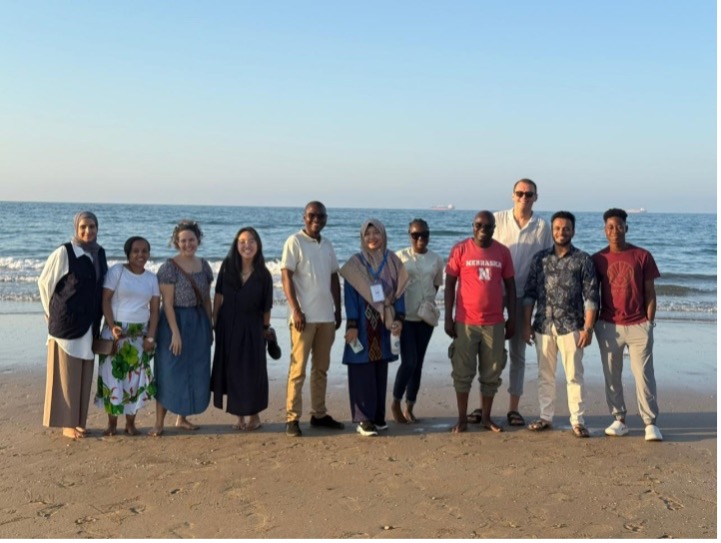
Zuhrupatul Jannah with other participatns visiting Ras Al Hadd. 2024.
For participants of the Oman Harmonious Connection 2024 program, a visit to Ras Al Hadd offered a first-hand experience of how nature and human life can coexist harmoniously. Participants enjoyed spectacular coastal scenery, with expansive beaches and golden sands stretching in the sunshine. The serene atmosphere away from the hustle and bustle of city life provided an opportunity for each participant to reflect, relax, and enjoy the natural beauty of Oman.
Next on the agenda was a visit to Hadiqah As-Salil, better known as As-Salil Conservation Park, one of the largest and most important conservation parks in Oman. Located in the vast desert region south of Muscat, the park is home to various endemic flora and fauna and plays a vital role in nature conservation efforts that have long been part of Oman’s environmental policy. As part of the Oman Harmonious Connection 2024 agenda, a visit to Hadiqah As-Salil provides an opportunity to explore the deep connection between humans and nature, and how Oman bridges the world through the biodiversity found on its land.
Hadiqah As-Salil is a prime example of Oman’s efforts to balance human development and nature conservation. In the context of the Oman Harmonious Connection 2024 program, the park serves as a symbol of the harmony between nature and human culture, as well as the country’s commitment to preserving biodiversity for future generations.
This park not only focuses on flora and fauna conservation but also on public education and the development of scientific research to better understand the existing ecosystem.
One of the main attractions of Hadiqah As-Salil is the diversity of flora and fauna that live in the area, most of which are native to Oman. The park has a collection of plants that thrive in desert ecosystems, including various acacia trees, palms, and shrubs that are unique in surviving extreme drought conditions. These plants are ecologically important and have cultural value, used by Omanis in various medicinal traditions, crafts, and everyday purposes.
In addition to flora, the park is also a sanctuary for rare fauna in dire need of conservation efforts. One of the most famous species is the Arabian Oryx, whose population has been successfully restored after being nearly extinct. Additionally, various rare bird species such as the steppe eagle and the desert owl can be found here. Hadiqah As-Salil is also home to desert mammals such as gazelles, jerboas, and various types of reptiles that live in harsh and hot environments.
Hadiqah As-Salil is more than just a conservation park; it is a symbol of the integration of biodiversity, local traditions, and global efforts to preserve our planet. As part of Oman’s Harmonious Connection 2024 agenda, the park rangers invited us to reflect on our relationship with nature, and how we can work together to ensure that the planet remains healthy and balanced for future generations. By deepening our understanding of nature through this park, Oman invites the world to move forward with full awareness of the importance of biodiversity and its conservation.
The next stop was Bidiyya Sands Desert, famous for Camp Hawiyah, one of the iconic destinations in Oman that offers an immersive experience of the beauty and silence of the desert. Located in the vast desert area of Bidiyyah region, about 200 km from Muscat, this place invites visitors to experience the true harmony between man and nature in a stunning setting.
Next, participants enjoyed the tranquillity of the Bidiyya Sands Desert by “stargazing” or observing the stars. Under a sky free from light pollution, participants were invited to witness the infinite beauty of the universe, from enchanting constellations to galaxies far beyond reach.
Stargazing activities at Hawiyah Camp were not just about enjoying the beauty of the night sky, but also a moment of reflection to realize how vast and fragile the universe is. When we observe stars that are millions of light years away, we are reminded of the importance of maintaining the balance of nature, including celestial bodies that are invisible but have a big impact on life on Earth.
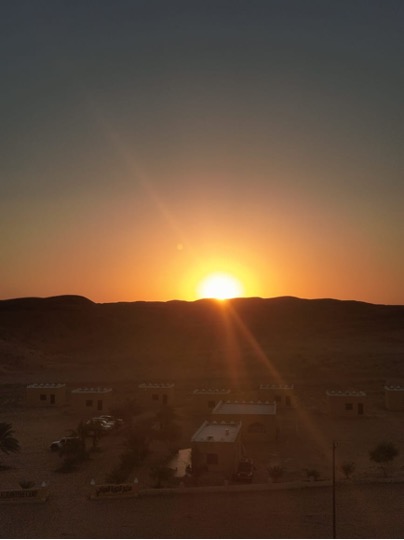
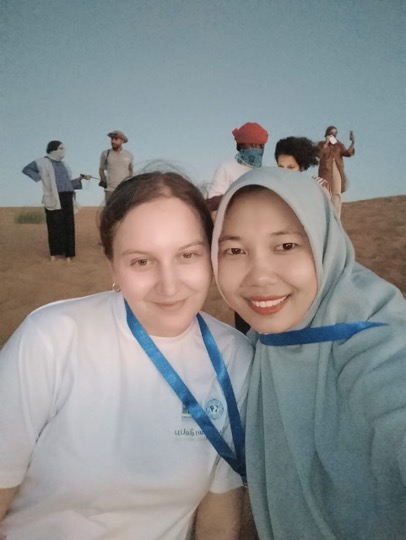
Zuhrupatul Jannah and Sarah Rehman (Peacemakers Network), share a sunset photo at Al Hawiyah Camp. 2024.
Through these experiences, participants were trained to appreciate and preserve the natural universe including conservation of the sky. Through stargazing, the The Oman Harmonious Connection 2024 program program taught that humanity is not only the guardian of Earth but also reminds us to guard the natural universe, both visible and hidden. It was a calling to think beyond Earth’s limits and see how every action relates to the sustainability of the planet.
Amid a busy agenda, a visit to a Bedouin village offered an opportunity to witness a traditional life. The Badui tribe maintains a natural life in harmony with nature. The Bedouins, who live in the interior and desert areas of Oman, are known for their simple life and strong ties to nature and nomadic traditions.
As part of the Oman Harmonious Connection 2024 program, a visit to the Bedouin village not only provided insight into a unique culture, but also into how the community lives in harmony, both with each other and with the natural world around them. Visitors can learn about local wisdom, desert survival techniques, and handicraft and hunting traditions that have been passed down through generations.
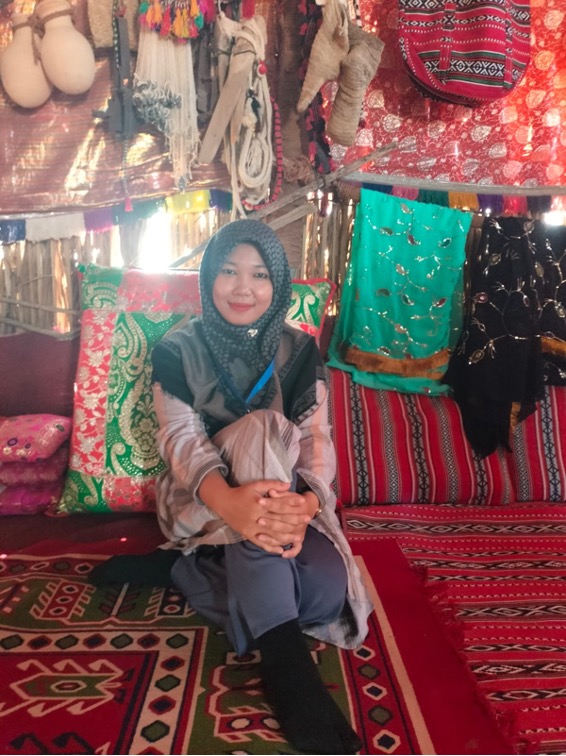
Zuhrupatul Jannah visiting the Bedouin village. 2024.
Visiting the Bedouin village in the Bidiya desert Badui Village also became a perfect place to feel welcome in a warm, friendly society, where visitors can witness a simple life full of meaning and understand the importance of guarding the balance between humans, tradition, and nature. The Oman Harmonious Connection 2024 program through this experience wants to invite the world to appreciate more the diversity of cultures and ways of life that can be examples of resilience and harmony in fast-paced modern life.
Amidst the stunning expanse of Oman’s sands lies a captivating natural gem, Al Jabal al Akhdar, or “The Green Mountain,” a mountainous region renowned for its stunning natural beauty. As part of the Oman Harmonious Connection 2024 program, participants climbed Al Jabal al Akhdar, making the experience not only a journey physical but also a spiritual and emotional experience that combined natural peace and a deep connection with the environment.
Al Jabal al Akhdar is located in the Central Hajar Mountains, which stretch across Oman. “Al Jabal al Akhdar” means “Green Mountains,” referring to the lush vegetation that grows in the area—a stark contrast to the vast desert that stretches across much of Oman. The peaks of these mountains are filled with lush orchards of fruit, including pomegranates and apricots, making it one of the most productive agricultural areas in Oman.
When climbing the mountain, we were treated to a spectacular view that combined the power of nature with peace. The mountain slopes were decorated with steep valleys and deep ravines, with an expanse of neatly maintained fruit gardens, creating a truly extraordinary panorama.
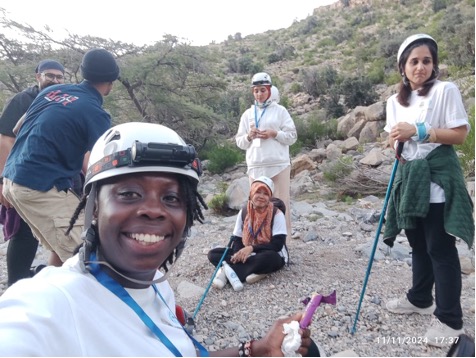
Zuhrupatul Jannah and participants hiking and enjoying the mountain at Jabal Akhdar. 2024.
More than just a visual treat, Al Jabal al Akhdar has the power to touch the soul. The cool air, the rugged ancient rocks, and the silence that envelops the area provide a sense of serenity that is hard to find elsewhere. This easy hike, while not requiring advanced hiking skills, offers a profound experience of connecting the body, mind, and soul with extraordinary nature.
Next, we visited the Oman Across Ages Museum. The Oman Across Ages Museum provided an opportunity to understand how Oman’s history was formed from a cultural, social, and political perspective. In prehistoric times, the Omani region was known for its early civilization that utilized natural resources wisely. Archaeological discoveries exhibited in the museum revealed that Oman had extensive trade relations with Mesopotamia, the Indus Valley, and the ancient Middle East.
Entering the Islamic era, participants were encouraged to learn how historically important Oman was in the spread of Islam, especially concerning the teachings of the caliphate and the spread of knowledge. Oman became one of the intellectual and spiritual centers of the Islamic world, with a great heritage in philosophy, astronomy, and architecture. In addition, this country also maintains a strong tradition of worship and applies the noble values of Islam that prioritize peace, brotherhood, and interfaith tolerance.
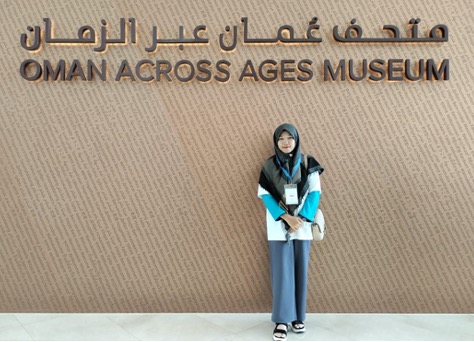
Zuhrupatul Jannah visiting the Oman Across Ages Museum at Nizwa. 2024.
As a strategic maritime trading hub, Oman has a strong maritime heritage. Through the Ages Museum, participants learned how Omani ships, known as dhows, played a vital role in trade between East and West for centuries. Oman’s presence as a hub for sea trade routes between Asia, Africa, and Europe made it a melting pot of cultures that greatly influenced the character of the country.
For participants of Oman Harmonious Connection 2024 program, visiting the Oman Across Ages Museum was an opportunity to delve deeper into the philosophy that underlies the life of the Omani people. One of the main principles that was highly emphasized in Omani history and culture is “al-harmony” or harmony, both in the relationship between individuals and between humans and nature. This is reflected in various aspects of Omani life, from how they care for the environment and respect traditions, to how they maintain harmony in a diverse society.
The Youth Center also reflects Oman’s vision of creating an inclusive and progressive society that focuses not only on formal education but also on character development, social skills, and leadership abilities. With a range of facilities within the center, including study rooms, technology labs, art studios, and sports arenas, the Youth Center Muscat has become a truly inspiring place for young people to hone their talents and contribute to the development of the country.
There is one agenda point that is no less interesting in the Oman Harmonious Connection 2024 program, namely the Global Youth Religious Mediation Course – a training specifically designed to empower youth in peace mediation, with a focus on the religious dimension of conflict. The training hones participants’ mediation skills and equips young people with the knowledge and tools needed to analyze violent conflicts and approaches to mediation design to achieve a more inclusive and sustaining peace.
The mediation course that was part of Oman Harmonious Connection and Oman’s Message of Peace 2024 was a truly memorable experience. In this course, participants were taught techniques to resolve conflicts with an empathetic and respectful approach. Experienced speakers and facilitators guided participants through a mediation simulation that helped them understand how to handle differences of opinion, both in personal and professional contexts. Participants were given training to become better mediators, with effective communication skills and the ability to listen with the heart.
The Youth, Religion and Mediation Course was highly relevant to the goal of the Oman Harmonious Connection 2024 and Oman’s 2024 Message of Peace program, which was to build a more peaceful world through dialogue and understanding. The mediation skills acquired by participants open up opportunities for them to become agents of change in their respective communities—promoting peaceful problem-solving and reducing tensions that often arise from differences.
The Global Youth Religious Mediation Course aimed to develop practical skills for young people in mediating conflict, using an approach that values the role of religion in peace processes. One of the main objectives of the training is to provide young mediators with a deeper understanding of the dynamics of conflict influenced by religion, and how they can engage religious actors who often play a significant role in such conflicts.
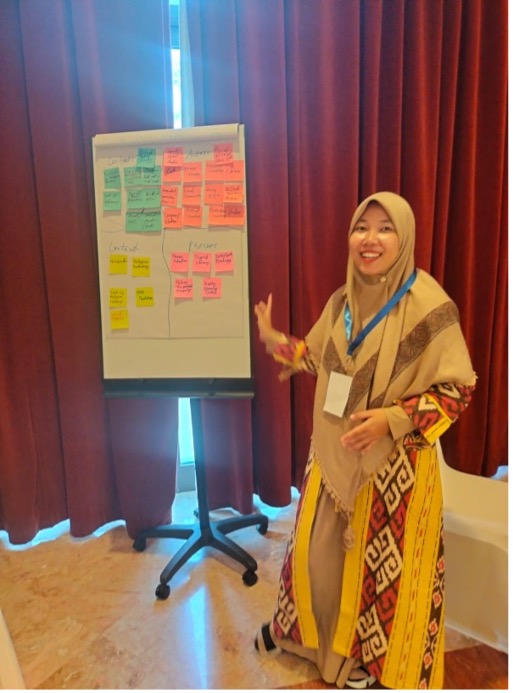
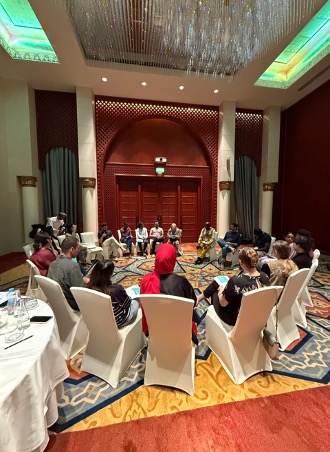
Zuhrupatul Jannah during Youth Faith-Based Mediators session. 2024.
Inclusivity in peace mediation was highly emphasized in the training. Youth are taught to understand that in many cases, religious actors, such as religious leaders, religious organizations, or faith-based groups, influence the decisions of the parties involved in the conflict. Therefore, effective mediation needs to include a deep understanding of the role of religion and how to involve these actors in the mediation process in a way that is constructive and sensitive to their beliefs.
In addition, participants were also provided with mediation tools and techniques that can help them create a safe and open dialogue space, where all parties feel heard and respected. This included skills in active listening, building trust, and dealing with feelings and emotions that often arise in the process of mediating religious conflict.
The training also placed special emphasis on intercultural communication and how to address differences in interpretation or understanding of religion that can lead to escalation of conflict. Young mediators were taught to understand how religious symbols, religious practices, or even the language used in conflict can exacerbate tensions, and how to use these elements wisely in the peace process.
The Global Youth Religious Mediation Course was a rare opportunity for young people from around the world to deepen their understanding of the importance of religion in peace mediation. Through this course, participants not only gained much-needed skills to handle religious-related conflicts but were also reminded of the importance of inclusivity and empathy in all forms of peace mediation.
As a final note, the Oman Harmonious Connection 2024 program provided a truly extraordinary experience for each participant, a journey that not only combined various aspects of adventure but also offered deep insights into the rich history and culture. This experience formed a holistic experience that touches on various dimensions of life—from the adrenaline rush of adventure activities to moments of deep reflection through historical knowledge and understanding of the fascinating local culture.
As the final series of the Oman Harninuous Connection 2024 program, the simple yet memorable Closing Day brought an atmosphere full of emotion and pride. Attended by the Minister of Endowments and Religious Affairs of Oman, this ceremony was not only a symbol of the closing of a meaningful international program but also a form of appreciation for the commitment of each participant in deepening cross-cultural understanding and improving international relations.
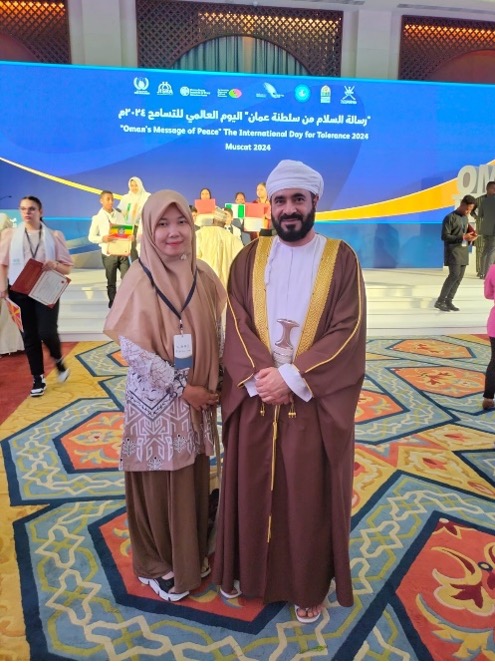
Zuhrupatul Jannah with Ministry of Awgaf and Religious Affairs. 2024.
The Minister of Religious Affairs of Oman distributed certificates to participants as a symbol of appreciation for their commitment to completing the in-depth program. The certificates are not only physical evidence of our journey but also a memento that reminds us of the learning we have gained and the relationships we have built with fellow participants and the Omani community.

About Zuhrupatul Jannah
Zuhrupatul Jannah is a lecturer in the Al-Qur’an Science and Tafsir Study Program at the State Islamic University of Mataram, a position she has held since 2019. She is currently pursuing her doctorate with a fully-funded scholarship from the Indonesian Ministry of Finance. Her research focuses on resolving conflicts between Wahabi Muslims and cultural Muslim groups, promoting religious moderation in grassroots communities. In addition to her academic work, Zuhrupatul is active in Muslimat Nahdlatul Wathan Diniyah Islamiyah, an organization dedicated to empowering Muslim women. Known for her openness and collaborative nature, she is well-regarded in both social and academic circles.
Follow the Network on social