Religion, Culture, and Peace Laboratory (RCP Lab) / Payap University: From the Margins to Empowerment – Building Inclusive Justice & Peace through Storytelling, Dialogue, and Advocacy
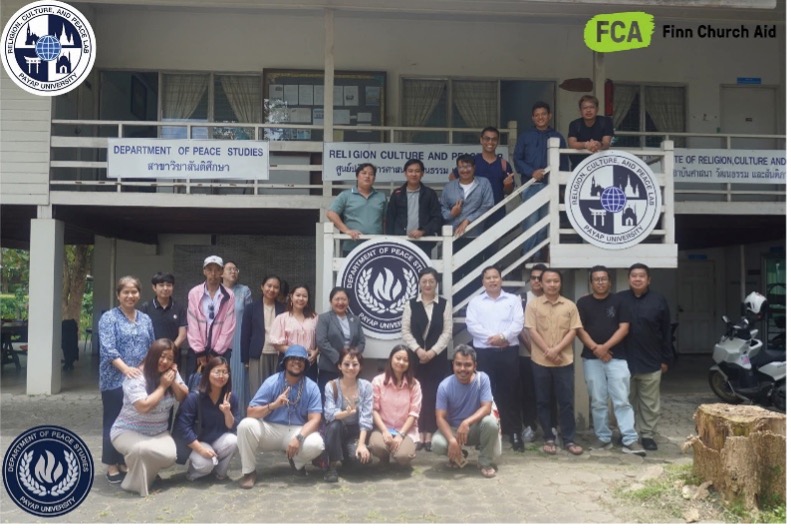
From August to October 2025, the Institute of Religion, Culture, and Peace (IRCP) at Payap University, ran an 11-event series that brought women of faith, Buddhist monastics and youth, LGBTQIA+ leaders, and persons with disabilities into a single process: share lived experience, build practical skills, and agree a common framework for action. Storytelling, interfaith engagement—including a six-site walking pilgrimage—and skills labs in mediation and peacebuilding culminated in a co‑refined Statement of Principles to guide inclusive, community-led peace efforts in Northern Thailand.
Key Achievements
- 11 targeted events delivered: 24–56 participants per session.
- Inclusive participation across faiths, ethnicities, genders, and abilities; Thai/English/ASL provided.
- Six-site interfaith walking pilgrimage that translated dialogue into practice and experience.
- Practical skills built in mediation, facilitation, and intersectional peacebuilding.
- Participant-owned, context-sensitive Statement of Principles, reflecting diverse voices, shared values and actionable commitments.
Project Activities and Approach
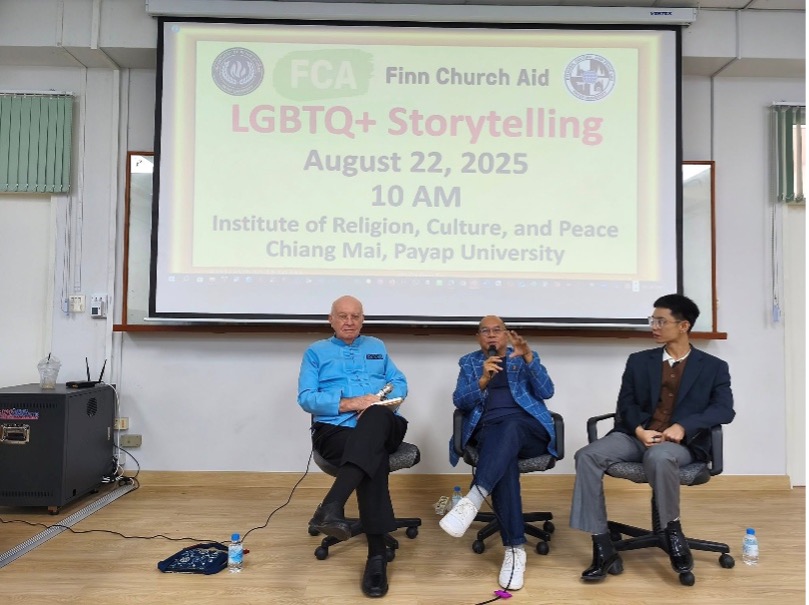
After a brief orientation to align expectations and norms (confidentiality, voluntary participation), IRCP ran a co-designed sequence that began with storytelling to surface perspectives often absent from public dialogue. Women of faith addressed leadership and practical barriers; LGBTQIA+ speakers traced Thailand’s visibility movement and lessons from Chiang Mai Pride; and persons with disabilities described barriers in education, work, mobility, and public life. Thai, English, and ASL interpretation supported full participation. Each session coupled first‑person accounts with guided reflection to build a shared analysis that fed directly into the Statement of Principles.
Interfaith engagement provided common ground. Buddhist monastics led a discussion on compassion and non-violence, followed by an interfaith walking pilgrimage to six religious sites in Chiang Mai. Short teachings at each stop and time in transit allowed participants to compare approaches to coexistence and build practical relationships across traditions. Skills sessions focused on application. A mediation workshop with Dr. Mark Tamthai covered neutrality, active listening, and interest-based problem solving; a peacebuilding workshop with Dr. Ly applied plain-language concepts of systemic harm and inclusion to community practice. Facilitators addressed power imbalances, low trust, and sensitive topics, modelling inclusive techniques participants could use in their own settings.
The program closed with two consolidation dialogues. The first connected concerns of minorities, women of faith, persons with disabilities, and LGBTQIA+ communities to local peacemaking practices. The second reviewed and refined a Statement of Principles—preamble, challenges, beliefs, positive developments, call to action, and conclusion—so it accurately reflects participant input and is ready for use in teaching, programming, and advocacy.
Outcomes and Early Results
- Inclusion: Consistent, respectful engagement across identities; strengthened cross-community ties.
- Capacity: Higher confidence among participants in applying mediation and dialogue tools and approaches; clearer language to address prejudice and structural barriers.
- Cohesion: Trust built through shared rituals and co-authored narratives; interfaith relationships deepened.
- Common framework: A context-aware Statement of Principles owned by participants and partners, ready for use in teaching, programming, and advocacy.
Significance, Sustainability and Next Steps
- Centers lived experience as the basis for recommendations and policy input.
- Bridges difference: interfaith dialogue, pilgrimage, shared knowledge, and skills labs make inclusion actionable.
- Built tools: Mediation and peacebuilding sessions strengthened capacity and provided tools and resources for inclusive peacebuilding in the region.
- Provides a low-cost, high-trust, replicable sequence: storytelling → interfaith encounter → skills → shared principles and commitments.
- Positions IRCP and partners to align community initiatives under diverse voices and sustain storytelling circles, interfaith walks and dialogue forums.
- Co-developed a Statement of Principles, creating shared language and ownership.
Follow the Peacemakers Network on social