
Youth Migration Dialogue Amplifies Myanmar Youth Voices on International Migrants Day
December 2025
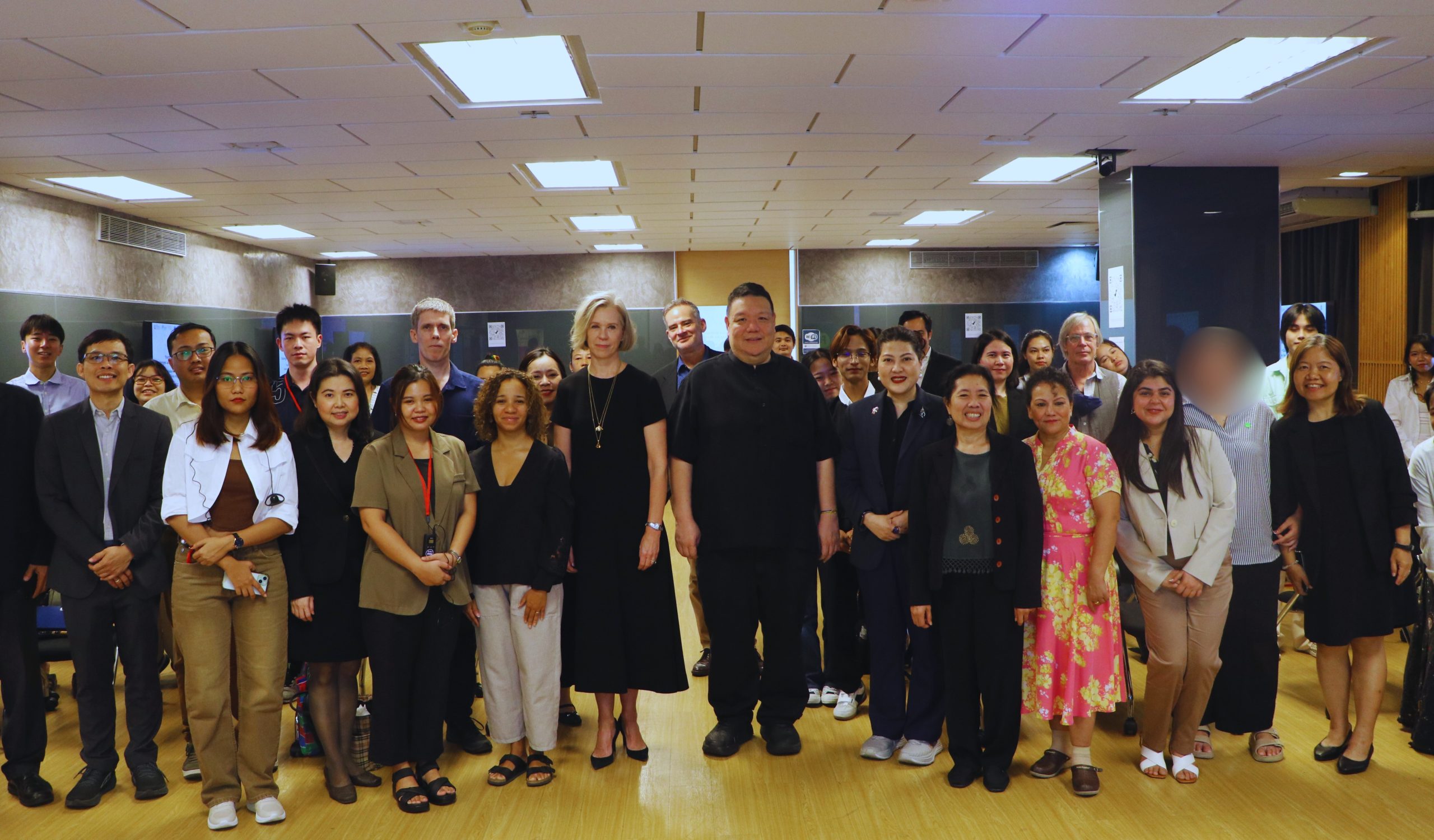
Representatives from civil society, academics, business, government agencies, and youth join the Migration Youth Dialogue: Challenges and Prospects for Myanmar Youth – Collaborating for safer and more inclusive migration pathways. Faculty of Political Science, Chulalongkorn University, Bangkok, Thailand.
On 16 December 2025, civil society, academics, private sector actors, government representatives, and young people gathered at the Faculty of Political Science, Chulalongkorn University, Bangkok, Thailand, for the Youth Migration Dialogue: Challenges and Prospects for Myanmar Youth – Collaborating for safer and more inclusive migration pathways. The event was co-organised by Finn Church Aid (FCA) Thailand, the Network for Religious and Traditional Peacemakers (NRTP), Spirit in Education Movement (SEM), the Asian Research Center for Migration (ARCM), and the Center for Social Development Studies (CSDS), with support from the Faculty of Political Science.
Held in recognition of International Migrants Day, the dialogue responded to a pressing reality: since the 2021 political crisis in Myanmar, conflict, repression, and economic collapse have forced large numbers of youth to seek safety and opportunity in Thailand. The full-day event brought together Myanmar youth, researchers, government representatives, international organizations, civil society, and the private sector to reflect on how to make migration to Thailand safer, fairer, and more inclusive.
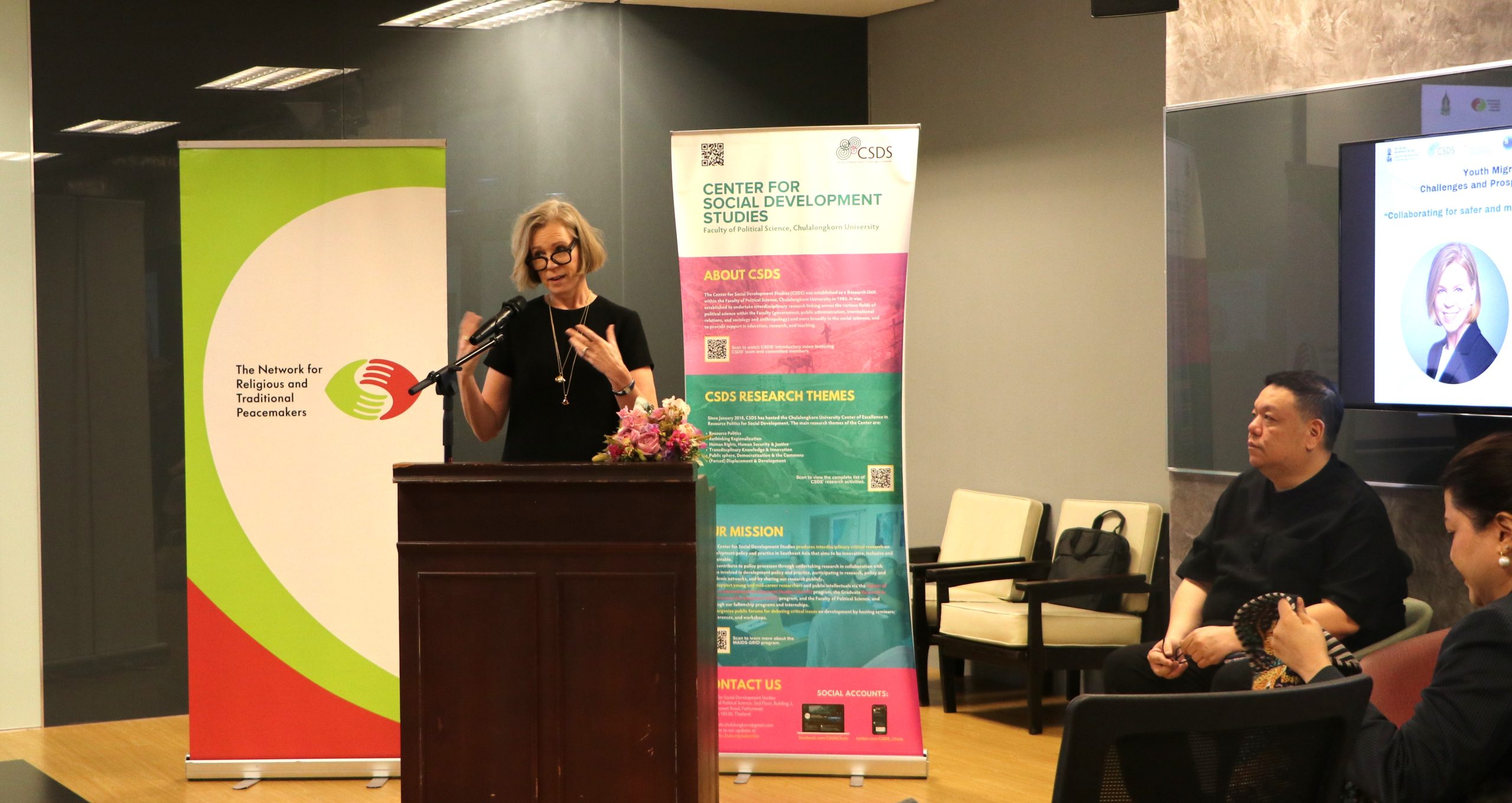
H.E. Kristiina Kuvaja-Xanthopoulos, Finland’s Ambassador to Thailand, addressed her opening remark by underlining Finland’s commitment to inclusive development and meaningful youth participation.
In her opening remarks, H.E. Kristiina Kuvaja-Xanthopoulos, Finland’s Ambassador to Thailand, underlined Finland’s commitment to inclusive development and meaningful youth participation. She emphasized that young people must be recognised not only as beneficiaries of aid, but as partners and leaders in shaping their own futures. “When we invest in youth, we invest in more stable, equal and democratic societies,” she noted, highlighting the Youth on the Move project, implemented by FCA Thailand, as a concrete example of Finland’s support for youth empowerment, safe migration, and labour rights education.
The morning sessions presented key findings from two major studies: a Labour Market Assessment for Myanmar Youth in Thailand and research on the economic and social impact of granting work rights to refugees. Together, the evidence showed that Myanmar youth contribute significantly to Thailand’s economy, yet still face obstacles such as irregular status, documentation barriers, exploitation, and limited access to decent work. At the same time, inclusive labour and migration policies can benefit both migrants and Thai society by filling labour gaps, supporting social stability, and reducing protection risks.
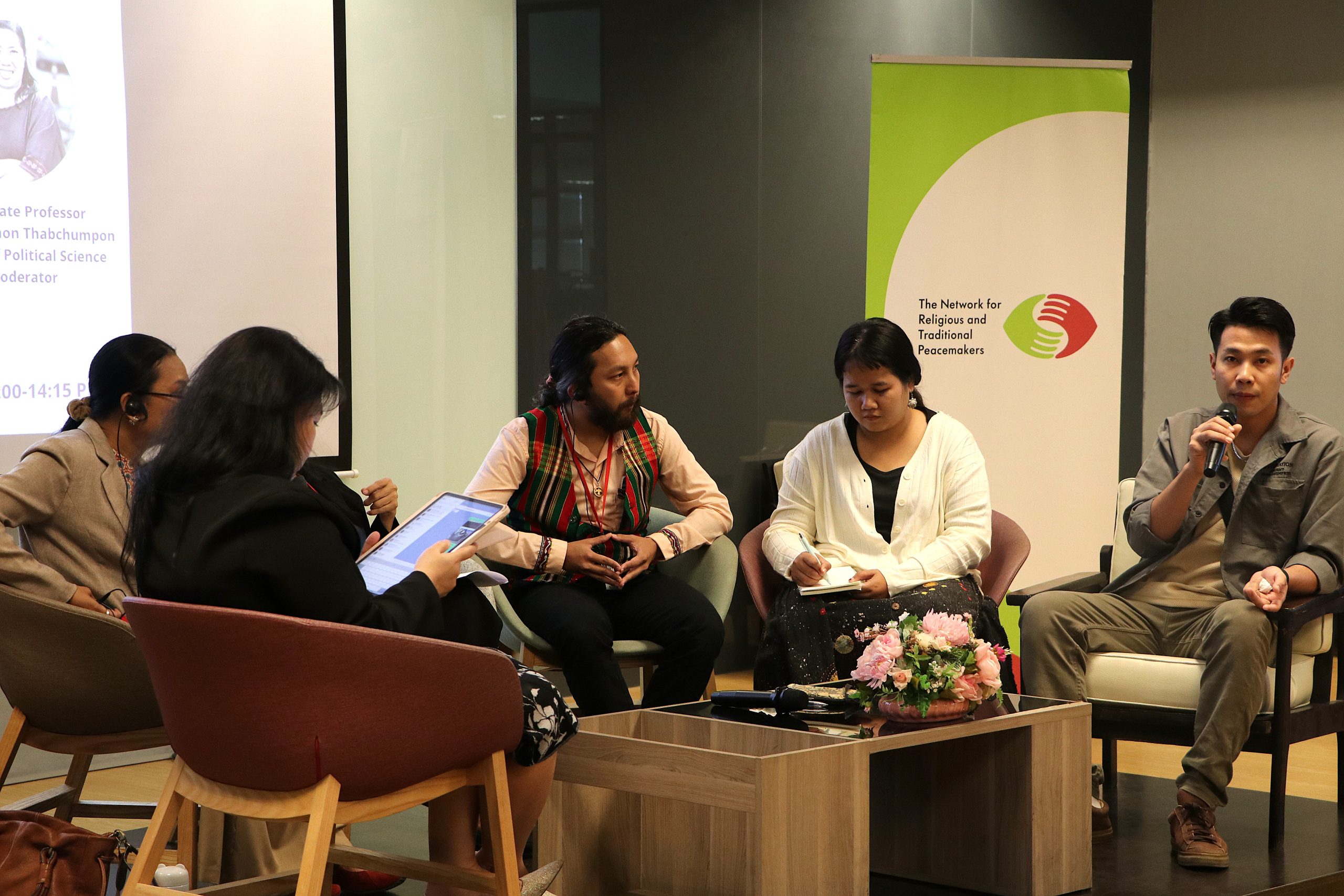
A Myanmar migrant representative shares his challenges in living and working in Thailand.
These insights set the stage for a multi-stakeholder panel discussion that dug deeper into the realities behind the data. Legal status and documentation emerged as a cross-cutting concern, shaping almost every aspect of a young migrant’s life—from access to education and decent work to the ability to rent housing, open a bank account, or simply move around without fear. Panelists speaking from an employer perspective acknowledged that Myanmar youth are often highly motivated and already skilled, but that complex and shifting regulations can deter businesses from hiring legally without navigating delays or costly intermediaries. Education advocates raised the urgent need for more affordable alternative qualifications, and bridging programmes that connect non-formal education to Thai universities and vocational training.
In the afternoon, the focus shifted more explicitly to youth voices through a dedicated youth forum. Myanmar youth participants shared their personal journeys—leaving home because of conflict, the conscription law, and economic hardship; balancing roles as students, workers, caregivers, and community leaders; and navigating complex identities that span both Myanmar and Thailand. While they did not downplay the challenges they face, they also spoke powerfully about resilience, solidarity, and the desire to contribute positively to the societies around them. Youth participants advocated for safer and more affordable regular migration pathways.
The event closed with a shared commitment to deepen collaboration across sectors and ensure that Myanmar youth on the move are not defined by their vulnerabilities but recognised as agents of change in building more inclusive, just and resilient societies.
One youth representative captured the spirit of the day in the closing remarks:
“Migration is not just a topic for us – it is our real life. Today was special because our stories were truly heard. We don’t want to be seen only as victims. We want to be partners in finding solutions.”
Follow the Peacemakers Network on social