
Advancing Persons with Disabilities in Peacebuilding: Toolkit Exhibition and Grantee Spotlight
Inclusivity | December 2025
In alignment with the International Day of Persons with Disabilities, the Peacemakers Network hosted an online event to showcase its global toolkit, framing guide and easy-to-read guides, as well as spotlight four small-grant initiatives aimed at promoting the inclusion of marginalized groups working across South and South-East Asia. These initiatives strive to advance partnerships and promote the inclusion of persons with disabilities within the wider peacebuilding community. Click here to watch the event recording.
Background on the Global Toolkit and Grantees
United Nations Security Council Resolution 2475, adopted unanimously in June 2019, represents the first resolution by the UN Security Council to explicitly address the rights, protection, and participation of persons with disabilities in conflict and post-conflict settings. The resolution affirms that all actors must ensure persons with disabilities have equal access to humanitarian assistance, justice, and participation in peacebuilding processes, emphasizing the importance of sustained dialogue with persons with disabilities and their representative organizations.
While the resolution marked a milestone in global recognition of the rights of persons with disabilities in conflict settings, its implementation remains inconsistent across national, regional, and global levels. The resolution is nonbinding, and without mechanisms for accountability or funding, it lacks the enforcement tools necessary to drive inclusion. Still, its adoption has opened new entry points for persons with disabilities to be acknowledged not only as vulnerable populations, but as active agents of change within peacebuilding processes, with unique knowledge, skills, and priorities, and leadership to contribute.
Since 2022, the Peacemakers Network, the Abilis Foundation and Finn Church Aid (FCA) have been working to advance persons with disabilities in peacebuilding processes. A global toolkit was developed to support the inclusion of persons with disabilities in peacebuilding and reconciliation efforts, following a year-long examination of their unique challenges and needs Click here to learn more about the development of the toolkit.
In June 2025, Peacemakers Network’s Asia Working Group (AWG), with funding from the Ministry for Foreign Affairs of Finland, awarded small grants to four grassroots initiatives to advance inclusive peacebuilding across Asia. The grants supported locally-led efforts that strengthened peacebuilders from groups of women and young women of faith, persons with disabilities, and LGBTQI+ individuals and communities. These small grants were designed to address persistent gaps in representation and participation within peace processes by investing in community-based leaders from underrepresented groups.
Event Opening and Toolkit Exhibition
Divya Moorjani, Asia Programme Manager for the Peacemakers Network, opened the event by emphasizing its purpose as an opportunity to showcase the toolkit for advancing the inclusion of persons with disabilities and to spotlight the work of the Asia Working Group’s (AWG) grantees. The event aimed to increase awareness of the vital role persons with disabilities play in peacebuilding, to share best practices and case studies, and to promote the integration of religious perspectives and storytelling in peacebuilding efforts.
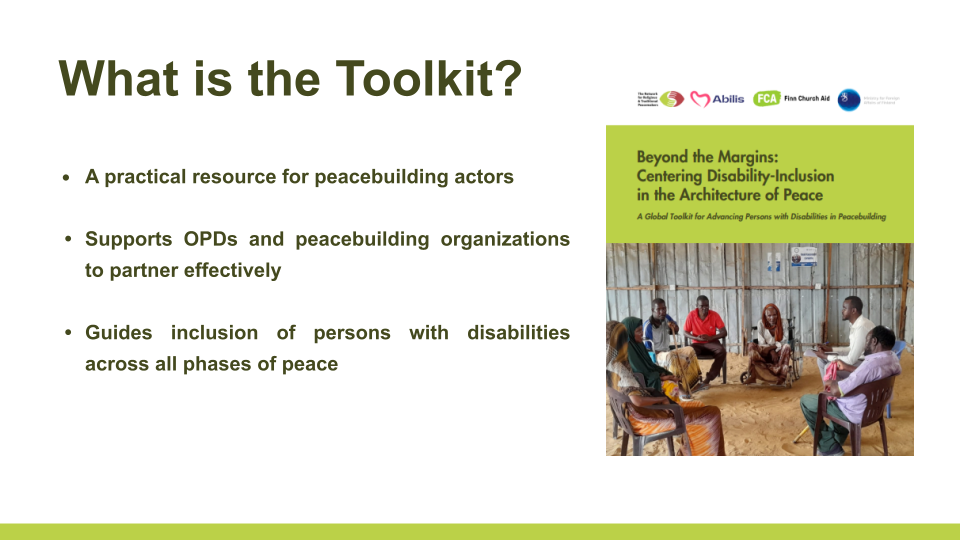
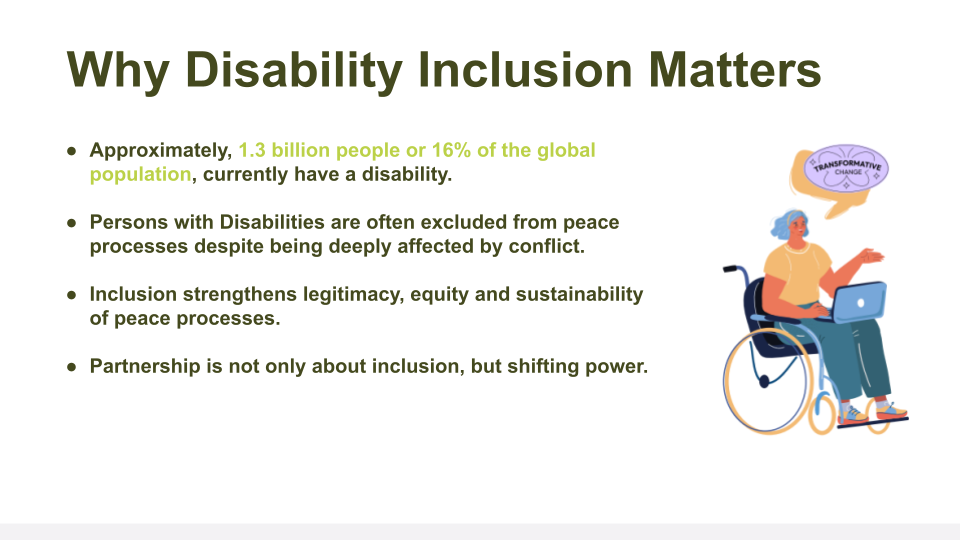
Presentation of the new toolkit given by Jessica Roland, Senior Specialist on Inclusive Peace at the Peacemakers Network.
Jessica Roland, Senior Specialist on Inclusive Peace for the Peacemakers Network, showcased the global toolkit for advancing persons with disabilities in peacebuilding, “Beyond the Margins: Centering Disability-Inclusion in the Architecture of Peace.” The launch included four components: the toolkit, a framing guide, the toolkit’s easy-to-read version, and the framing guide’s easy-to-read version. Roland emphasized that the toolkit was years in the making, shaped by input from members and supporters of the Peacemakers Network on the barriers faced by persons with disabilities and a commitment to a more intersectional approach. 1.3 billion people, or 16 percent of the global population, have a disability, yet persons with disabilities are often excluded from peace processes, despite being deeply affected. Roland highlighted that meaningful inclusion strengthens the legitimacy and sustainability of peace processes and explained that the toolkit offers practical guidance and entry points for change. The toolkit is designed to be adaptable to local contexts and its organization around the conflict cycle and levels of action. Roland concluded by urging that inclusion should not be seen as an individualized case but as part of community resilience.
Grantee Spotlight
Abdus Sattar Dulal, Executive Director of Bangladesh Protibandhi Kallyan Somity (BPKS), shared a presentation on how BPKS has been fostering disability-inclusive societies to advance social progress in Bangladesh. Dulal described BPKS’s commitment to driving lasting, holistic systemic change through a disability-led, rights-based approach, implemented through programs across Bangladesh and resulting in measurable improvements in the lives of persons with disabilities.
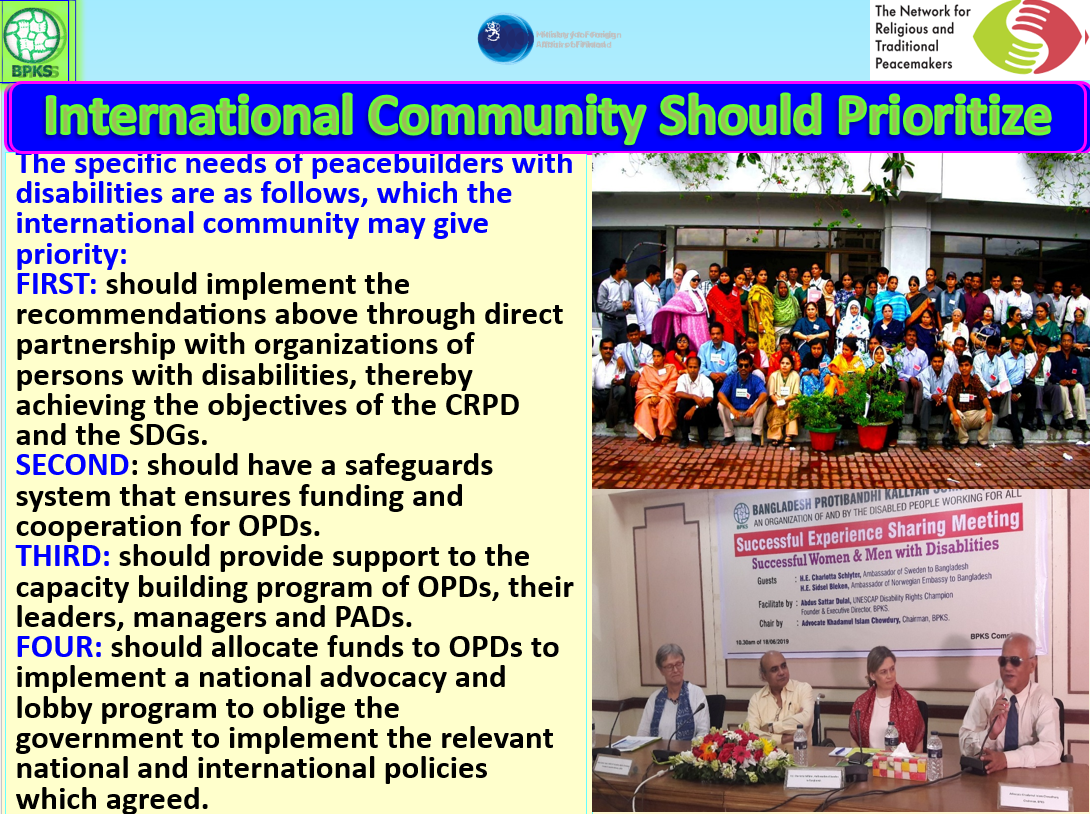
Abdus Sattar Dulal speaks about the importance of partnering with persons with disabilities to enact change, offering recommendations to the international community on what should be prioritized to advancing their leadership and participation.
Abdus Sattar Dulal, Executive Director of Bangladesh Protibandhi Kallyan Somity (BPKS), shared a presentation on how BPKS has been fostering disability-inclusive societies to advance social progress in Bangladesh. Dulal described BPKS’s commitment to driving lasting, holistic systemic change through a disability-led, rights-based approach, implemented through programs across Bangladesh and resulting in measurable improvements in the lives of persons with disabilities.
He highlighted the Peacebuilders Advocates with Disabilities (PADG) project, which trained persons with disabilities, including women and youth, to serve as advocates within their own communities, with a focus on promoting peace in families, neighborhoods, and broader communities. Dulal championed the project’s impact, underscoring the dedication of persons with disabilities to peacebuilding. He emphasized the need for the international community to strengthen the UN Convention on the Rights of Persons with Disabilities (CRPD) by working in direct partnership with organizations of persons with disabilities and implementing relevant recommendations. Dulal stated, “It is proven that people with disabilities and their organizations of persons with disabilities are the true essence of change and transformation.”
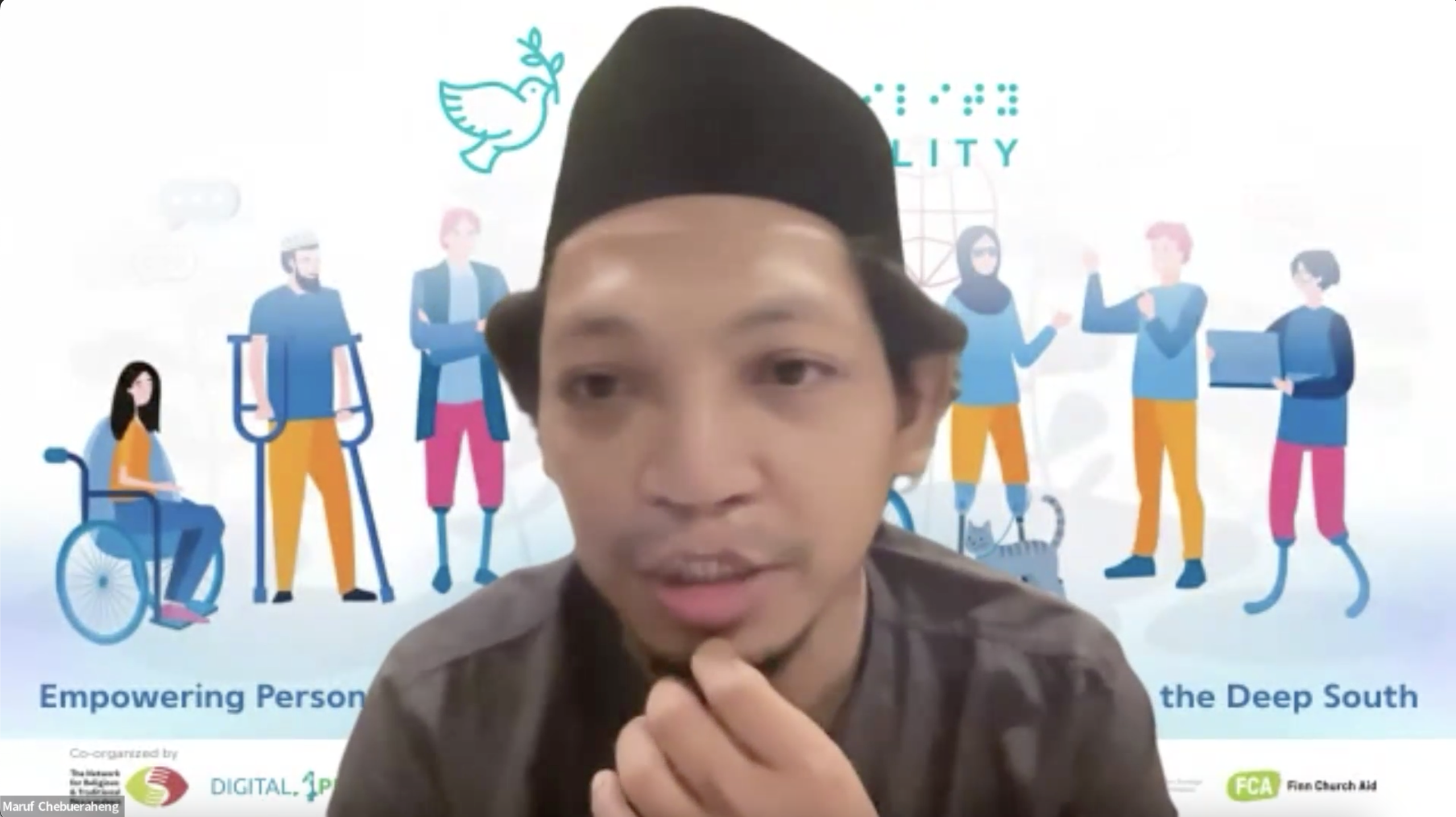
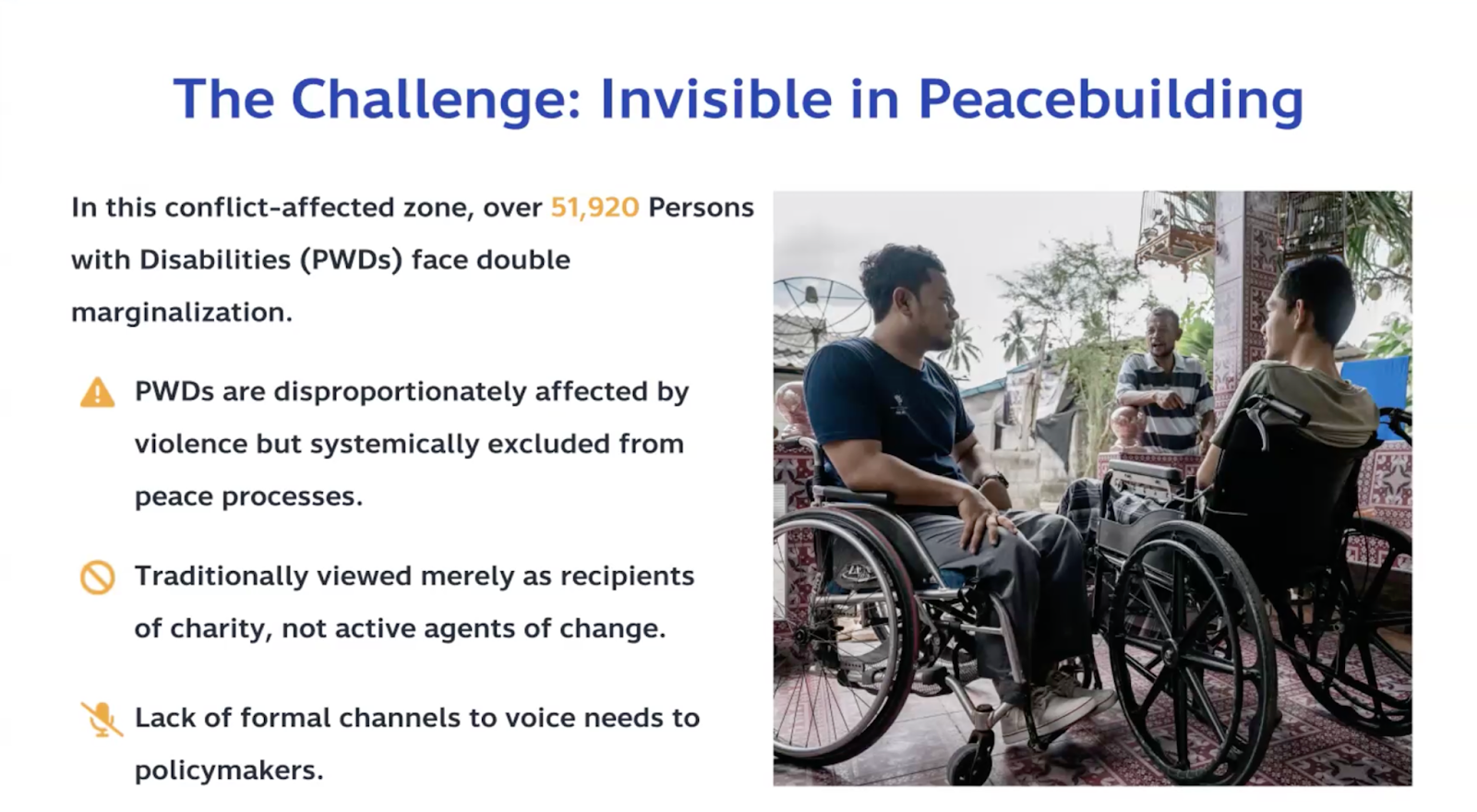
Maruf Chebueraheng calls to advance a human-rights-based approach that values persons with disabilities as leaders.
Maruf Chebueraheng, Project Lead for PeaceAbility and Director of Digital 4 Peace Foundation, and Apichaya Thaichana, Project Coordinator for PeaceAbility and Director of Club for Empowerment of Disabled Friends, presented PeaceAbility’s project “Empowering Persons with Disabilities for Inclusive Peacebuilding in the Deep South.” Chebueraheng described how the project sought to empower persons with disabilities to become leaders in peacebuilding in Thailand’s Deep South. The project engaged persons with disabilities in its design, offered capacity-building programs on the role of persons with disabilities in peacebuilding, and promoted a human-rights-based approach that positions persons with disabilities as leaders and partners in development rather than recipients of charity.
Chebueraheng emphasized that more than 51,920 persons with disabilities in the region experience dual marginalization and often lack opportunities to participate in peace processes, highlighting the project’s emphasis on knowledge as a tool for peace. She reported that, following the project, 68 percent of participants expressed greater confidence in sharing their perspectives, and reiterated the importance of treating persons with disabilities as essential partners in peacebuilding. Chebueraheng concluded by sharing a participant’s reflection: “If the peace process doesn’t include us, it won’t be a true peace for all.”

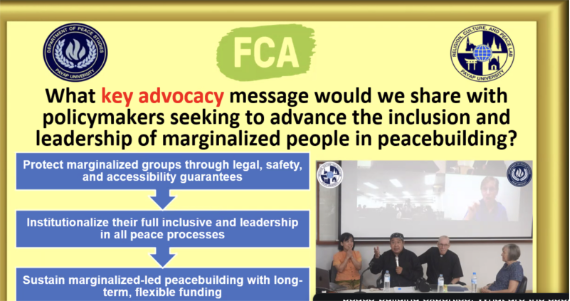
Dr. Rey Ty speaks about amplifying persons with disabilities in all of their diversities in peacebuilding processes.
Following, Dr. Rey Ty, from the Institute of Religion, Culture, and Peace (IRCP) for Payap University, delivered a presentation titled, “From Marginalization to Empowerment: Building Inclusive Justice through Storytelling, Dialogue, and Advocacy.” Dr. Ty emphasized that justice is strengthened through storytelling, dialogue, mediation, and peacebuilding, as well as through the representation of persons with disabilities from diverse backgrounds, including gender diversity, members of the LGBTQIA+ community, and various faith communities. He stressed the necessity of addressing systematic exclusion and ensuring meaningful participation by amplifying the lived experiences of marginalized persons to reduce biases, support healing, and allow greater ownership in peacebuilding.
Dr. Ty highlighted that there is growing interest in understanding the challenges persons with disabilities face as part of efforts to advance the inclusion of all marginalized groups across the international peacebuilding community. He urged, “Peace is only possible when marginalized groups are legally protected, fully represented, and sustainably supported as leaders in dialogue.”
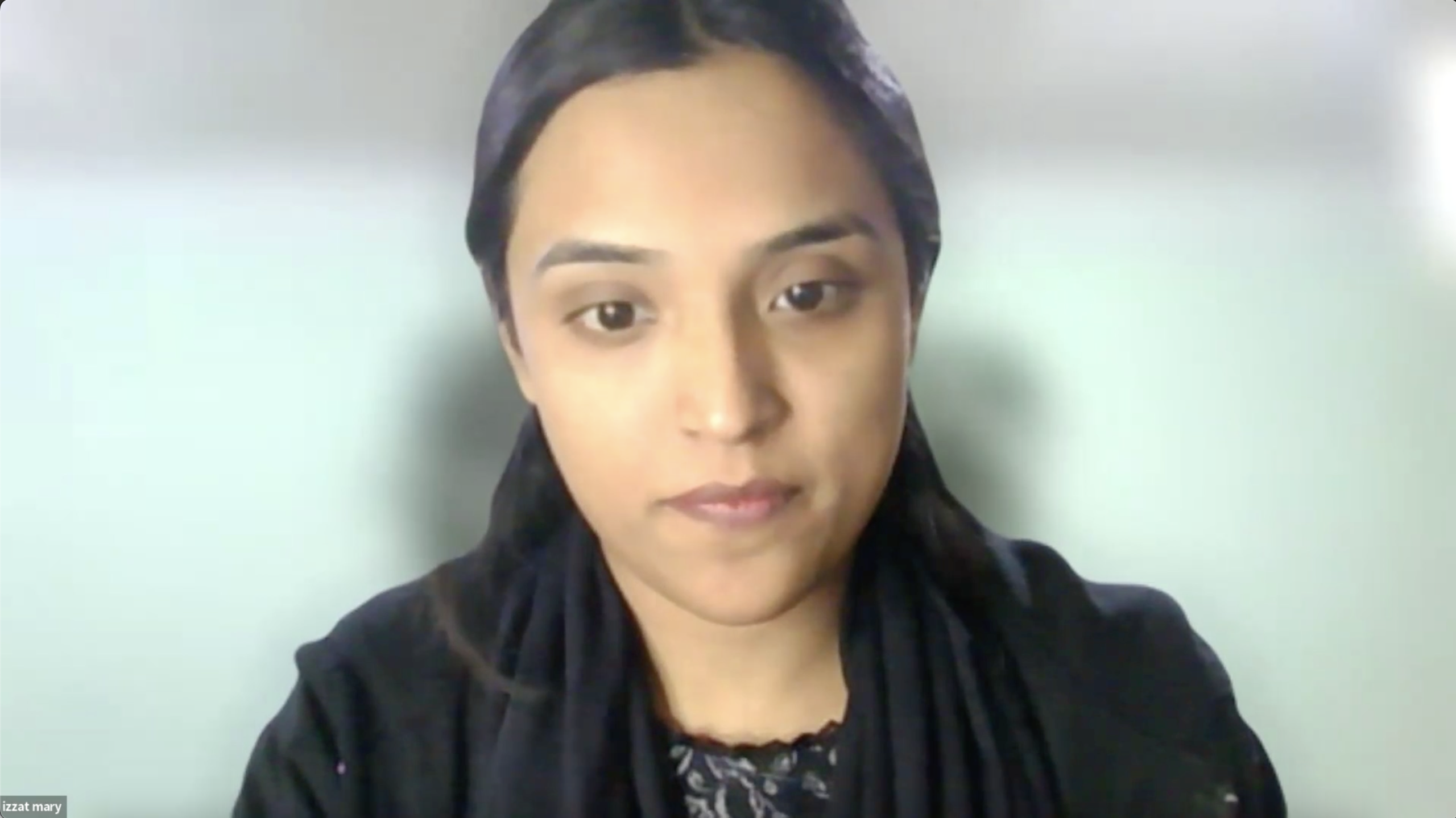
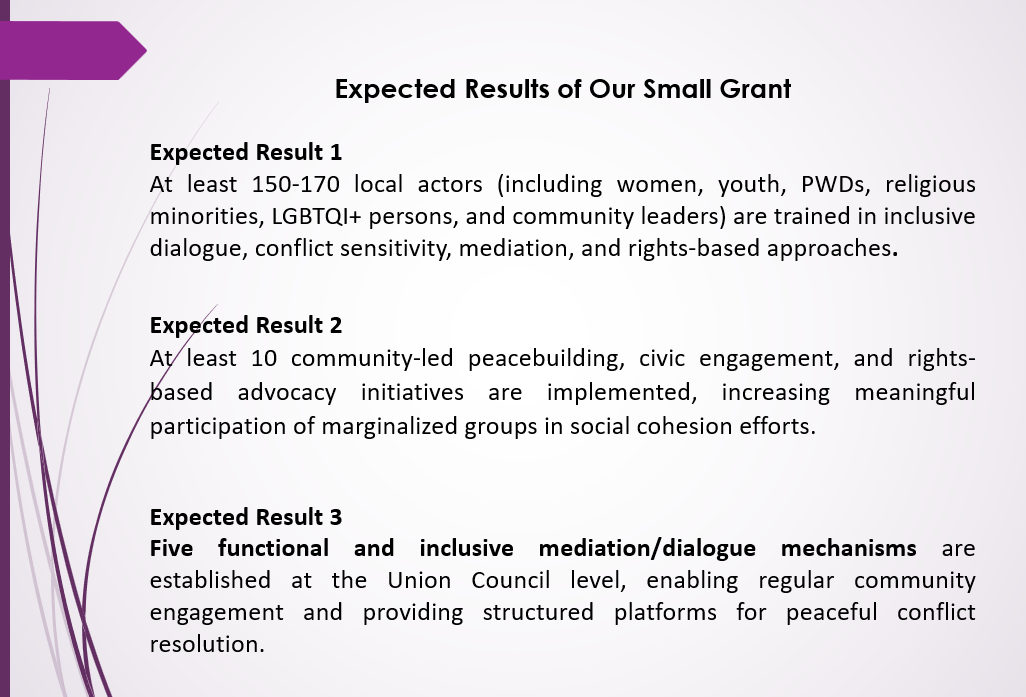
Izzat Mary advocates for social mobilization to advance more peaceful, equitable, and inclusive societies for all.
Izzat Mary, President of the Organisation for Women and Disable Care (OWDC), explored their efforts to advance the rights of persons with disabilities in Pakistan, highlighting their vision of a peaceful society and their mission to empower women, youth, and marginalized groups through service delivery, social mobilization, and inclusive participation. Mary noted that although Pakistan mandates a two percent national employment quota for persons with disabilities across both public and private sectors, the law is poorly enforced and, “employers hesitate to hire due to stigma and lack of workplace accessibility.” She explained that OWDC works to strengthen the implementation of existing laws, expand employment opportunities, improve inclusive education, and reduce stigma and discrimination by raising public awareness. The organization also promotes institutional coordination and advocates for gender-responsive disability inclusion. Mary reaffirmed OWDC’s commitment to building a peaceful, respectful, and inclusive society, especially for women and persons with disabilities, expressing the strong belief that everyone deserves to live with respect, equality, integrity, and without discrimination.
The presentations were followed by a question and answer session, giving participants the opportunity to ask about the global toolkit and the grantees’ presentations. Key discussion points included strategies for grassroots peacebuilders engaging with the multilateral system, leveraging artificial intelligence to promote the inclusion of people with disabilities in peacebuilding, and inclusion as a transformative process.
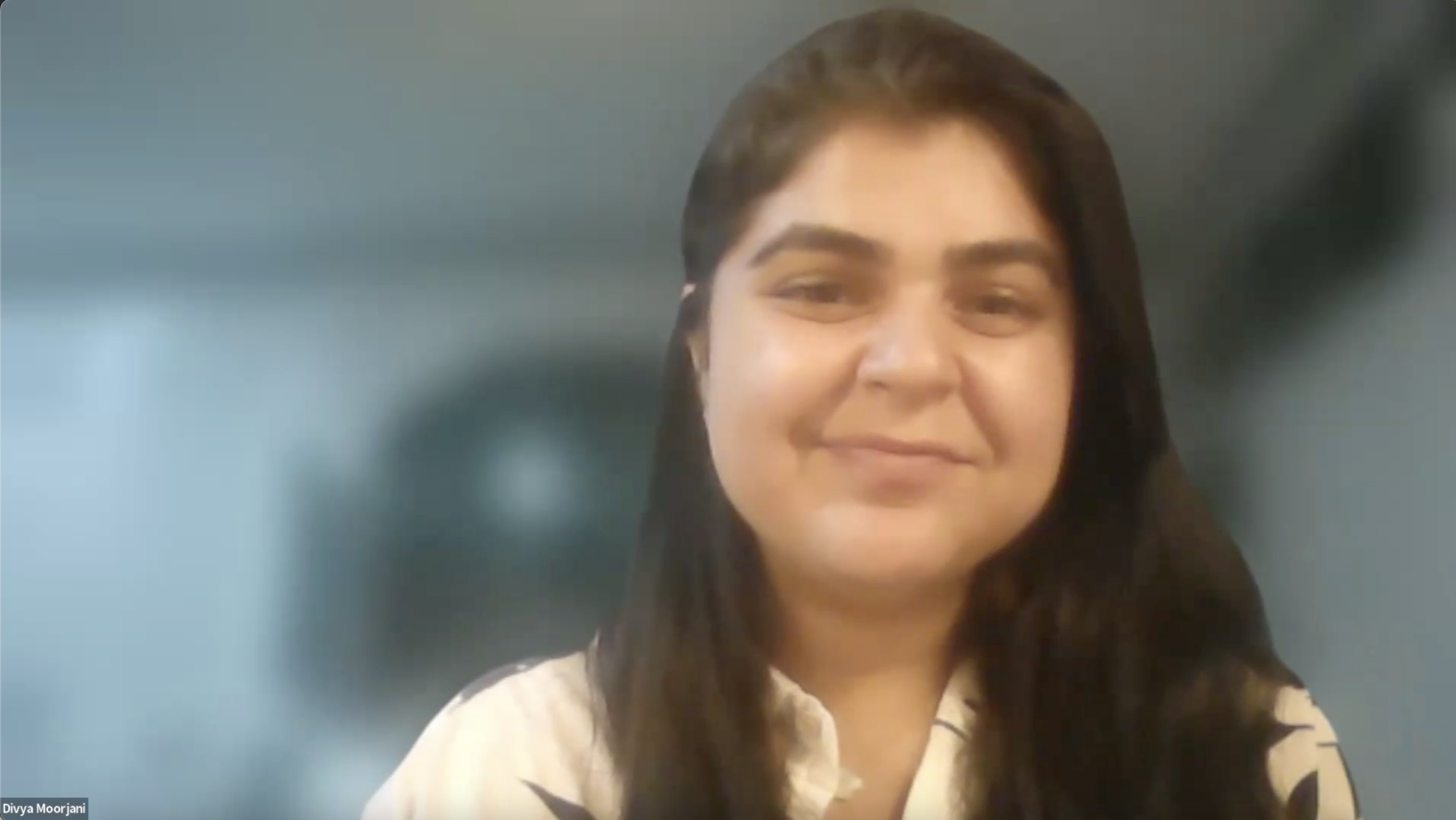
Divya Moorjani closes the event with a call for advocacy and implementation.
During her closing remarks, Divya Moorjani framed the event as the starting point for applying the toolkit and forging active partnerships to promote the inclusion of persons with disabilities in peacebuilding at every level. She concluded by urging participants, “Let’s continue to advocate for and implement inclusive practices.”
Follow the Peacemakers Network on social