
Centering Disability-Inclusion in the Architecture of Peace: Reflections from Helsinki
May 2026
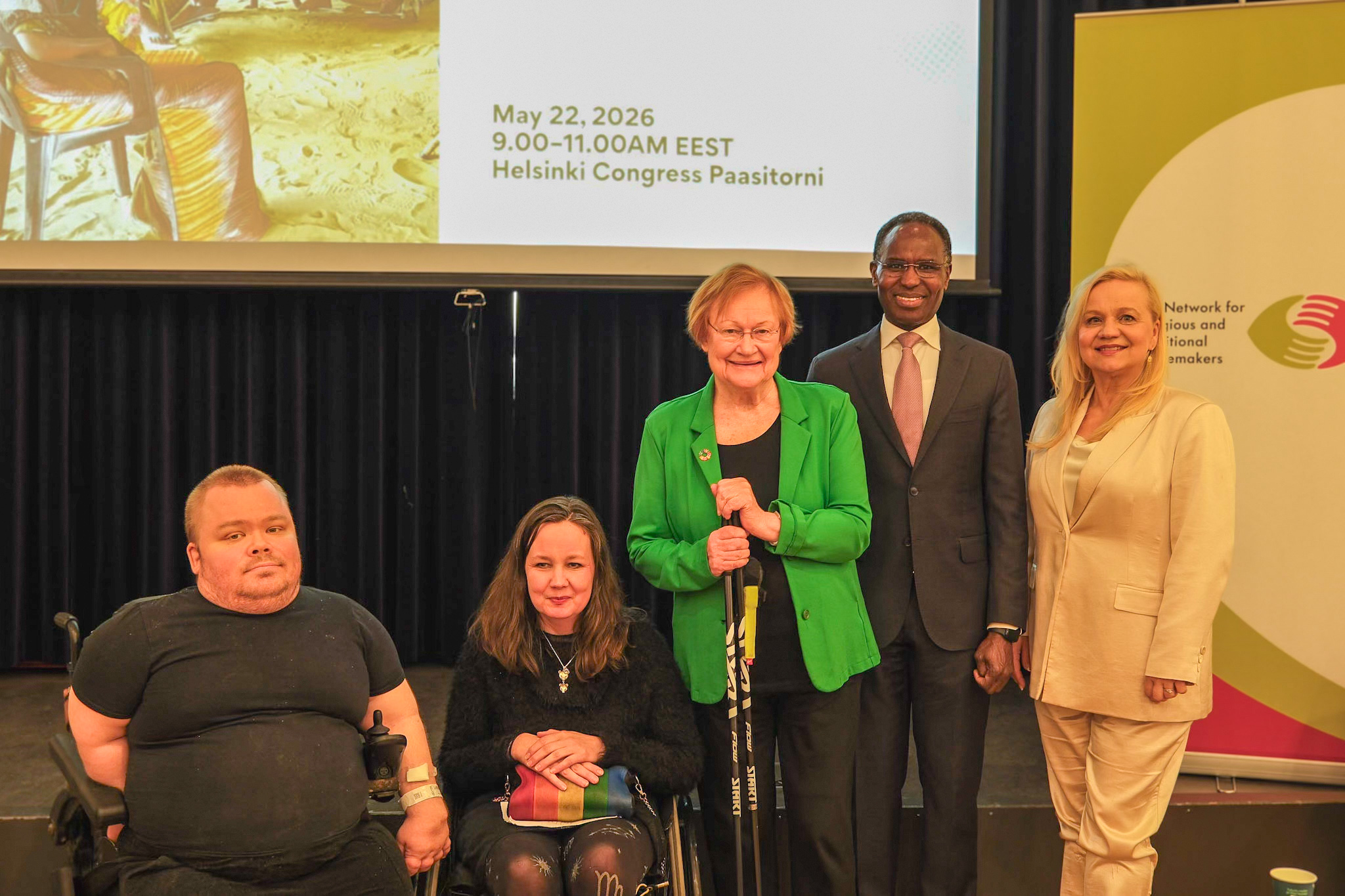
Group Photo: From Left to Right (Tuomas Tuure, Advocacy and Collaboration Specialist for the Abilis Foundation, Amu Urhonen, Chairperson for the Abilis Foundation, H.E. President Tarja Halonen, Dr. Mohamed Elsanousi, Executive Director of the Peacemakers Network, and Satu Suikkari-Kleven, Ambassador for UN Peace and Security.
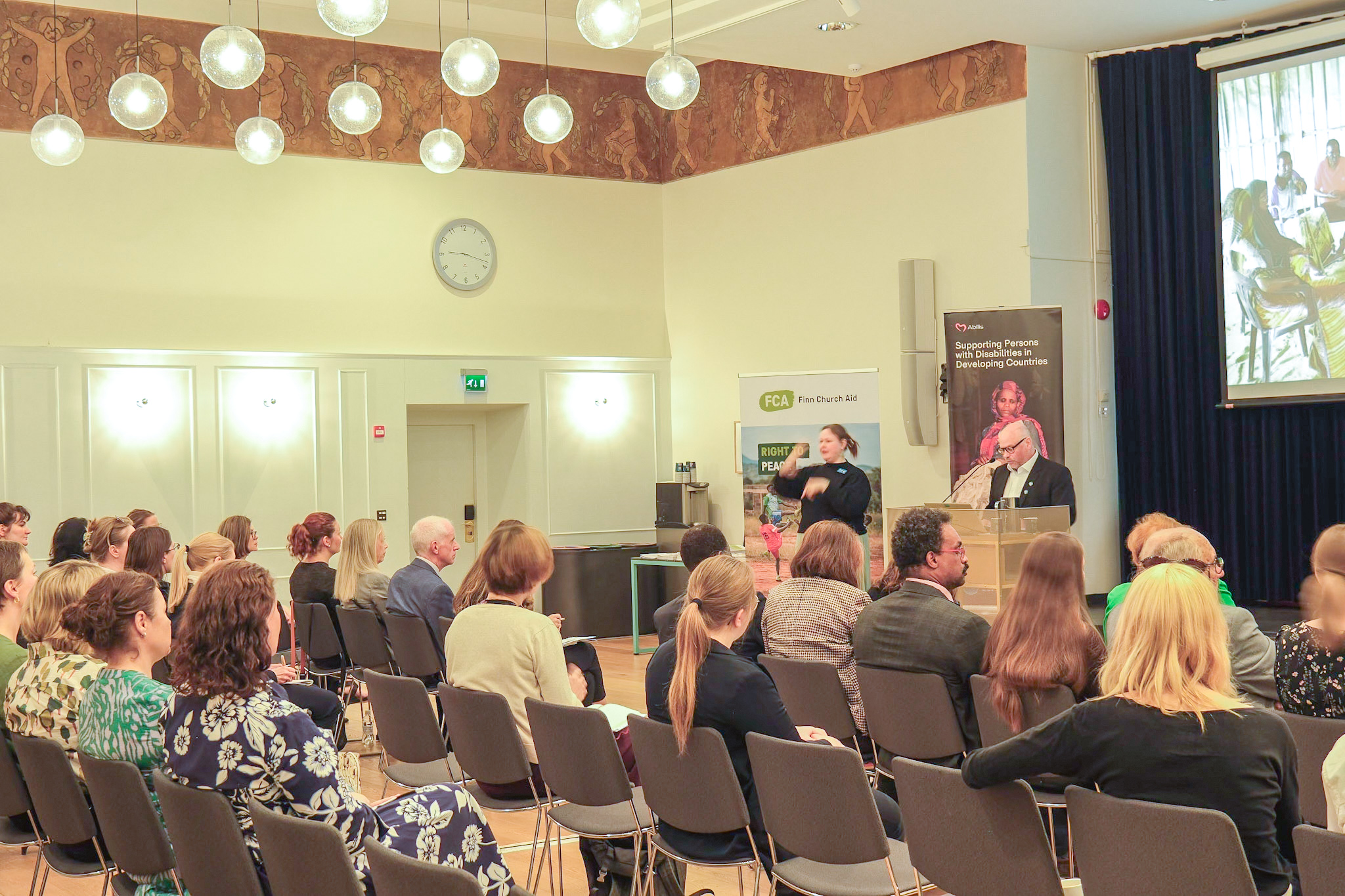
On May 22, 2026, the Network for Religious and Traditional Peacemakers, Finn Church Aid (FCA), and the Abilis Foundation convened policymakers, peacebuilders, organizations of persons with disabilities (OPDs), civil society actors, and development practitioners in Helsinki, Finland for the event, Centering Disability-Inclusion in the Architecture of Peace. The gathering provided an opportunity to launch and discuss a new global toolkit and framing guide on disability-inclusive peacebuilding while also advancing broader discussions on how disability inclusion can be more systematically integrated into peacebuilding, peace mediation, conflict prevention, and post-conflict recovery efforts.
The discussions took place against the backdrop of growing global polarization, rising conflict, and increasing pressure on multilateral cooperation and inclusive approaches to peace and security. Participants emphasized that despite the existence of important international frameworks, including UN Security Council Resolution 2475 on the protection and inclusion of persons with disabilities in conflict settings, implementation gaps remain significant. Speakers repeatedly stressed that persons with disabilities continue to be excluded from peace processes and decision-making spaces, despite often being disproportionately affected by conflict.
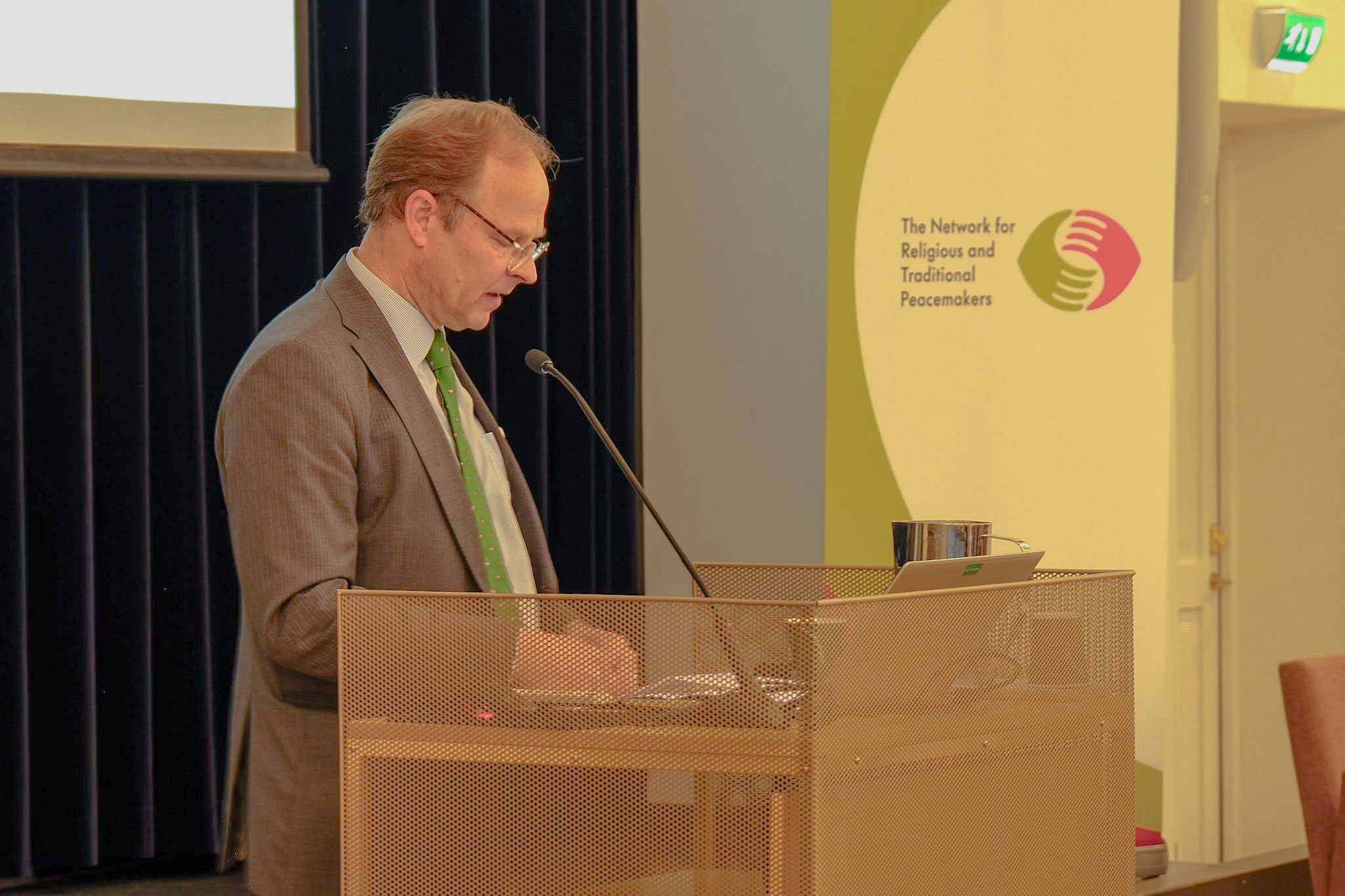
Tomi Järvinen, Executive Director of Finn Church Aid opening the event.
Opening the event, Tomi Järvinen, Executive Director of Finn Church Aid, highlighted FCA’s longstanding commitment to disability inclusion and the importance of embedding inclusion within societal systems rather than treating it as an afterthought. Drawing on FCA’s work in contexts such as Syria and Somalia, he emphasized that meaningful inclusion must be grounded in partnerships with local organizations and persons with disabilities themselves.
Claus Lindroos, Director of the Center for Peace Mediation at Finland’s Ministry for Foreign Affairs providing high-level remarks.
High-level remarks from Claus Lindroos, Director of the Center for Peace Mediation at Finland’s Ministry for Foreign Affairs, reinforced Finland’s commitment to promoting disability inclusion within international peace and security discussions. Lindroos underscored that marginalized groups are often disproportionately affected by conflict and noted Finland’s efforts to elevate disability inclusion as a cross-cutting issue within the UN and other international fora. He further reflected on Finland’s candidacy for the UN Security Council and the importance of ensuring that disability inclusion remains central to future peace and security efforts.
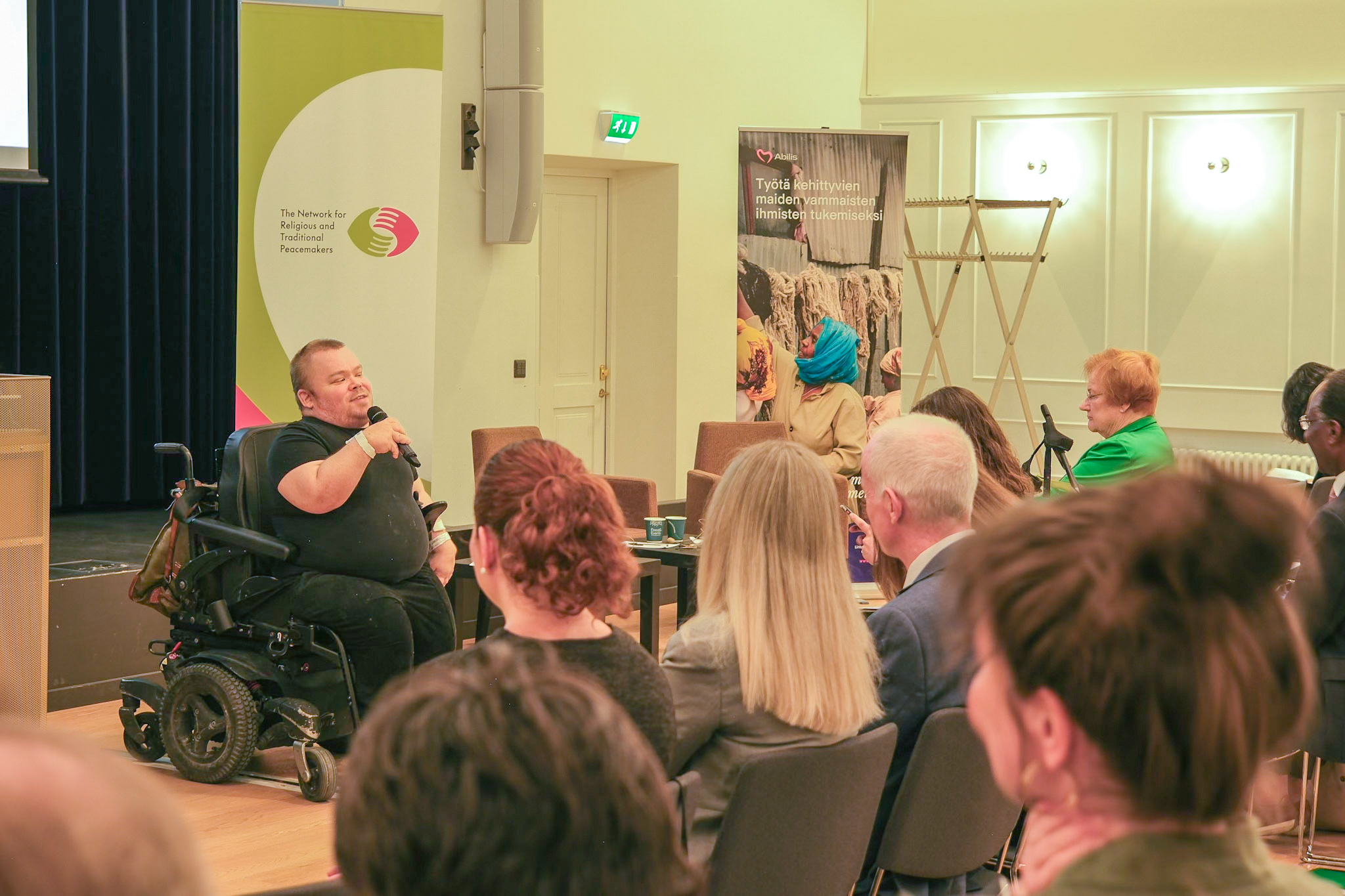
Tuomas Tuure, Advocacy and Collaboration Specialist at the Abilis Foundation reflecting on the Foundation’s work.
The event also highlighted the evolution of collaboration between Finnish organizations working on disability inclusion and peacebuilding. Tuomas Tuure of the Abilis Foundation reflected on how the Foundation’s work initially focused primarily on development cooperation before gradually expanding into humanitarian action and peacebuilding. He noted that while disability inclusion is often recognized rhetorically as important, practical guidance on how to operationalize inclusive peacebuilding has remained limited. The growing collaboration between Abilis, FCA, and the Network for Religious and Traditional Peacemakers was presented as an effort to move from discussion toward concrete action and practical implementation.
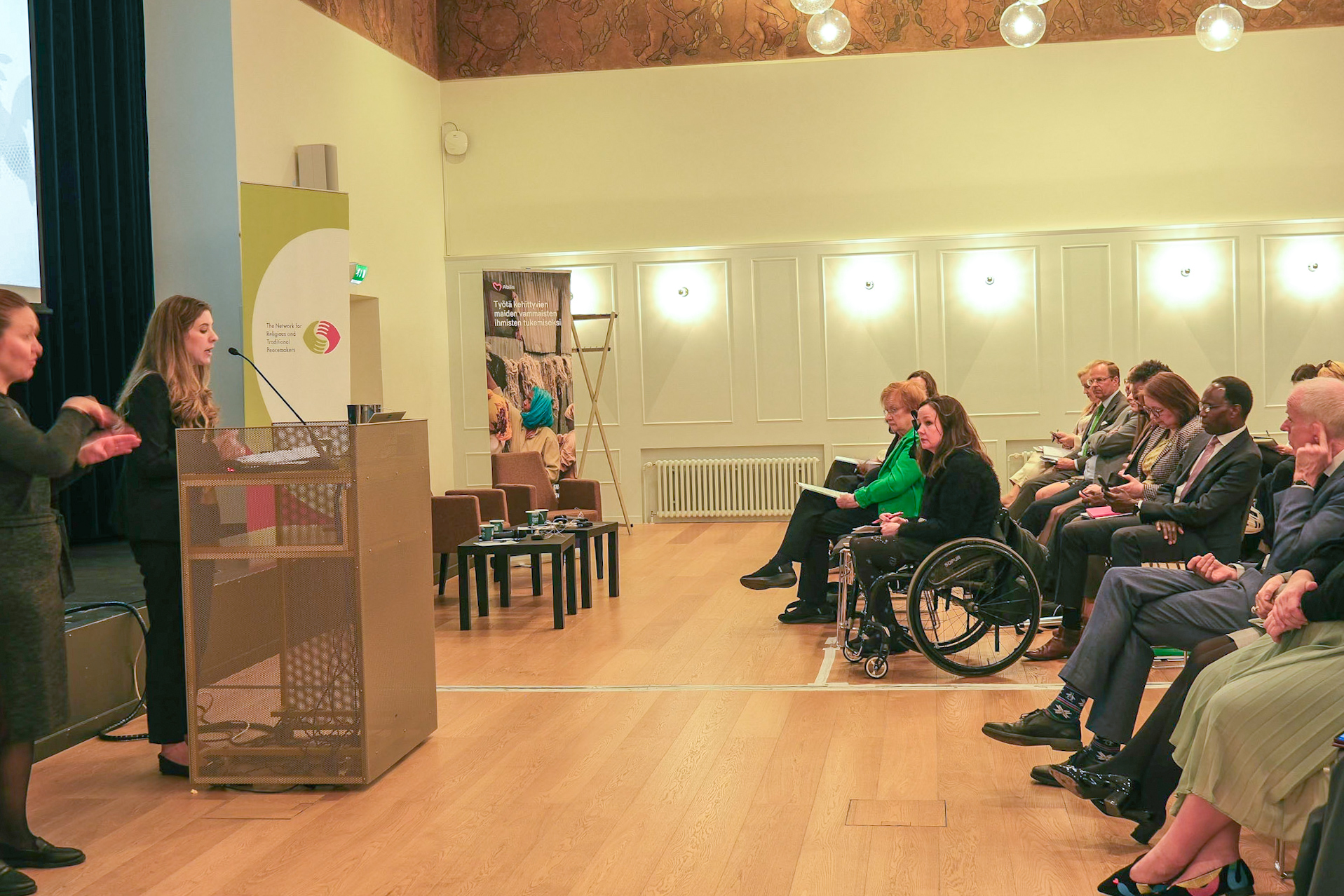
Jessica Roland, Senior Specialist for Inclusive Peace at the Peacemakers Network then introduced the global toolkit and framing guide.
Jessica Roland, Senior Specialist on Inclusive Peace at the Network for Religious and Traditional Peacemakers, introduced the newly developed global toolkit and framing guide on disability-inclusive peacebuilding. Drawing on years of consultations, pilot projects, and collaboration with local partners, the toolkit seeks to provide practical guidance on how peacebuilding actors can move beyond symbolic inclusion toward meaningful partnership with persons with disabilities. Roland emphasized that inclusion is not simply about inviting persons with disabilities into existing spaces, but about transforming processes, partnerships, and structures to ensure meaningful participation from the outset.
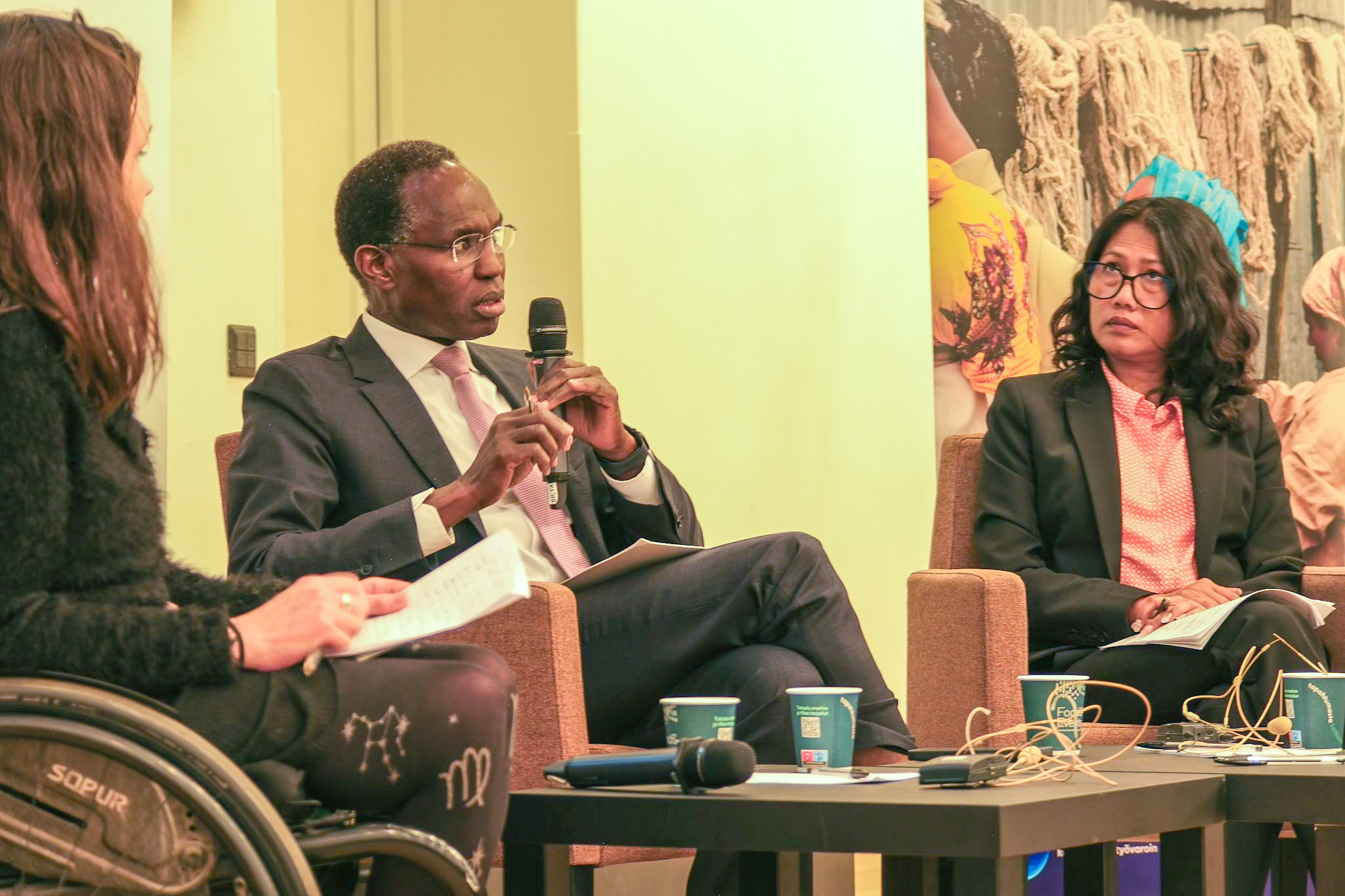
Dr. Mohamed Elsnanousi, Executive Director at the Peacemakers Network, speaking on the panel.
Throughout the panel discussion moderated by Amu Urhonen, Chairperson of the Abilis Foundation, participants repeatedly stressed the need to move beyond rhetoric and political commitments toward practical implementation. Dr. Mohamed Elsanousi, Executive Director of the Network for Religious and Traditional Peacemakers, emphasized that peace mediation and peacebuilding efforts cannot be truly inclusive unless persons with disabilities are recognized as active contributors and leaders within these processes. He cautioned against viewing persons with disabilities solely through a humanitarian lens, instead highlighting their critical roles in conflict prevention, reconciliation, and social cohesion.
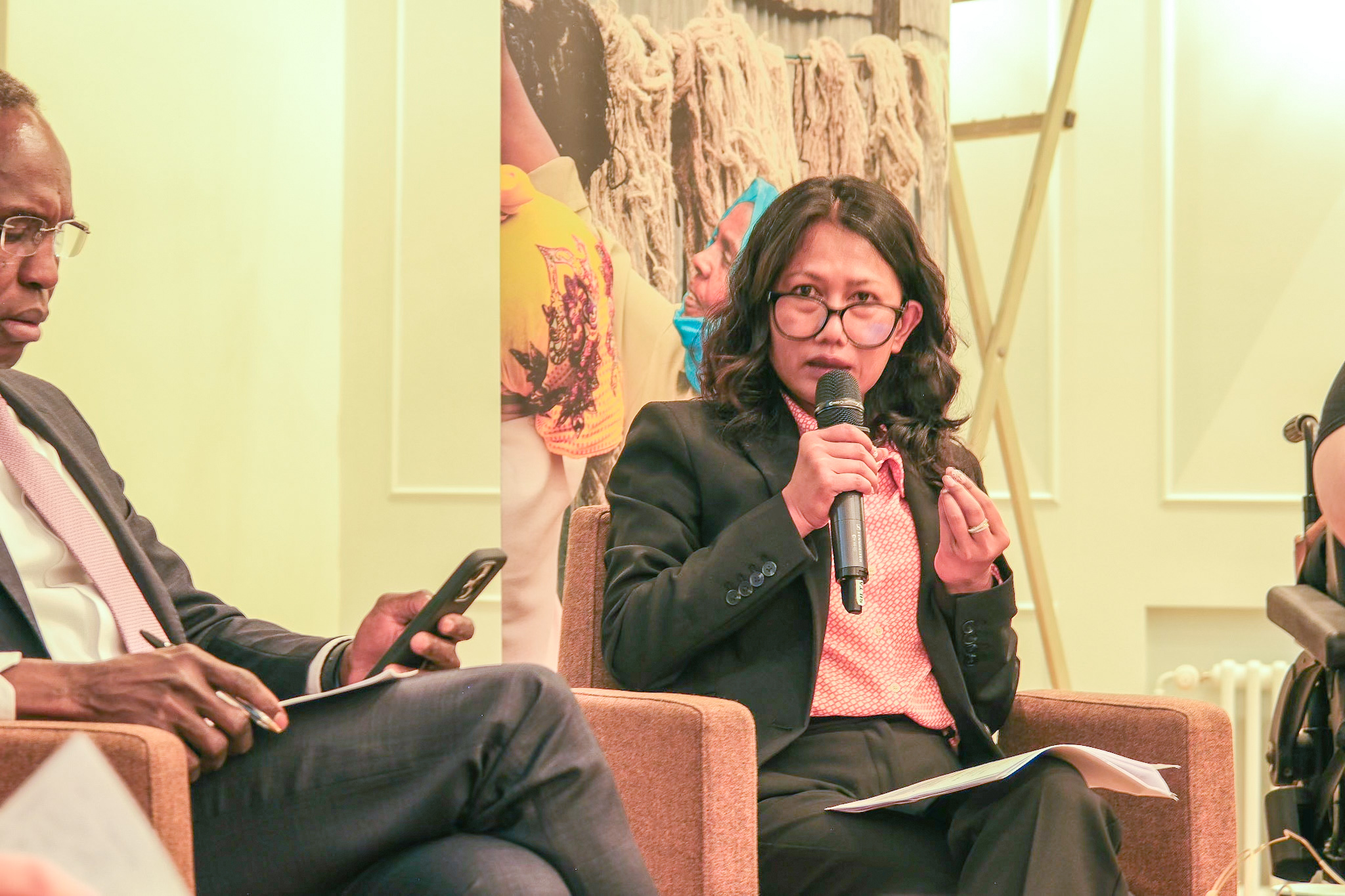
Piya Smith, Somalia Country Director for Finn Church Aid speaking on the panel.
Panelists also explored the structural barriers that continue to limit meaningful participation. Piya Smith, Somalia Country Director for Finn Church Aid, reflected on lessons learned from disability-inclusive peacebuilding efforts in Somalia, noting that exclusion is often not intentional, but rather the result of systems and processes that fail to proactively include persons with disabilities. She stressed the importance of engaging organizations of persons with disabilities from the earliest planning stages through implementation, monitoring, and evaluation. Participants also highlighted the need to move beyond simply counting participation toward measuring influence, impact, and meaningful engagement.
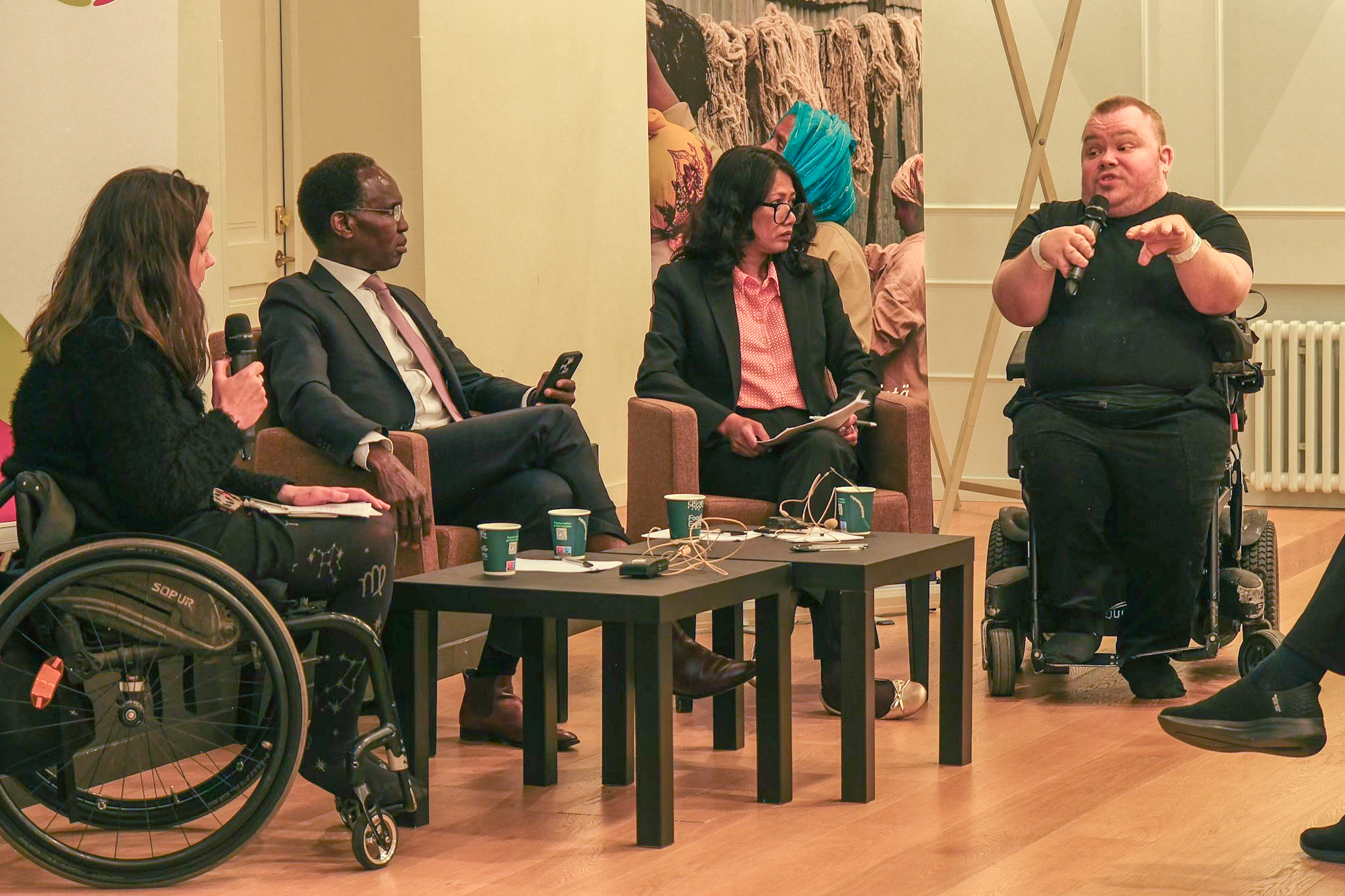
Tuomas Tuure, Advocacy and Collaboration Specialist at the Abilis Foundation (right) speaking on the panel.
Discussions repeatedly underscored the importance of partnerships between peacebuilding organizations and organizations of persons with disabilities. Participants noted that while many actors express commitment to inclusion, practical methods, dedicated funding, and long-term cooperation mechanisms remain limited. Tuure highlighted that one of the major challenges facing the field is fragmented funding and the lack of sustained investment in practical partnership-building approaches.
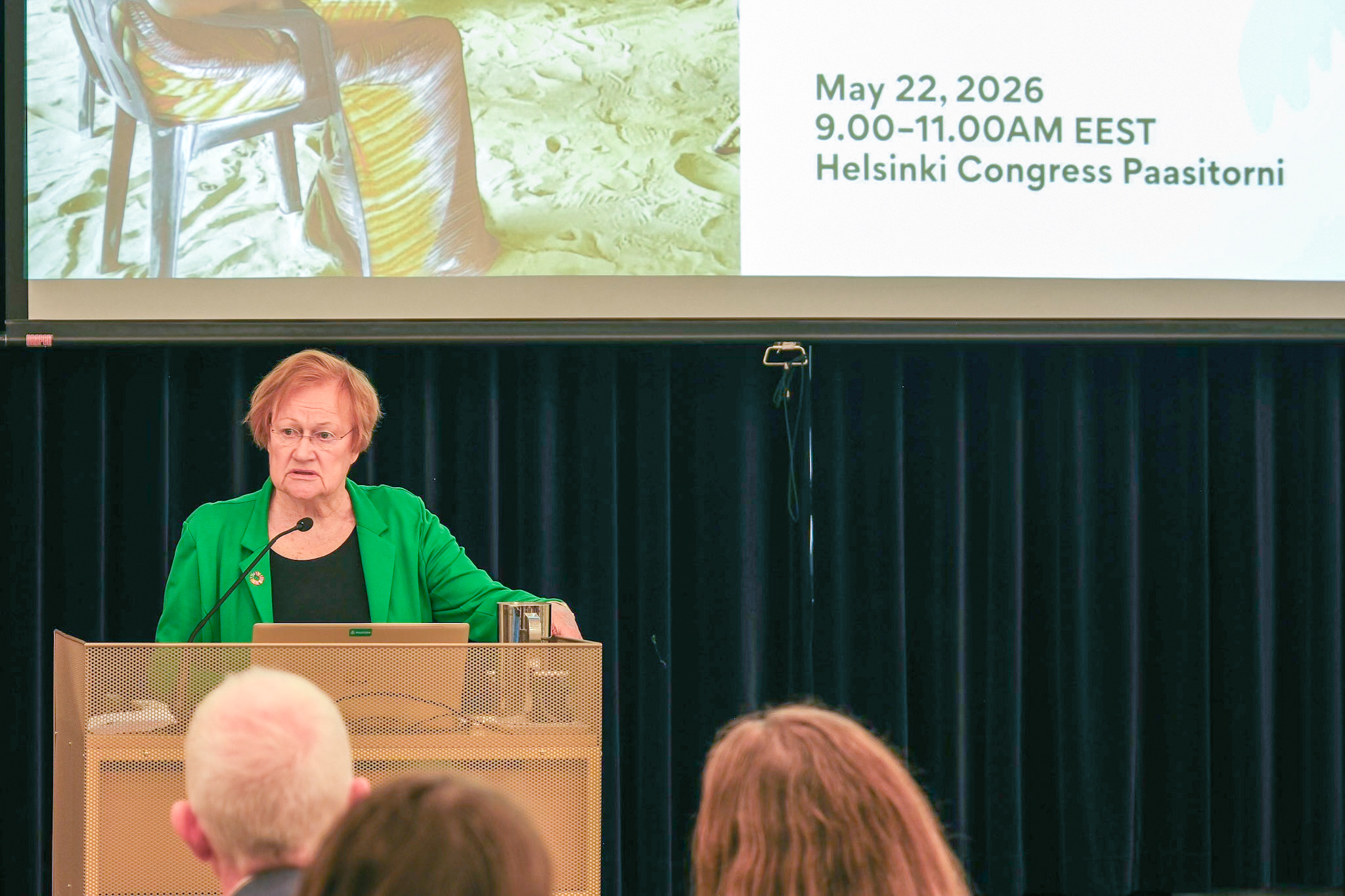
H.E. President Tarja Halonen speaking at the podium.
The reflections session further expanded the discussion to broader global dynamics and the future of multilateral cooperation. Former President of Finland Tarja Halonen emphasized that inclusive societies are ultimately more resilient societies. She reflected on the importance of maintaining strong multilateral institutions and ensuring that underrepresented groups are meaningfully integrated into peace and governance structures. Halonen also stressed that peace should be viewed as the norm rather than the exception, and that inclusion benefits societies as a whole rather than representing an additional burden.
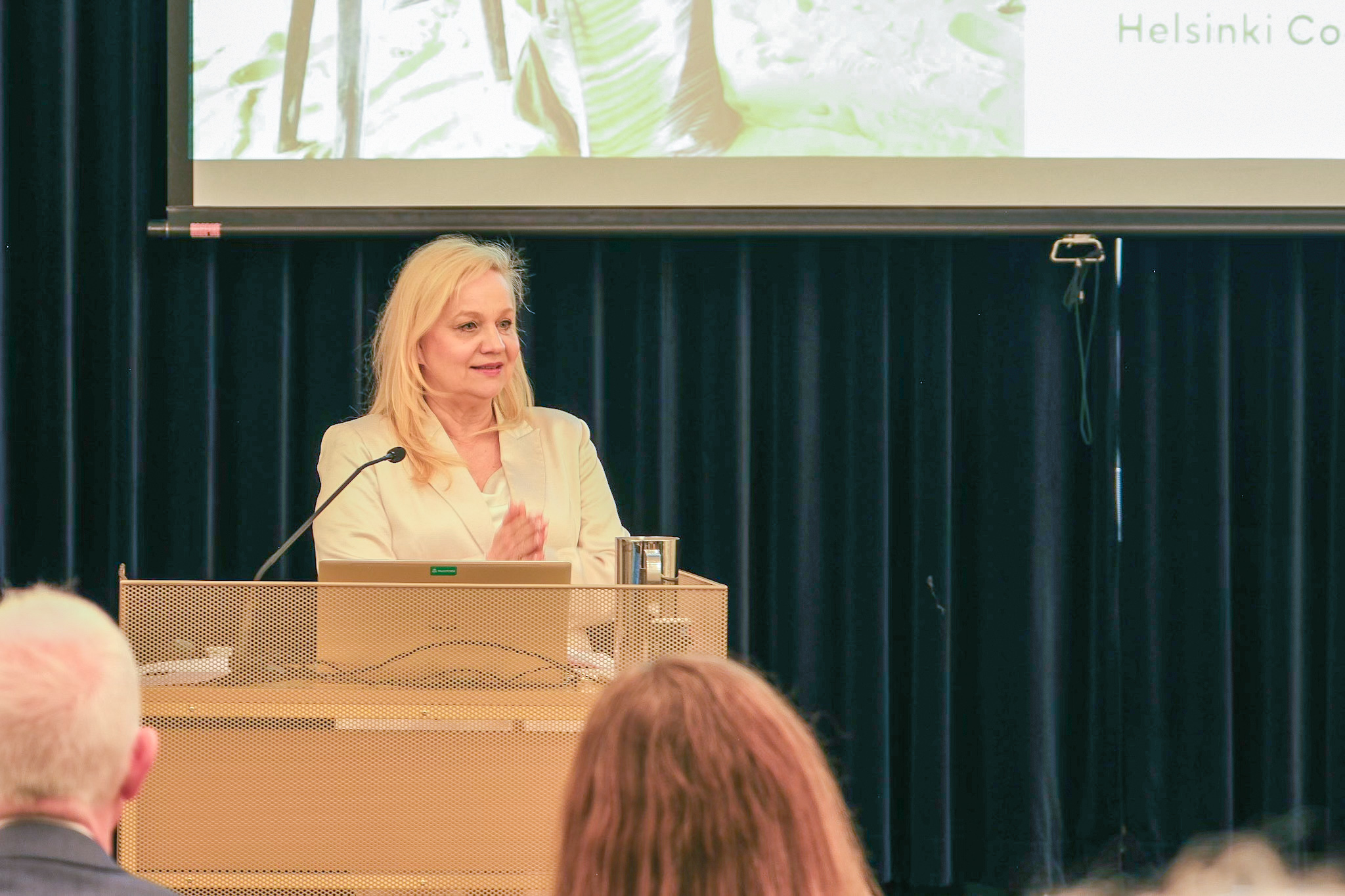
Satu Suikkari-Kleven, Ambassador for UN Peace and Security,speaking at the podium.
Satu Suikkari-Kleven, Ambassador for UN Peace and Security similarly emphasized that the toolkit represents an important step in translating principles into practical action. She noted that Finland’s ongoing engagement with civil society organizations has demonstrated the country’s strong expertise in inclusive peacebuilding and reaffirmed that disability inclusion, alongside women, peace and security and youth, peace and security agendas, will continue to feature prominently within Finland’s international advocacy.
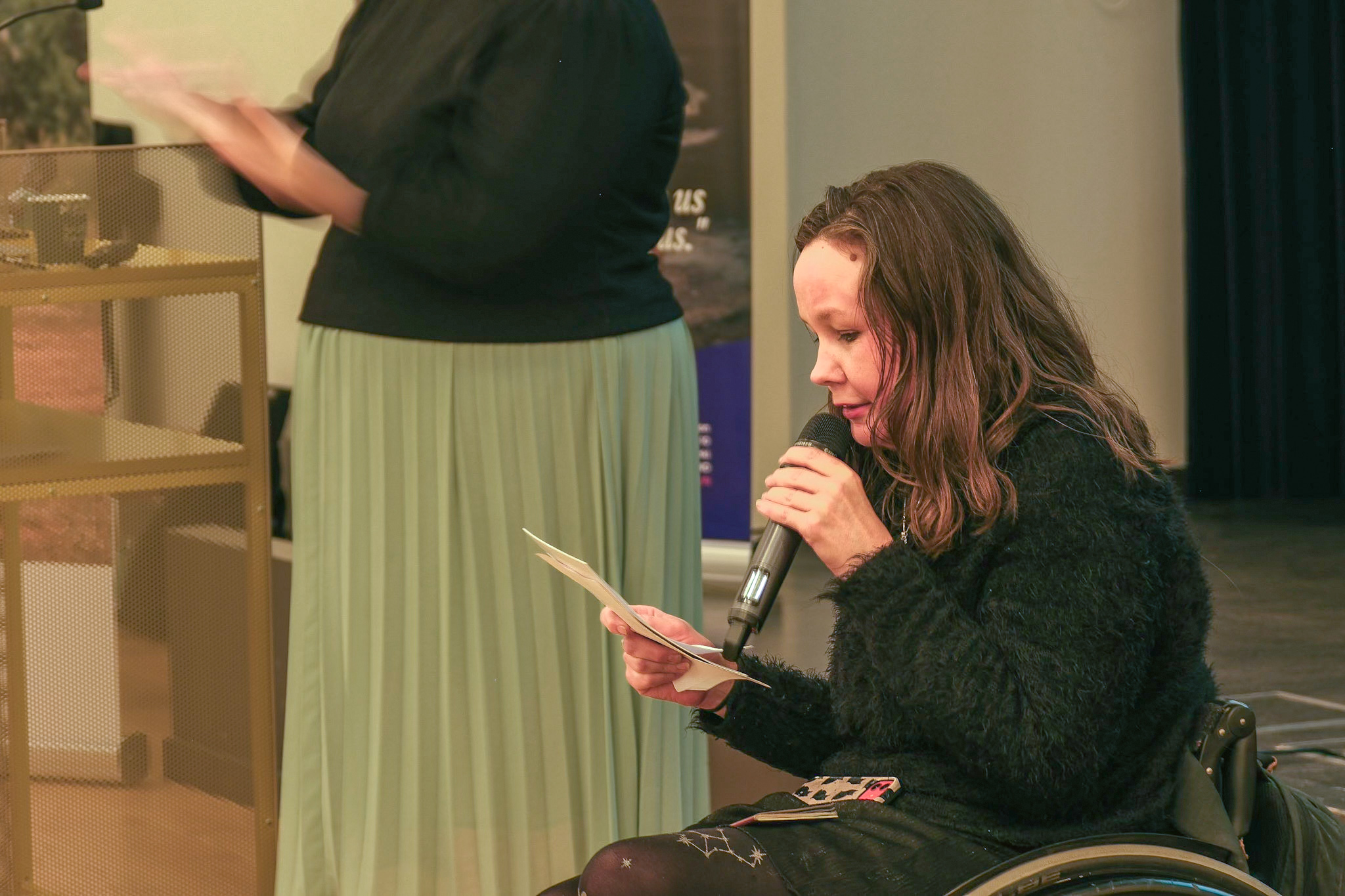
Amu Urhonen, Chairperson for the Abilis Foundation providing closing remarks.
The event concluded with closing reflections from Amu Urhonen, who summarized several key ingredients necessary for advancing inclusive peacebuilding: sustained investment, cooperation, and the redistribution of political power to ensure that underrepresented groups can meaningfully shape peace processes. Participants also reflected on the importance of solidarity, community, and hope in sustaining efforts toward more inclusive societies.
Overall, the event highlighted growing momentum around disability-inclusive peacebuilding while also underscoring the significant work that remains ahead. Participants repeatedly stressed that advancing inclusion requires moving beyond high-level commitments toward concrete implementation, dedicated resources, practical partnerships, and long-term structural change. The launch of the toolkit and framing guide was positioned as an important contribution toward helping peacebuilding actors operationalize disability inclusion in practice and strengthen efforts to ensure that persons with disabilities are recognized not only as beneficiaries of peace processes, but as essential actors within them.
Follow the Peacemakers Network on social